Get Familiar: Bijlmer Run
-
Get Familiar
-
Patta Running
-
Get Familiar
-
Patta Running

We are delighted to have the opportunity to interview Charita Zandgrond who alongside Yosie Groen founded the Bijlmer Run in 2022, a community organization that promotes sports, health, and social cohesion in Amsterdam's Bijlmer neighborhood. Charita is an accomplished runner, educator, and advocate for physical activity. As we speak with Charita, we will explore the origins and vision of Bijlmer Run, the impact it has had on the community, and the challenges and opportunities that lie ahead. We will get familiar with Charita's personal journey and her work within the neighbourhood as well as discover the transformative power of running and community engagement.
Can you tell us a bit about your role and experience working at MBO College Zuidoost over the past few years?
I have been working for MBO College Zuidoost for 12.5 years in various positions such as a teacher, internship coordinator and project leader. In recent years I have mainly focused on diversity and inclusion. My motivation has always been to have an eye for individual and talent development. In my position as project leader D&I, I find it particularly interesting to highlight the similarities between groups of people in order to create more understanding for each other based on human interest and involvement.
You've mentioned that Southeast Amsterdam has a negative image, can you elaborate on what you mean by that and why you think it's important to challenge that perception?
In the media, Southeast often talks about the negative events in the district. It is the district where the least amount of municipal money is spent on talent development and art and culture. I have often heard from students that there parents would rather not have them attend school in the district because of the large population of non-western students. I believe in self-fulfilling prophecy, if fyou focus on the negative of a person, group or community, all outcomes will also be negative. And then all the negative images, like the example in the media will be confirmed.
It is important because image change initially for the residents themselves. They must believe in their own strength. Through financial injections, education, sports, art and cultural projects, they deserve to get the chance to dream and to believe in their own worth. To be respected as a full citizen. That starts with believing in yourself and your own community. But also the negative image and stereotyping need to change . In recent decades major developments have taken place that deserve to be seen.
What inspired you to organize a run in Southeast Amsterdam, and how did you go about making it a reality?
Running is my hobby and Zuidoost has my heart. The idea came to me during a long run that ended on Anton de Komplein. Edson heart of the idea trough a mutual friend Lieke Koningen. I meet Yosie Groen through that same network. Edson was inspired to do something in Zuidoost and Yosie had experience setting up running events. That’s how it al started. The most important values of the Bijlmer Run are moving, connecting and discovering.
How do you believe running contributes to a positive mindset, and how has it helped you personally?
I believe that every sport contributes to a positive mindset and better functioning of body and mind, and running is that for me. I am a solo runner. I love to go for a morning run before the day starts when the streets are quiet and dark (in winter). It activate my body and set an intention for that day. It’s actually my meditation moment. After such a start I feel that I start the day stronger. That energy carries me through the day.
Can you talk about the importance of community and collaboration in organizing events like the Bijlmer Run?
In a community, togetherness and collective experience are central. We humans are group animals and like to join a group in which we recognize ourselves. Sports brings people together and transcends ethnicity, religion, age or socio- economic status. The individual performance becomes a group performance. Whether you contribute as a participant, spectator, volunteer or sponsor. The commitment, strength, discharge, love, fraternization and joy is the outcome of togetherness.
What do you hope participants take away from the Bijlmer Run, and how do you hope it impacts the larger community?
I hope they experience Southeast at its best, the hospitality, the diversity and the creativity. I hope that encounters will take place that otherwise would not have happened. Ik hope it increases curiosity about people who are not in their own network. I want the Bijlmer run to be an event for and by the residents of Southeast. Something they can be proud of and which people outside Southeast would like to participate. That the negative image is invalidated and revised.
How do you see your work at MBO College Zuidoost and your involvement in the Bijlmer Run intersecting?
As a project leader at MBO College is was able to build a network in Southeast. My field of work was not only education, but also the work field and social initiatives. I used this network and knowledge when setting up the Bijlmer Run. MBO College is one of are sponsors. As an educational institution, they consider it important to be visible in the district. We both think Diversity and inclusion is an important topic.
Can you share any challenges you faced in organizing the run and how you overcame them?
The biggest challenge is finding a sustainable sponsor contract. This year we managed to bind many smaller sponsors to us. My wish is to find a sponsor in a multinational located in Southeast for at least a couple of years that believes in our mission, vision and decisiveness. In a few years’ time, the Bijlmer Run must have grown into the most fun and inclusive running event in the country.
What do you see as the future of Southeast Amsterdam and its residents, and how do you hope to contribute to that future through your work and initiatives like the Bijlmer Run?
Difficult question. I only hope that the Bijlmer Run contributes to fraternization, vitality and solidarity. I want the Bijlmer Run to be an event for and by the residents of Southeast. Something they can be proud of and in which people outside Southeast would like to participate. I want it to be something positive.
On Saturday, May 6th the second edition of the Bijlmer Run will take place, there is still place for people who would like to take part in the 5km run so head to Anton De Komplein to support those who already entered or get amongst it yourself. Last year was a great success and together with you we will make sure that this year will be even better.
Related Articles
-
Interview by Passion DEEZYou might know Dahi through records like “Money Trees”, “90210” and “Self Care”, but there is more to the person behind the production credits. Growing up, his curiosity took him towards film scores, classical music and rock, and into conversations about faith, life and everything beyond his immediate surroundings. Music became a way of exploring those interests, but also a way of connecting with people he might otherwise never have met. With Black Boy (Alternative), that curiosity gets a world of its own. Built around drums, guitars and a willingness to let collaborators surprise him, the album came together once Dahi made a deliberate decision to give himself the same attention he had spent years giving other artists. For him, “alternative” is about perspective rather than appearance, and making this record meant trusting his own. We caught up with Dahi to discuss stepping beyond the producer label, finding freedom in collaboration and making music that people can carry with them. For anyone getting familiar with Dahi beyond the production credits, how would you introduce yourself? What should we know about the person behind the records?That I’m a pretty easygoing person. I love philosophy and anthropology, but I also love ignorant shit. I think those two things go hand in hand, in terms of who we are culturally, how we are naturally and how we react. Overall, I just try to find the humour in things first and foremost, and deal with the hard stuff after.When I’m making art or music, I’m usually trying to find things that will emotionally pull you. It doesn’t necessarily mean that I’m trying to make you happy; my goal is just to have an emotional draw. That is what I’m looking for when I’m making music.What did your musical world look like growing up? Were there things you loved that didn’t necessarily fit with what your friends were listening to?My musical world was very eclectic, based on what I was exposed to at different stages of my life. Growing up in the inner city, there were always things kids played at school that were considered popular. I thought those things were cool, but I was more pulled towards film scores and classical pieces from musicians across the world. I also loved rock music; that was always pretty prominent and intrigued me growing up.More than anything, I was always interested in meaningful conversations. Surface-level talk was hard for me to pay attention to, so I was always searching for deeper discussions about religion, faith, life and death. I was a curious kid, always exploring things outside of my neighbourhood or what other kids were talking about.You’ve helped so many artists find their sound. When it came to making this album, how did you work out what you wanted to say for yourself?It really came down to what felt unique to me growing up and what I was attracted to. A lot of that was understanding the roots of instruments. There are instruments that everyone plays across the world, like the guitar, but everybody plays them a little differently.Understanding how an instrument like that brings people together is key. You just have to figure out how to break down the divide, whether it’s from a racial, tonal or gender standpoint, to make things feel uniform and understand that it’s all one thing. We just have to listen and pay attention.That idea came to me later in the process of making the album, and it made sense to execute it to make the project feel special.What came first with this album: the title, the sound or something you needed to get off your chest?The sound came first. The title came last, and the message came after I figured out the sound.Black Boy (Alternative) is a title that opens up a lot of conversations. What does alternative mean to you? And why did you put it in brackets?Alternative means perspective. I think that word is powerful in opening people’s eyes because people don’t know what to expect, or they have a preconceived notion of what “alternative” is. They think it’s about the colour of your hair, the clothes you wear or ear piercings. All those things are related to “alternative culture”.But I think, at the end of the day, it’s just perspective and finding your voice, knowing that not everyone is going to agree or understand it, but being okay with that. That is the power of the word.I named the album that, and put it in brackets, because we live in a categorised world where it’s easy to label people, art or things to make sense of them. I just wanted to put it “on front street” what this title means, what this project represents and what feels the most honest to my experience.Have you ever felt that being a Black producer comes with expectations about the music you’re supposed to make? How did those expectations show up while making this record, if at all?Throughout my career, I’ve moved around a lot, pursuing different artists and projects, but I’ve always stuck to my art form. Early on, as I was working on this album, I wanted to rethink what a “producer album” is. I wanted it to feel like an album, period—not just a “producer album”.When I think of a Quincy Jones record, I don’t view it as a “producer album”; I just view it as a dope album. While he’s definitely a producer when working for other artists, at the end of the day, he’s just making good music. That was my goal creatively.I don’t really feel the pressure of those expectations. I tried to establish early on that I just make music. After signing my publishing deal and doing records with Kendrick and Drake, I went to London to work on a pop album with Lily Allen. I’ve worked with artists across all genres, so I’ve always tried to keep my creativity open and avoid being boxed in.It’s a gift and a curse, because when you have a hit, people want more of the same, but I usually try to be spontaneous and do something different that feels special to me.At the end of the day, when someone is listening to a song, they aren’t asking, “Is the person who made this Black?” They’re thinking, “Is it good or bad?” Since I’m not singing on most of the tracks I produce, if the music is good, that’s what matters. I take pride in how I move creatively and in never feeling boxed in by others’ expectations.What changed for you when you dropped DJ from your name? Was that a personal shift, a creative one, or simply catching your name up with who you already were?I dropped the “DJ” just because of where I was creatively and what I wanted to do. I just wanted to stand on my name and have that be it by itself. I still DJ—it’s a huge part of my creative process, and I’m actually DJing more than I have in a while.Overall, I think it’s just collectively bringing everything into one thing and not feeling like it’s under the title “DJ”. The idea of who I am and what I represent is just me, at the end of the day. That’s where I felt the most comfortable being. I like the sound of it, and I like the way it looks as a name, by itself: just Dahi.When you spend years making records with other people, your own ideas can end up waiting their turn. What made you finally give this project the space it needed?It really came down to committing. I had to take time and set it on my calendar to work on my album and nothing else. When I did that, it gave me the focus and energy to complete it and find a path to finish.I had to realise that while I was working on other people’s projects and songs, I needed to give as much attention to myself as I did to other artists. That was the turning point for finishing this project.It’s hard. I’ve always looked at art as vessels, and for a long time, I felt like the artists I was working with had larger voices and could carry my message further than I could. But for my own creative outlet and personal sanity, and to fill what felt like a void in my life, I had to give this project the time and attention it needed.Did being an experienced producer make it easier to trust yourself on your debut, or harder to let something go without questioning every detail?Absolutely. I feel like it comes down to knowing who to have in the room and what people’s skills are, and setting a tone that feels open to let the magic happen.Those are things you learn over your career—knowing that you can’t be too heavy-handed with music; you just have to play. That’s the main thing. Just play and don’t box yourself in.While rules can sometimes be effective, you have to have the space to react to what you’re doing and let the feeling of what you’re making guide you. That was a big part of what made the album work for me.How different is the conversation when you invite someone like Kendrick Lamar or Vince Staples into your world, having already worked inside theirs?To be honest, it was fairly easy because I feel like we’re all left-leaning artists, and we’re searching for something that gives us a unique feeling rather than feeling like certain things are just for everybody.With all the artists on the album, there’s a unity in “the other”—having that otherness be discovered, trying things and seeing what you can make with something that feels unfamiliar.Selling them on the idea, having them listen to it and giving them a perspective of what I want to make helps so much in how they want to write a song or what narrative they want to create. I feel like that happens quite well on the album.With voices as distinct as Fousheé, Moses Sumney, Baby Rose and Ravyn Lenae, how did you decide who belonged on each song? Were you hearing particular people from the beginning?Not really, to be honest. I had people on my wish list, but overall, I was kind of just going with the flow—whoever showed up ended up on the album.I don’t mean that I wasn’t being picky; obviously, there were people I wanted. But if I couldn’t get them, or if they weren’t available, I just worked with what I had. For the most part, the people I called showed up to the studio, I sold them on the idea, and they were all in.By the blessings of God, it just came together. They definitely exceeded my expectations in their performance and lyrically. It’s very rewarding to be surprised when you just let people do what they do, and I was very happy with the results.Can you take us inside a session where someone brought something you would never have thought to ask for, and changed the direction of the record?I’d say working with Moses Sumney on “Find Me” was a great example. I remember we had a song or hook idea, and when Moses came in, he said, “I love what you did, but I don’t really sing other people’s lyrics.”I didn’t know that, which was fun. I told him, “All right, perfect, my man. Well, do what you do. Find some inspiration.”He went into the booth and freestyled those melodies. It was amazing to see because he really helped me see the song. He helped me view the song closer to what I wanted than I might have realised.I feel like “Find Me” is a perfect example of Black Boy (Alternative)—just soul and rock all in one place. His performance really brought home the idea that this album is bringing worlds together in a way I feel we haven’t seen in recent times. I feel like this album has a certain colour that feels unique.Overall, it’s about allowing people the space to create and understanding the power of their voice—how it really is an instrument that you have to know how to use.What holds this album together for you beyond the guest list? What makes every track part of the same story?Drums and guitars—I feel like those two things are the tie that binds the album together. From the African polyrhythms to the different styles of guitar playing, they’re really the backbone of what makes the album feel unique to its own world.That was intentional, and I’m glad it makes sense, especially when listening to the transitions from track to track; those elements really connect everything.From “Money Trees” to “90210” and “Self Care”, people have built real memories around music you helped make. What’s it like hearing someone describe what one of those records means to them?It’s great. Going back to my earlier point, I think music is timeless if you allow it to be. Having records that resonate 10, 15 or 20 years down the line is powerful, especially seeing how these songs have become anthems to a certain degree.For me, I always think about when I made these tracks—being in my bedroom by myself, experimenting and trying things out—and then having the world hear them and react to them. It’s really cool to see the journey of a song.I don’t take it as being about me; it’s just about connection at the end of the day. I’ve been able to travel the world just off of music, which is incredible. Creating relationships with people in other countries through music is crazy—you don’t really understand the power of it until you live it and see how it affects people.That’s why I take what I do seriously; I don’t want to take it for granted. I’m very appreciative of the gifts it’s given me, and I’m always trying to give the music the respect and grace it needs.For Dahi, making this album started with something practical: clearing space in the calendar and giving his own work the attention it deserved. What followed still depended on being open to other people, whether that meant letting Moses Sumney rewrite a song’s possibilities or trusting a collaborator to bring something unexpected into the room. There is room for all of that within his idea of alternative. The point is to find your voice without deciding in advance everything it has to sound like. -
3FM on Skepta - The Fork and Knife
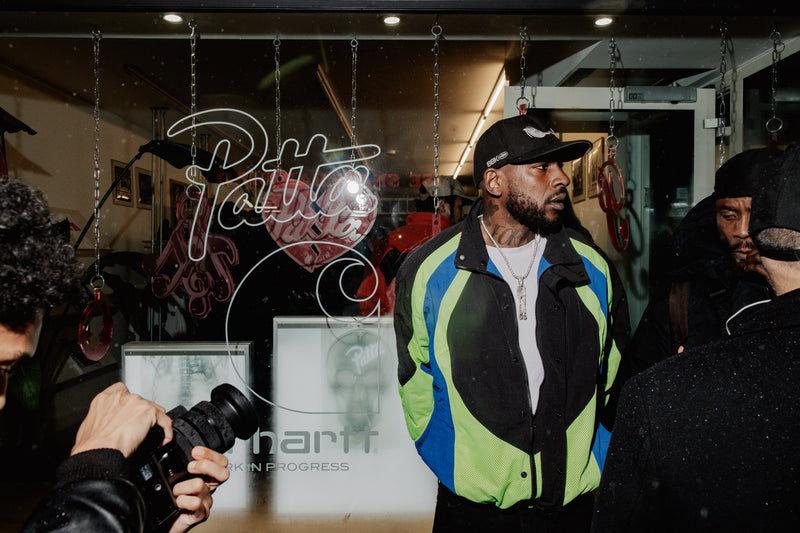
The Fork and Knife is finally on the table. Skepta’s long-awaited solo album is here. 3FM sat down with the grime legend for an up-close interview, going deep into everything from the tees to the symbolism behind the album cover. Skepta opened up about his approach, what the album means to him, and why this one hits different. If you missed it, 3FM takes you inside the Patta x Skepta release party.-
interview
-
Music
-
-

New Balance Made in USA 990v7
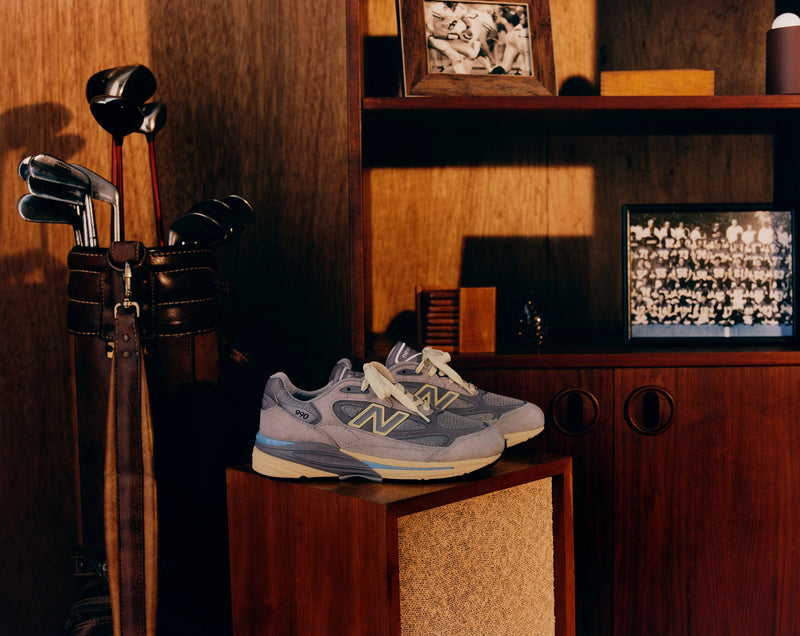
Since 1982, the New Balance 990 has moved well beyond its original purpose. Born as a premium running shoe, it found its way into everyday uniforms, wardrobes and subcultures around the world, becoming a silhouette that rarely needs an introduction. Now, more than four decades later, New Balance introduces the Made in USA 990v7.The seventh chapter keeps what made the 990 unmistakable while bringing the shape forward. Familiar pigskin suede and breathable mesh are joined by refined leather accents and a streamlined construction, while a softer FuelCell midsole, ENCAP technology and a new TPU midfoot shank bring added cushioning, stability and comfort underfoot.Built around New Balance’s idea of “memories from the future,” the 990v7 looks back without standing still. From marathoners to supermodels. From the streets to dads in Ohio. Some things just work.The New Balance Made in USA 990v7 launches November 6th on patta.nl and at Patta Amsterdam. -

Get Familiar: Raoul Etienne
From a quick Batman sketch drawn by his dad to the Rembrandts and Van Goghs he first saw on a school trip to the Rijksmuseum, Raoul Etienne has always found his own way into art. The Dutch painter spent eleven years as a tattoo artist and built a sneaker brand that took off across Amsterdam and Rotterdam, all while painting for friends and family. His work pulls from anime, the Italian masters and street culture, with one goal at its centre: a message so clear you get it the moment you see it.On All Connected, his first exhibition, he strips the stories of Christianity, Islam and Judaism back to the messages they share. Opening Friday, October 30th at Burgemeester Rendorpstraat, the show presents its paintings as reminders rather than sermons, from an Adam who barely lifts a finger towards God to a canvas that simply reads There's only now. We caught up with Raoul Etienne to talk about his first museum visit, walking away from a church that took more than it gave, red-and-blue 3D paintings and why the time is now. Step inside All Connected and get familiar below.For people getting familiar with you for the first time, can you introduce yourself and tell us about the journey that brought you to making art?I started making art when I was young. I used to look at Rembrandt and Van Gogh. I didn't necessarily love the paintings themselves, but I loved the idea of making art, and that's what pushed me to start drawing and, later, painting. I always kept painting, but I never thought I could turn it into a job. Friends would ask me to make paintings for them and I always did, but to me it was just for fun. So Rembrandt and Van Gogh were the first inspiration, and later on I started to appreciate Da Vinci and Michelangelo too.Was there a lot of art around your house growing up? What were the first things you drew? No, there wasn't a lot of art at home. But my dad could draw the face of Batman really quickly, and I couldn't understand how he just did that. From that moment I started drawing Looney Tunes: Road Runner, Speedy Gonzales, characters like that. My family always told me it looked good, and I'm still not sure if that's because it actually did. I started making drawings for their birthdays, because I was a young boy and didn't have money. Drawing was the only thing I could give. Sometimes I drew portraits of them. That's really where it began.Beyond your father, were there people or places that inspired you? Were you going to exhibitions growing up?Not really. In the last year of primary school, group eight, we went to the Rijksmuseum with the whole class. That's where I saw Rembrandt and Van Gogh for real, the actual paintings, and that was really special. But otherwise I never saw paintings. In the communities and places I came from, there wasn't much art around.You've told me that as a Muslim there are things you are and aren't meant to read, yet your work draws on several faiths. What does your research process look like, and how do you come up with your ideas?It goes back to my mother, who was a Christian woman. From when I was about eight until I was fourteen, we went to church four or five times a week. But that church exploited us. I don't want to say Christianity is bad, but the church we went to wasn't good. They told us a tenth of your salary has to go to God, and then the pastor showed up in a new car while we were poor and sometimes didn't have enough to eat. My mom gave so much, believing she would be blessed, because she was listening to the pastor.Around fourteen, I told her, "Mom, this isn't working." My sister felt the same. For a while I was really angry, and I felt like Jesus and God were all bad. Later, I started reading the Bible myself, without a pastor, trying to understand what it actually says. That's when I realised the message has a strong foundation. If you really understand what's being said, it can change your life.So I started reading the Quran. I haven't finished it, but a friend was teaching me, and I saw that it also made really good points. I began to think there's something in religion we don't see, because we believe in the stories but not in the message underneath them. We listen so much to the stories, the pastor and the imam, that we get clouded. So I asked myself: how can I show the message itself, not the story? I decided to paint it as simply as possible, so that when you see it, you get it, whether you're Muslim, Jewish or Christian. The message is right in your face. That's the inspiration for my paintings.Street culture is a major influence in your work, but that means different things to different people. Which scenes and communities have been important to you, and what have you taken from them?For me, it's anime and Japanese culture. I love how clean it is, and how much care goes into every drawing. You can tell everything is thought through. That was the biggest influence, and I studied it a lot. Tattooing was a big one too. I tattooed for eleven years, and that was the style I worked in most, so it shaped me.I also love the Italian masters, because their work has a bigger meaning and purpose. It's timeless. You can look at it now, or a hundred years from now, and you'll still find a message that speaks to your moment.Beyond that, the way I paint comes from intuition, but also from study. When I'm studying something, I see a picture in my head, and I ask myself how I can make that picture easy to understand for people who might not get the message straight away, so it still resonates with them. In Dutch we'd say laagdrempelig: easy to step into. That's how I paint.Can you take us through one piece from All Connected, from the first thought to the finished work?Everything I make is connected. Islam, Christianity and Judaism all carry messages through metaphors, and the message underneath is the same. But because we take the metaphors so literally, we miss the message.Take Moses parting the Red Sea to lead his people to safety. That's the metaphor. What I take from it is this: if you believe in God, even when you face a huge challenge, He will help you. He'll even divide a sea so you can get through, and you'll make it. I found metaphors like that in Islam and Judaism too. So when I draw, I draw the point instead of the metaphor, so you can see what's really meant without being held back by thoughts like, "I'm a Christian, so I can't learn from the Quran," or, "I'm a Muslim, so I can't learn from the Bible." Those messages are still relevant to you if you stop looking at who is sending them. That's what I put on the canvas.One simple example is my take on God reaching out to Adam. In my version, Adam is nonchalant. He's not really extending his arm or his finger; he's relaxed, a bit lazy. The meaning is that God is reaching out to us all the time, and we could connect with Him as quickly as we want, but we stay in that lazy state. To make it personal: I'm like that too. "I'll do it tomorrow."In the painting, the figure of God is shaped like a brain, anatomically. And Adam isn't just Adam, he's also an atom, a particle of the body. The idea is that the physical comes out of the mind. I painted that layer in red, and the illusion, the image as Michelangelo drew it, in blue. So you need 3D glasses: look through the red and you see the deeper meaning; look through the blue and you see the illusion.This is your first exhibition. How did you come up with the title, and why is now the time to show your first big body of work?You know those scenes in films or series where the police are searching for someone, and they pin up photos of everyone he knows, with red string between them? He's connected to that man, that man is connected to this guy, this guy is connected to that girl, and she's connected to the suspect. Suddenly you see it's all one big organisation. That's what I'm doing with these paintings. They cover different topics, but the message is the same. Only the way we present it differs. When you connect the dots, you see it's all connected.As for why now: at first I didn't believe I could do it. At some point I started believing in myself. I'm not religious, but I believe in God, and I thought, if I believe in God, then this is possible. From that point, people came into my life saying, "I can help you with this," "I can help you find a space," and I thought, okay, I get it now. The moment you focus on what you want, the dots connect. It's all connected, and you're the one who has to focus, see the dots and join them. That's my whole philosophy: it's happening now. We're living now, and everything is possible now. So now is the perfect time.Where can people see the show, and what can they expect?It's at Burgemeester Rendorpstraat. People can expect messages, though I prefer to call them reminders, because I think everyone can relate to them. They're not for one culture, race or religion. They're for humans.For example, one painting says There's only now. That isn't a message for Muslims or Christians; it's for everyone. Live in the now. Don't let your mind drift to the future or back to the past, because you'll miss what's happening right in front of you. You already know this. We all know we should stay positive and present, but there are so many distractions that we forget. My paintings are there to remind you: stay here, and when you're here, you'll see what's happening and be able to do what you really want to do. Personally, I like how I painted them. Whether other people like them is up to them, but I like them.Through All Connected, Raoul Etienne turns years of questioning faith, family and himself into paintings anyone can step into, whatever they believe. The same mindset drives his sneaker brand Redipill, where health is wealth and everything starts in the head. With his first exhibition about to open, he is living by his own philosophy: it's happening now. Visit All Connected at Burgemeester Rendorpstraat from Friday, October 30th and follow Raoul Etienne for what comes next.-
Art
-
Get Familiar
-
-

Get Familiar: Pozer
Get Familiar: Pozer
Interview by Passion DEEZ | Photography by Henry Goodwin If you haven’t already tapped into Pozer’s world, now’s the time to get familiar. Coming out of South Norwood, the South London rapper has built a sound that feels inseparable from the place that raised him: multicultural, community-driven and constantly changing. Pulling the bounce of Jersey club into the colder edges of London rap, Pozer leaves space for his voice to sit front and centre, moving between humour, grief, ambition and the realities of watching both your surroundings and your life transform in real time.After “Kitchen Stove” and “Malicious Intentions” introduced him to a much wider audience, Crossroads gives us something deeper. Described by Pozer as the meeting point between his life before music and whatever comes next, the project opens up the person behind the momentum. There’s childhood and loss on “Lauryn Hill”, internal conversations on “Franklin Saint”, vulnerability on “Double Edged Sword”, and throughout it all, the kind of resilience that comes from learning to make something out of whatever is available to you.Pozer’s got love for South Norwood even as he wrestles with what it means to return somewhere that no longer feels quite like the home he remembers. That tension runs through the conversation: belonging and isolation, success and responsibility, pain and humour, where he comes from and the mythology he wants to build around where he is going.We caught up with Pozer to talk about Crossroads, growing up in South Norwood, finding safety behind the microphone, learning from AJ Tracey, building with Kerchak, the psychology behind his samples and why, beyond everything else, he wants his music to leave people with belief and hope.For anyone getting familiar, who is Pozer, and what do we need to understand about South Norwood to understand you?Pozer is a young black artist from the south of London, South Norwood, to be specific. South Norwood is multicultural, it's very diverse and community driven.What was playing around you growing up, and when did you start feeling like you had something of your own to contribute?A lot of artists! My mum listened to Beyonce, Rihanna, lots of rappers - Max B, 2Chainz, Lil Wayne. Drake, Kendrick, Timberland, Nelly Furtado. T Pain. And lots of different genres - garage, jungle, drum and bass, house, funky house. My mum was young, so she showed me lots of different artists. Like she showed me about Biggie and Tupac. She told me about Aaliyah dying. She showed me Missy Elliott, the pop culture and the entertainment world. I didn’t think about making music until I was 21/22. I never thought about music outside of how you would think about computer games. I could play them, but you'd never think how I could make one. I think writing as a whole has always been fun for me because I like English. But at the age of like 20, after lockdown, is when I thought I might as well try.You’ve called Crossroads a meeting point between your life before music and what comes next. What’s been the hardest part of moving between those two worlds?People and having to keep myself disciplined. Self-control and people management are the two main things because obviously the fame, the money, and the notoriety and everything, it will have people build up their own imagination about what's really going on in it. And then how much that they feel they're entitled to based off of friendship or just knowing me or family. So it's making me see a lot of people's true colours. At the start, yeah, I was like, "This is cliché. This is mad cliché.” Like my friends not fucking with me. And you just start feeling like, like, no way, this legendary feeling is a movie. Like no way people actually behave like this. Then obviously when I first started, I thought money grew on trees, so it was like when you get here, and you realise, you actually gotta put in some legwork and make the thing move and have ideas and have, you know a message to convey and display and everything. I found I had to set new goals. If I didn't set new goals, I don't think I'd be here now. “Kitchen Stove” and “Malicious Intentions” introduced you to a lot of people very quickly. What did you want this first full project to reveal that those singles couldn’t?Depth and substance in me as an individual and to build the myth within my brand.Your music brings Jersey club bounce into the colder sounds of London rap. What first drew you to that rhythm, and how did you find your pocket within it?I always had this thing where I felt like nobody listened to me until I got mad. And then the jersey beat is so quiet that all you can hear is me. The beat is kind of on a metronome, it’s kind of like your heartbeat and has that hypnotizing thing about it. When I listen to Jersey, it's refreshing because it's like you can really hear me.There’s something powerful about hearing difficult experiences over a beat that makes you want to move. What does that combination allow you to express?For me, it's anguish, it's sorrow. So this is the outlet. This is the only outlet that I have for any type of sadness.You open the tape with “Lauryn Hill”, touching on childhood, grief and the people around you. Why did that feel like the right place to let listeners in?Anything up until I dropped Crossroads kind of felt like a single. It was kind of like quick food. It's nice, but it's quick food. So when I made Lauryn Hill, especially because of some of the things I'm talking about in there, it's like I wanted people to hear it. A song like Lauren Hill. provided the “get to know”, something with substance value for the actual listeners.On “Double Edged Sword”, you talk about saying you’re fine when there’s more happening underneath. What makes something easier to say in a song than in a conversation?There's no response. The microphone's not gonna talk back. And it's not gonna judge you either. It's not gonna throw it back in your face. It's a lot safer than talking to people.The “Franklin Saint” video puts you face to face with another version of yourself. How did you develop that idea, and what made Amsterdam the right setting for it?The whole reflection thing, draws from the tv show, but also as well where I implemented the segment of the song. It was very conversational. I have this ‘both sides of the spectrum’ thing when I rap. Like I'll give you the yin and yang of whatever subject or theme I'm talking about. So where I was talking in two different perspectives, it kind of just made it convey the message better of what I was really feeling. It's like talking to your conscience.Amsterdam. It's a beautiful city. It's a beautiful place. We shot in one hotel for the whole day. I ran around all day filming, and it was good. I go there a lot as well, so it's kind of like a second home.You’ve described watching food shops and barbers disappear from your area as it changed. Which places made South Norwood feel like home, and what gets lost when they go?There's so much stuff gone, I can't even remember - Soco Cheetah, Ju-ice & Shakes, Corner Fish Bar, Belly Full. These places hold no significance, other than being like shops within the community. But for me it's the essence of the people. For example, when I go back to South Norwood, it's changed. Like, not the same people lived there, and it's not the same. It's not the same narrative. We're not doing the same things as it was 10 years ago, and that's down to just everything. You know, times change. What I feel like you lose when things like that close is you lose your area. You lose your home. Like I can go back to South Norwood now. It doesn't feel like the South Norwood that I grew up in, and it's not. I feel like a nomad. Your line about making do without a scale has become a wider philosophy about using whatever resources you have. How did that mentality shape your earliest music?For example, my music journey. I used to record with one of my friends on his computer, but his computer was broken, so it was like he'd record it out of time and we'd have to slip it in time. But yeah, my music journey hasn't been steady. I used to just get up and do certain things. But my journey has been weird. Like if I didn't have an iron resilience and a weird, profound feeling of not being with everybody else, then I don't think I'd be here. Yeah, if I felt like I belonged with people, I'd just go and live like a normal person. But because I have a mad disassociation with people, and there's just normal goings on, and that even down to like my family and that, it makes my music and my drive for it mad heavy. So that's all I save in it. That's all I got, man. Here is that. AJ Tracey has been both a supporter and a collaborator. What’s something you’ve learned from being around him that you couldn’t have picked up just by listening to his records?You have to be a normal person. Like obviously, AJ’s from the ends. He's from the ends. I used to look up to him and I listened to a lot of his music when I was growing up. And when I met him I was looking for role models because there's no one to look up to in the ends. So when I see him I just take the gems. He always gives me proper advice, like I could call him now if I wanted to. But he's got a very calm, laidback manner to his work, but it's with cut precision. Like he can have fun all day in the studio, but the work's getting done to a T. So I kind of try and take that more than anything. Like his ethic and like his manner of turning up and being present, and then he pulls into the music.On “Ghetto Jazz”, you connect with Kerchak. Where did you find common ground, and what did he bring out of you creatively?When I met him, I was very early into the music thing, and it was just after ‘Kitchen Stove’, so my socialising skills were in the ground, so when I met him, it was good because we could relate on foolishness outside of music. He would show me a lot about Paris. And then two years into us knowing each other, he came to England and we went to the studio and we made ‘Ghetto Jazz’.“Jersey King” flips Blood Orange’s “Champagne Coast”. What caught your ear in that song, and how do you know when a sample has room for you to take it somewhere else?What caught my ear is the vocal. It's like ear candy. Stuff that will make you smile, your ears prick, hair stand up, stuff like that. I'll implement it. I'm not ramping. It’s past your control. It's in your nervous system. So when I heard that, I knew I wanted to sample it. When I pick the samples, it’s also got to be on par with my brand as well. My fans like to see kind of niche ambient sounds. I like to pick samples as well that people won’t expect. But sometimes I fix stuff and it goes over people's heads. But the Blood Orange sample was just a good shout. It's a very good shout. There’s humour in your writing even when the subject is heavy. Does that come naturally from how people around you tell stories?It’s how I tell stories, because if not, I'll go mad. So I'm being a little cheeky. It’s just the many layers of the onion that South Norwood made. So it's me being cheeky, taking the piss in the bars. People love and hate it because it's funny. My banter's impeccable, so I just have the ability to kind of put funny little quips in. I'll make you think of something that you're laughing at because of how I said it, but you shouldn't be.From performing on Jools Holland to winning a MOBO, which moment made this change in your life feel real? Who did you want to share it with first?The MOBO, I took my mum. She loved the after parties.You’ve described this tape as “charging up music” for people heading into work or getting through a night shift. What music has done that job for you?I listen to Soul, like I'll listen to Isley Brothers or Roy Ayers or even like Minnie Rippleton. I'll listen to something mad smooth, cause it will take my mind elsewhere. And then after that, I'm on autopilot. Like the players left the controller now. It's just doing what it needs to. You’ve mentioned wanting to build something on the scale of Master P. What interests you about his example, and what would you want to build beyond your own music?I want the level of understanding that his fanbase had of him. Every successful person has that in their folder, that their fan base knows them, wants to believe in them. You have to get to a point of being able to depict and visually, verbally, the five senses, sound, touch, smell, all of this other stuff you have to be able to convey it. I just want my message to hit, and Master P was just an inspiration because his following was just so real.People like Master P, even the Nujabes, the MF Dooms, like a lot of these people were part of collectives before they got big on their own and did this and did that, and then they shaped the scene. But it all started with the cult following and the people who wanted to believe and they wanted to consume what you put out essentially.If someone from South Norwood hears Crossroads while figuring out their own next move, what do you hope stays with them after “Common” finishes?That the hope stays with them. That if it can happen to me, that you can make it. What I hope stays with you is belief and hope in your situation. I'd say for people to just believe, hope, and use my music as a blueprint for where you can see yourself in however many years. Learn from my mistakes.For all the mythology Pozer wants to build around his name, Crossroads ultimately brings things back to something much more human. Behind the Jersey rhythms, sharp punchlines and growing profile is someone using music to process the things he finds harder to say anywhere else, while trying to understand what success changes, what it leaves behind and who gets to come with you.South Norwood may not feel exactly like the place he remembers, but its imprint is everywhere: in the humour, the resourcefulness, the resilience and the instinct to keep moving even when there is no obvious route forward. If Crossroads is a meeting point between the life Pozer knew and the one he is building now, the message he wants to leave behind is simple: believe there is somewhere else you can go. Learn from the mistakes, use what you have and keep the hope alive. Step inside Crossroads.-
Get Familiar
-
Music
-
-

What went down at Skepta - The Fork and Knife Listening Party
What went down at Skepta - The Fork a...
During Amsterdam Dance Event, we opened the doors to Patta Amsterdam for an early listening session with longtime friend and global icon Skepta as he showcased his upcoming album, The Fork and Knife, giving those in the room the chance to hear part of the project for the first time.Rooted in questions of identity and belonging, the album explores Skepta’s experience as a British artist of Nigerian heritage, navigating life between cultures. Rather than framing diaspora through struggle, The Fork and Knife embraces it as a source of strength, shaping Skepta’s resilience, work ethic and creative vision.Passion DEEZ set the tone behind the decks, with drinks provided by Sea Water and Jarritos. Thank you to everyone who came through, listened with us and shared the moment.In celebration of the album, Patta and Skepta have come together to create a special T-shirt, locally produced in Amsterdam. Patta x Skepta T-Shirt available exclusively on Friday, November 6th, only in Patta Amsterdam and on patta.nl -

Patta x Dana Lixenberg - American Images
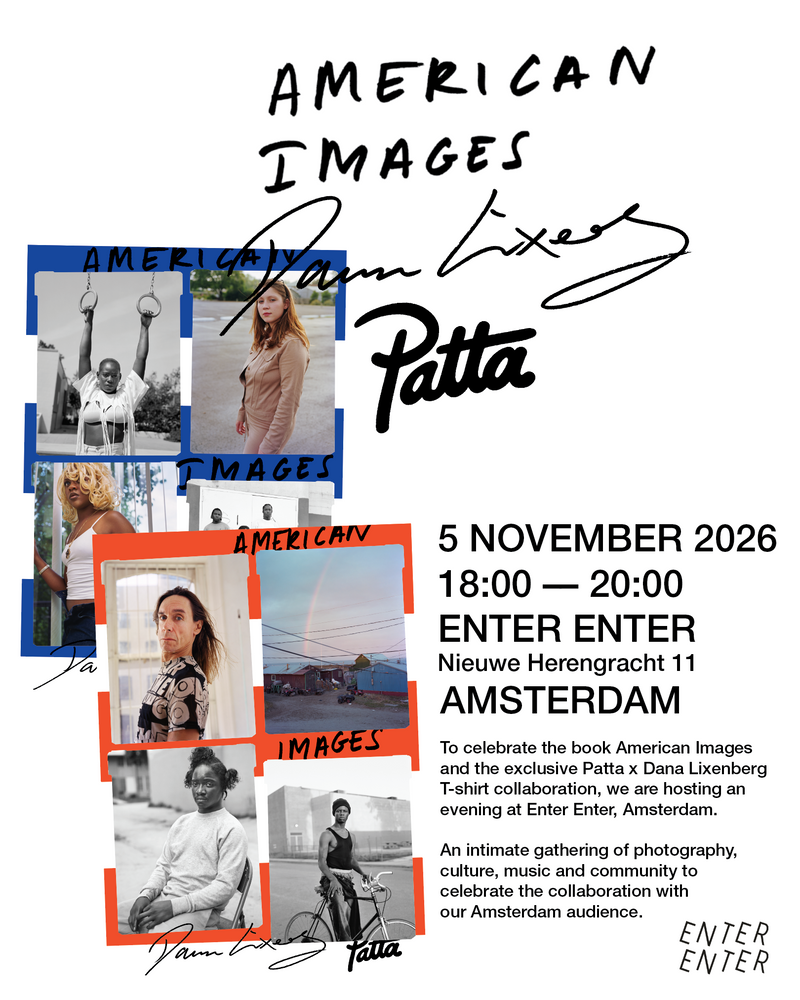
Spanning more than three decades, American Images offers the first comprehensive overview of the work of Dutch photographer Dana Lixenberg. Drawing on key series made in the United States, it presents a nuanced and deeply human portrayal of American life. Across social and geographic contexts, her work unfolds in carefully composed images that resist stereotypes and simplification.Lixenberg is known for her stripped-down approach, marked by the use of a large-format 4×5-inch view camera, whose deliberate pace demands time, stillness, and collaboration, shaping the encounter as much as the image itself. Rather than capturing moments of display or performance, her portraits emerge slowly, through attention to posture and gesture, allowing individuals to appear without affectation.Inspired by American Images, Patta and Dana Lixenberg collaborated on a limited T-shirt. The collaborative T-shirt was first presented in Paris, following the opening chapter of Dana’s international book and exhibition tour. We now bring this creative connection to Amsterdam, the city where both Patta and Dana have their roots.To celebrate the book American Images and the exclusive Patta x Dana Lixenberg T-shirt collaboration, Patta and Dana, together with publisher Roma Publications are hosting an evening at Enter Enter, Amsterdam. Bringing together photography, culture, music, and community.-
Art
-
Events
-
-

Get Familiar: Saïna
Get Familiar: Saïna
Interview by Passion DEEZ From the Studio Ghibli scores she grew up with to the club sounds she discovers behind the decks, Saïna brings different worlds into her music. The London-based singer-songwriter, DJ and producer draws on her Japanese and English roots, moving between alternative R&B, neo-soul and electronic music with vulnerability and personal discovery at the centre. Her storytelling extends into film, giving shape to the emotions and experiences she works through in her songs.On Hotel 555, the second chapter of her trilogy, Saïna explores the uncertain space between feeling broken and beginning to heal. Taking its name from a love hotel in Japan where she once staged a photoshoot, the project brings together an EP and accompanying short film to explore desire, escapism and the parts of ourselves we don’t always want to face. We caught up with Saïna to talk about her childhood soundtracks, taking control of her career, confronting her shadow and finding the thread between music and moving images. Step inside Hotel 555 and get familiar below.For anyone getting familiar with you for the first time, who is Saïna and what world are you inviting them into?I’m Saïna, a singer-songwriter and DJ. I also produce and direct videos. The themes I’ve been exploring in my songs over the past few years have been around vulnerability, resilience and transformation. For Hotel 555, part 2 of my trilogy, I delve into the world of the unconscious and the liminal space between feeling broken and beginning to heal.Growing up between Japanese and English cultures, how has that shaped your identity and the way you approach music?From a child, I was encouraged to practise piano or guitar daily. Grades never interested me, but what did was film scores and theme songs. In particular, Joe Hisaishi’s Studio Ghibli film scores moved me - the magical jazz tones and unforgettable melodies really resonated with me. Yearly trips to Japan until I was 12 fed that too, and later I discovered city pop - complex but catchy in a way that I still find mesmerising.London is so diverse - everywhere you go, you hear different sounds and genres; I’m still learning names of today. Living in such a metropolitan city, I feel free to create new blends of old and new from all around the globe.What did your time at the BRIT School teach you, and what did you have to unlearn once you began finding your own voice?Firstly, it taught me I wasn’t top of the class in music anymore. Haha, but for real, it was a challenge. Being surrounded by so much talent, many who’ve gone on to do amazing things, inspired me to become a better musician.There was nothing to “unlearn”, really, but once I’d finished school, I realised I had to be proactive and business-minded if I was to survive in the music industry. I tried a few managers, learnt a few lessons along the way, and realised that, for the time being anyway, I’m capable of managing my own career.Hotel 555 explores the space between death and rebirth. What was ending in your life when you began creating the project, and what was beginning?Out Of Sync (Part 1) is about the negative consequences of being out of sync with yourself. As doom and gloom as it sounds, it represented the ending of an old way of living, the silver lining being that I created art by “painting with my blood”.I still feel like I have these little deaths and transformations. I feel I handle pressure pretty well, but most of us experience breaking points of one kind or another - and they can be really challenging, but also an opportunity to explore something new in life.Hotel 555 sits in the space between those two phases.Why did a hotel feel like the right setting for this story?In 2024, I was introduced to the concept of ‘love hotels’ and found it very intriguing for such a quiet, modest culture. That year, I did a photoshoot with Calvin Ma at a love hotel in Japan purely to get a cheap ‘studio’. We discovered there are some interesting (to say the least) rooms around Tokyo. There was something about the anonymity and secrecy of these places that resembled escapism, desire or dreams. As the EP’s concept developed, the rooms slowly evolved into the emotional states on the path to some kind of transformation.The number 555 is often associated with transformation and change. What does it mean to you personally?Funny story, Hotel 555 was the name of the hotel we shot in. I thought it was a very mysterious name for a hotel, and it stuck with me. I’ve never been into angel numbers, but out of curiosity, I looked up the meaning of 555. And guess what? Transformation. Is that not a crazy coincidence? As soon as I decided this was to be the EP title, I started seeing the numbers everywhere - number plates, ticket machines, someone’s tattoo. I even have a whole photo album of the 555s I’ve spotted!As executive producer, how important was it for you to bring together the right team to help shape the sound and story of the EP?Each track was built block by block. For example, Desire was produced by Zuma., based in Tokyo, who sent me the production while I added the opening strings and some subtle layers as I recorded my vocals. Each producer, Matthew Sperring on Dreamscape; zuriel on Darkest Hours; Zuma. on Desire and For The Love; Jacob May on Merry Go Round, all helped me showcase a body of work that presents different sides to my Alternative Rnb sound. Collaboration is key for finding new angles on your own sound and concept. As an executive producer, I have ultimate control, but I remain open to the ideas and sounds the others bring to each song, selecting the elements to keep it cohesive.The project moves between alternative R&B, neo-soul and electronic music. Which artists, scenes or experiences helped shape its sonic language?AUDREY NUNA’s track ‘Mine’ influenced Desire - that electronic blend of Jersey Club and pop I’d been discovering through DJing. Darkest Hours pulls from Studio Ghibli’s emotional chord work and orchestral instruments, while the fourths give it a Japanese tone. These are just a couple of examples, but underneath it all, soul and Rnb have always been at the heart of my sound - from Amy Winehouse, Kali Uchis to Jhene Aiko…How does your experience as a DJ influence the way you build rhythm, atmosphere and transitions within your own records?It puts you in the listener’s shoes. You see how the room reacts, how tension builds. It’s also let me flip my own tracks into remixes, taking a song I poured my heart and soul into writing and turning it into a club-ready track for people to move to. In Darkest Hours, I wanted a sound you could picture live. Using all live drum kit sounds, I built tension through the bridge into a crescendo, where my vocals take the back seat and the production takes over. It carries me somewhere deeply heartfelt - I even found myself tearing up sometimes during the recording. There is a textural appeal to film, bouncing between different camera types, surveillance cameras, Super 8, and digital cameras. Why did you make this choice?Each look gives a different feel. Super 8 gives Dreamscape (shot in Okinawa) a distant, dreamlike quality. It explores only being able to see my lover when I close my eyes - a memory, daydream, a fantasy? Its imperfect zoom and focus suit that carefree, nostalgic feeling.Surveillance footage, TV zoom and wide lenses, all shot by Brett Bushell, add a Truman Show surrealism - the overbearing pressure from an outside world demanding more from you, again and again. The film is rooted in Jungian psychology and the idea of the “shadow.” When did you first encounter that concept, and why did it resonate with you?There’s a side to all of us that we don’t always want to look at. The parts of ourselves we repress, reject or don’t recognise as being us. In Jungian psychology, this is often referred to as our shadow.For me, it showed up most clearly in work or romantic relationships that weren’t right for me: a quick temper; a condescending edge. I would sometimes find myself acting out behaviours I used to see in my mum growing up, behaviours I was critical of. So why, when I was older, was I repeating this? I would ask myself. We absorb our environments and inherit behaviours and attitudes. It’s not until you accept you are sometimes behaving in ways you don’t like in others that you can correct those behaviours - or at least soften them. That’s where the shadow becomes important. It isn’t simply the “bad” part of ourselves; it’s the part we haven’t fully acknowledged or taken responsibility for. Sometimes what we most want to reject is what's asking to be understood. In Darkest Hours, I face mine directly. She’s a part of me I can’t simply erase, because if I were to do so completely, I would probably risk becoming somebody I don’t even recognise. What princess in Disney doesn’t have an imperfect companion to help her survive?What parts of yourself did you have to confront while making Hotel 555?Darkest Hours was the rawest of the tracks - confronting what triggers those unconscious, often destructive, habits. Merry Go Round went through many rewrites, partially because I didn’t want it to just complain about the 9-5 grind that made me unhappy at the time. This was my realisation that I was ready to make the jump and dive into the freelance world to do what I love most. Desire is about honesty with your own feelings, even when they're just lust, even when it's not someone you'd choose long-term. Every track carries that same bittersweet honesty.The film touches on performative glamour; how has that affected your relationships with people around you and your perception of yourself?For The Love is about those “friends” who only show up at certain parties, the smiles that only appear when you’re associated with certain people. I've been part of that illusion myself - trying to connect with people I didn't really understand or vibe with, and feeling out of place where I didn’t quite belong. This track is where I let it all go: where passion must come first.You co-directed the film and shot it entirely in Tokyo, while being based in London. What does each city represent within your creative world?That’s right. The short film plans were 90% built remotely with Calvin Ma and Brett Bushell - script, shot list, scheduling.London is home, for sure, but Japan, especially Yokohama and Tokyo, carries a childhood nostalgia. Going back tests my language and pulls me into a completely different rhythm. It’s almost an interesting social experiment when you put yourself in different environments. Stepping outside what you know is where creativity sparks. How did you translate the music into rooms, characters and visual symbols without simply illustrating the lyrics?Each track had its own visual image: Desire - hotel room; Dreamscape - Okinawa; Darkest Hours - a shadow; Merry Go Round - the metro; For The Love - a party. The challenge was to find a narrative thread between them. I was looking to create a stylised space that was slightly surreal, a little trippy, like in some of Gaspar Noé’s movies.Were there any scenes or ideas in the film that changed meaning once you saw them on screen?Saïna’s character in the bar scene shifted how I saw the characters. She's awkward at a cool party, sits alone with a cigarette, confined to her own thoughts. Naïve and vulnerable, she wonders if the room likes her, rather than whether she likes the room. They’re simply not her people!In contrast, her shadow fits right in with the crowd with her enticing, effortless charm. I intended Saïna to be exactly me but, after stepping back from planning and shooting, I realise I can be somewhere between the two. I suppose one of the things I like about acting in my own films - that freedom to drift between different versions of yourself and your character.Now that you have stepped out of the hotel and into the light, where does Saïna go next?I’m already plotting what’s next, but the general theme for Part 3 will be rebirth. Like a game or sequel, there’ll be easter eggs that stitch all 3 short films together. The first was screened on a projector in a small bar, the second in a small cinema, and I know I’ll be going even bigger for round 3. Already itching with excitement!Through Hotel 555, Saïna turns a close look at her own habits, relationships and desires into a story that reaches across music and film. That honesty extends to how she approaches her career, choosing where to put her energy and who to bring into her creative world. With the final chapter of her trilogy set to explore rebirth, she is already imagining how to take that story further. Follow Saïna for more on Hotel 555 and what comes next.-
Get Familiar
-
-

Get Familiar: HUNNA
Get Familiar: HUNNA
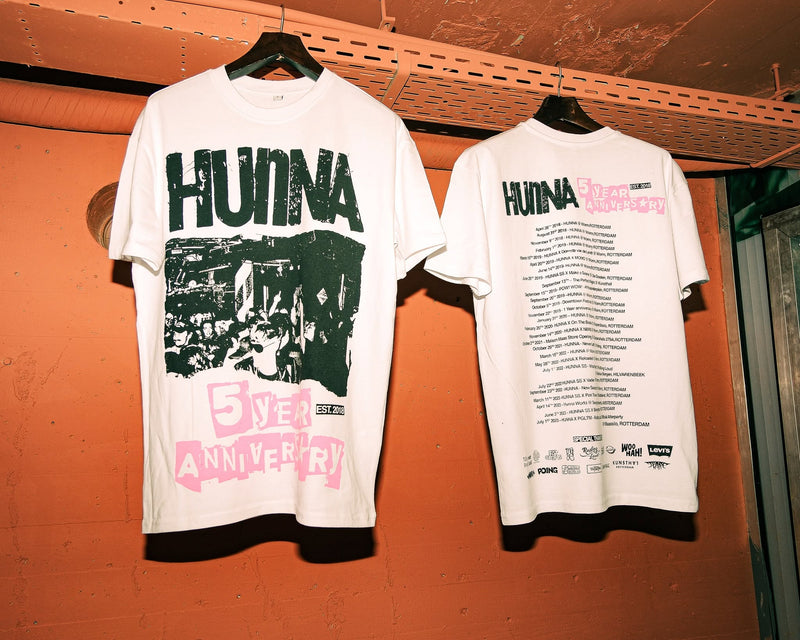
Words by Passion DEEZ If the music you want to hear isn’t getting played, throw the party yourself! That was the starting point for HUNNA, the Rotterdam platform that has been making room for underground hip-hop and trap since 2018. What began with friends putting together an idea in a bedroom has grown into a collective, a soundsystem and a community with an ear for what comes next. Along the way, they’ve hosted early shows for local artists, released their own edits and taken on a sold-out Rolling Loud afterparty.With another Amsterdam Dance Event edition approaching, HUNNA are connecting with Los Angeles collective Trap Rave while continuing to give opportunities to people from their own dancefloor. We caught up with Lewis and Nadim to talk about Rotterdam, hearing your favourite tracks through big speakers and what it takes to keep an independent party going. Get familiar below.For those getting familiar, who is behind HUNNA, and what brought you together?Lewis: I’m the founder of HUNNA. I started HUNNA in 2018 together with two friends, Boris and Nahom. At the time, it was simply a club night where we wanted to create space for a specific side of hip-hop that we loved but couldn’t really experience anywhere else in the city. We wanted to bring a new sound to Rotterdam and create a place for music and artists that we felt weren’t being heard enough.Nadim, Zeus and Guap became part of HUNNA pretty early on. They were the first DJs I reached out to because I felt like they shared the same taste, energy and interests we had with HUNNA. Selim, another DJ from Rotterdam, was also part of the team in those early days shoutout to him as well, haha. Mas came in on the visual side as our graphic designer, his work became a huge part of HUNNA’s identity. Everyone had their own strengths and interests and I wanted to create more space to explore those and develop ourselves through HUNNA as well. It became less about everyone just having one specific role and more about giving everyone the opportunity to grow into different sides of what we were building together. Around 2023, that really started to take shape and we began moving much more as a collective, with everyone bringing their own ideas, skills and perspective to HUNNA. I think that’s really what HUNNA has grown into not just a group of DJs or people putting on parties, but a collective where everyone brings something different to the table. That’s still how we operate today.Nadim: The team changed along the way. The other two co-founders eventually went on to do other things, and over time I became more involved in running HUNNA alongside Lewis. Today, Lewis and I are probably the main driving forces when it comes to keeping things moving day to day, while everyone in the wider team contributes from their own role and expertise. There’s a lot we work on together.What brought us together was that underground hip-hop and trap sound. We were enjoying it ourselves and thought it deserved a platform in Rotterdam.Lewis: It’s always been about spotting new things: new sounds, new artists and new DJs. We’re always looking for something fresh.Take us back to that first party. What was missing in Rotterdam’s nightlife?Lewis: Boris and I were really into a trap at the time. We went to a lot of parties together, but we rarely heard the music we actually loved being played. At some point we just thought: if nobody’s really doing it, why don’t we throw the kind of party we would want to go to ourselves?Around that time, we got an opportunity at WORM to help with some of their events. After working with them for a while, they asked if we’d be interested in creating something of our own. That gave us the opportunity to turn the idea into something real. I remember going over to Mas’ place, we basically sat in his bedroom putting the whole thing together the idea, the feeling, what we wanted it to look like. That’s really where the first version of HUNNA started taking shape.It came from something very simple: we felt like a certain sound and energy were missing in Rotterdam, so instead of waiting for someone else to create that space, we decided to create it ourselves.Nadim: There had been a lot of hip-hop parties in Rotterdam, but some had died down. Then this new wave of hip-hop came up, and we felt it wasn’t getting the attention it deserved.Lewis: A lot of the other parties focused on the mainstream hip-hop sound. We wanted to play things you weren’t hearing at club nights that much.Where does the name HUNNA come from?Lewis: We were already listening to artists like Chief Keef and that whole Chicago drill era before HUNNA started. For us, that period represented a shift in hip-hop a raw energy and sound that felt completely different from what we were hearing at most parties in Rotterdam.That energy was a big part of what we wanted to showcase with HUNNA. Not just Chicago drill, but that whole new generation of hip-hop. So when we started thinking about a name, it naturally came from that world. You would hear “three hunna” around Chief Keef and that era, eventually we landed on HUNNA. Over time, the name took on a meaning of its own for us too: staying true to your taste and what you believe in.Nadim: There’s also the slang term in the Netherlands, responding to someone with “honderd” to say you understand. That was part of the idea too.You describe HUNNA as a new generation of sound. What does that sound like today?Lewis: The sound of HUNNA keeps moving. Right now, there’s an interesting crossover happening between trap and electronic music, and that’s where we’re at today. At the same time, we’re opening up the sound more and creating something that connects with a wider crowd.Nadim: Trap is still a big part of hip-hop. A lot of the newer artists have that punkish, rockstar energy. The guys we’re working with, Trap Rave, do afterparties in LA for artists coming out of that world.We’re also trying to make the party accessible to people who just want to dance. We combine the more iconic hip-hop sounds with newer music and a more eclectic approach. We want people to enjoy themselves and dance while still hearing that new generation of hip-hop.You’ve given early opportunities to artists such as ADF Samski and Elijah Waters. What makes you want to book someone before they have a wider audience?Lewis: We look for artists who stay true to what they believe in, have their own sound. It’s not always about how big someone is, but about the potential, authenticity and energy we see in them. Nadim: It’s also about being in touch with what’s new and what we enjoy. Both of those artists are from Rotterdam. When we see that potential, it motivates us to give someone a platform where they might have one of their first shows. Samski’s first real live show in Rotterdam was at HUNNA.Lewis: And we have that same approach with DJs.Nadim: We want to give people opportunities early. A lot of it comes from being connected to the people around us and hearing what they’re doing.Are there any performances from those early years that really stick with you?Nadim: The ADF Samski show was iconic. He was just coming up and he arrived with no DJ and no USB stick. Me and Guap, one of the guys from our team, ended up playing his set through an aux cord. The songs were in his Notes app, so we connected his phone to the decks and played it like that.The event went really well. We were so locked in and having so much fun that it felt like this was going to last for years.Lewis: That was our one-year anniversary too. It was a really fun night, our good friend Bao G joined us as a guest DJ, which made it even more special.You’ve also released an edit pack. What made you want to put music out together?Lewis: We’re always trying to expand what we do with HUNNA. We all do things with music outside HUNNA, we wanted to bring that into HUNNA and release something together. We wanted to show people that we could make music from our own perspective.Nadim: What we enjoy about a good edit is taking a song you wouldn’t usually play as a DJ, whether that’s because of the BPM or the way it sounds, and making it work for you. We took three songs and made them more suitable for our sets.Alongside being a party, we’re a DJ collective and a soundsystem. We use those edits ourselves. They’re our perspective on club music.Who makes up HUNNA Soundsystem, and how does it work?Lewis: We started with Nadim, Luca, Guap and me on the mic. It’s changed a little since then. Right now, it’s mostly Nadim and me, but we switch things around with DJs who share the same ideas. Qu!nna, a DJ and really good friend of ours, also steps in a lot and has become a familiar part of the Soundsystem.Nadim: We have people on the bench! We reach out to different people when gigs come in. Sometimes we invite a DJ who knows and loves trap but doesn’t usually get to play it. That gives them the opportunity to play a trap set with us.It also lets us make the soundsystem fit the gig we’re doing. It’s an open team, but the core is Lewis and me.The Rolling Loud afterparty was a big moment for HUNNA. How did that come together?Lewis: When I heard Rolling Loud was coming to Rotterdam, I started thinking about how HUNNA could be part of it. We came up with the idea of hosting an official afterparty and wanted to collaborate with an organisation that shared the same energy and connection to the culture. We had always liked what Pretty Girls Like Trap Music were doing, so joining forces with them felt like a natural fit. At the same time, me and Nahom were responsible for the DJ programming for the festival itself. It was a big moment for us being involved both in the festival and through HUNNA with the official afterparty. It took a lot from the whole team to pull everything together, but it was a really special opportunity.Nadim: If you’re from Rotterdam and organise events, having a party at Maassilo is a bucket-list thing. Selling it out was huge for us. It was our biggest event yet.What did taking on a production of that size teach you?Nadim: We went from events of around 500 people to 3,000 at Maassilo. We’d never run a production that big, and we still did it independently. Rolling Loud supported us with promotion, but we didn’t receive money from them to organise the party. The financial risk was on us and Pretty Girls Like Trap Music.We were confident enough to go for it, and we learned so much about promoting and producing an event at that scale, dealing with different artists, live performances and DJs.It was also a catalyst for exploring other sounds that still connect to hip-hop. We had a second area with a more eclectic sound, including Jarreau Vandal and FS Green, and that worked really well. We kept doing that whenever there was room for it. We still use what we learned from that event today.You’ve worked with brands, venues and other collectives. Which collaborations have meant the most to you?Lewis: Last year we worked with New Balance and JD, which was our first own activation with a big brand, so I’m really proud of that one. We also work a lot with The O, another collective from Rotterdam. Those collaborations are always really dope because there’s a natural connection between us. And now working with Trap Rave from LA is exciting because it connects HUNNA to a whole new world outside of Rotterdam.Nadim: Trap Rave feels like a mirror image of HUNNA, but from LA. Working together feels natural.We’re also proud of Royal Rumble, our yearly King’s Night party with other partners. Last year we did it at Annabel for the first time. It wasn’t sold out, but it did really well, and we were proud of the lineup.Lewis: Royal Rumble feels like an extension of what we’re doing with HUNNA. We created it together with Sense and Feeble, bringing our different worlds together to build something that represents the wider hip-hop community.What is the hardest part of keeping an independent party going that people on the dancefloor don’t see?Lewis: You really have to push yourself because you’re doing it yourself. Sometimes you don’t immediately see what comes out of it and financially there isn’t always much there. You have to do it from a place of passion. The love of the music keeps me going, but also seeing what we’ve built over the years and the moments/memories we’ve created. It’s basically that same drive I have for my own music: that need to create, build something I believe in and keep pushing it forward.Nadim: This isn’t something we make a lot of money from. Every now and then we get a little bag, but it’s always been about having a creative outlet and giving people something we would want to enjoy ourselves.We’ve noticed that underground hip-hop and trap have become more of a niche again, especially in how many people are willing to come to events and concerts. We’ve had tougher times, but we kept our heads up. Staying focused on that sound is also what put us in a position to do the Rolling Loud afterparty. It made sense because we’d already been doing the work.Last year’s ADE party sold out. What stood out about that edition?Nadim: We did it with Global Warning, and it was so much fun. I think the people who came really got what they came for. It was a proper trap party, and we still sold it out. We also brought in some of that wider club sound to connect with the Amsterdam Dance Event setting.It’s one of the collaborations we’re really proud of. Shots Fired was behind Global Warning, and he’s one of our good friends and partners. He really pushes the newer trap sound, so it makes sense to bring him back for this year’s lineup too.This year you’re linking with Trap Rave. What do you want the lineup to say about HUNNA now?Lewis: We’ve brought everything we stand for into it. There are upcoming DJs, people from Trap Rave and names people already know.Nadim: A lot of the lineup comes from the collectives themselves, with HUNNA Soundsystem and Clover and Sakura from Trap Rave.We also wanted to give someone who has been coming to our parties for years her first ADE booking. She knows what we stand for and understands the music we’re trying to share with our audience. We have a lot of faith in her talent.Lewis: She also started her own party, Get Out, in Utrecht, where we’ve played before. It makes sense to give that opportunity back to her too.Nadim: Then there’s DJ iPad Kid 2001. He’s a serious DJ, but he brings a sense of humour to his sets with sound bites and other funny moments, while still having great song selection. We really enjoy that, and he’s part of our community as well. There’s also a special guest still to be confirmed.You’re also doing a pre-party before the club night. What can people expect?Nadim: We’re working with a fragrance store on a Wednesday pre-party. People can come and hang out, grab a drink and vibe with us before we go into the night programme.Lewis: It’s free. You can just pull up.Nadim: If it’s full, you might have to wait outside, but everyone is welcome to come by.Looking beyond ADE, where do you want to take HUNNA?Lewis: We’d love to explore more international collaborations and see what can grow from connecting HUNNA with different scenes outside of Rotterdam. At the same time, the core stays the same: giving the new generation a platform to express themselves through their own sounds and ideas.Nadim: We want to expand the ways we can offer that platform. We’re building our social media into somewhere we can share music, talk about artists and interact with our audience more, alongside promoting events.We’re also interested in community events, DJ lessons and marketplaces where upcoming Rotterdam brands and people we support can show their work. We’re figuring out how to keep giving space to the music, DJs and artists we really fuck with as clubbing changes.Lewis: We’re interested in working with cultural spaces where we can connect music with film, storytelling and other creative disciplines.Nadim: We want to broaden our hip-hop horizons. That could mean curating films or creating nights where people can enjoy different kinds of art and music. We want to build more of a communal hub in Rotterdam. We care a lot about the city and think it has so much more to offer than people sometimes realise.Lewis: Basically, expand the HUNNA world!For someone coming to their first HUNNA night this ADE, what do you want them to leave having experienced?Lewis: Hopefully people leave HUNNA having discovered something new an artist, a DJ, a sound or even a community they didn’t know before. We want people to feel connected to what’s happening and feel like they’re part of it, rather than just watching from the outside. That sense of discovery and belonging is a big part of what HUNNA is about.Nadim: If you already love hip-hop and trap, I want you to leave thinking, “I always listen to that song, but I’ve never heard it in the club.” That’s why I started DJing. I wanted to play music I really enjoyed, that I never heard in clubs, and blast it over some big-ass speakers.If you listen to trap, expect a lot of your playlist to get played at HUNNA. I hope you leave satisfied, having heard the songs you wanted to hear.From a bedroom idea to an international link-up, HUNNA are still following the same instinct: give the music they love somewhere to live and bring their people with them. Catch them during Amsterdam Dance Event as they connect with Trap Rave for another night of new discoveries and familiar tracks through big speakers. Keep an eye on HUNNA’s channels for the full event details.-
Get Familiar
-
-

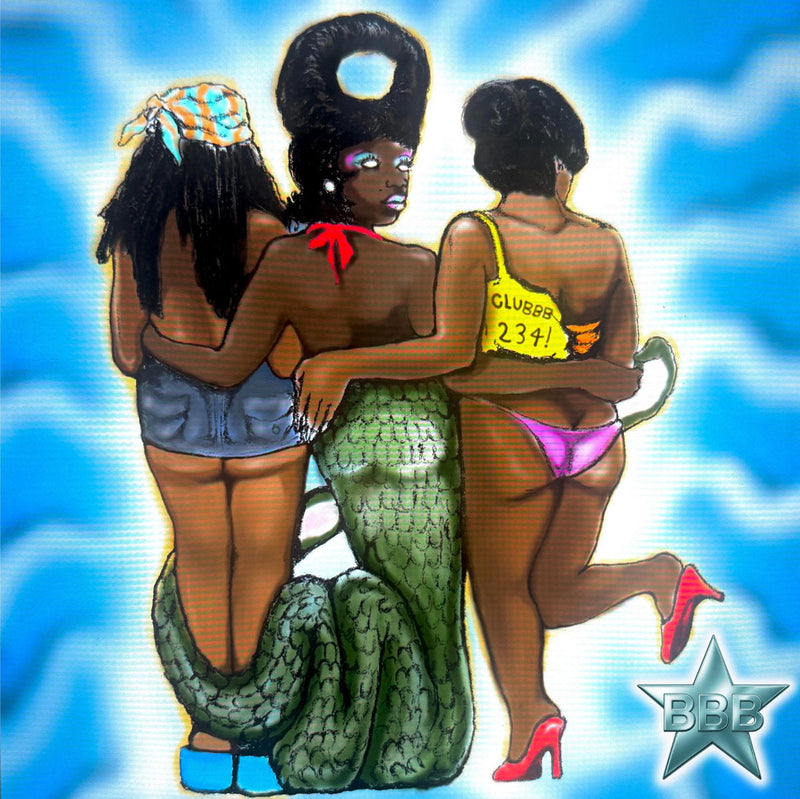
CLUBBB 234! - BBBwithluv
BBBwithluv presents the official music video for “CLUBBB 234!”Stepping further into her own world, BBBwithluv shares the visuals for “CLUBBB 234!”, a new release produced by GØD and written by Malaika.Watch the official music video for BBBwithluv – “CLUBBB 234!” now.-
Music
-