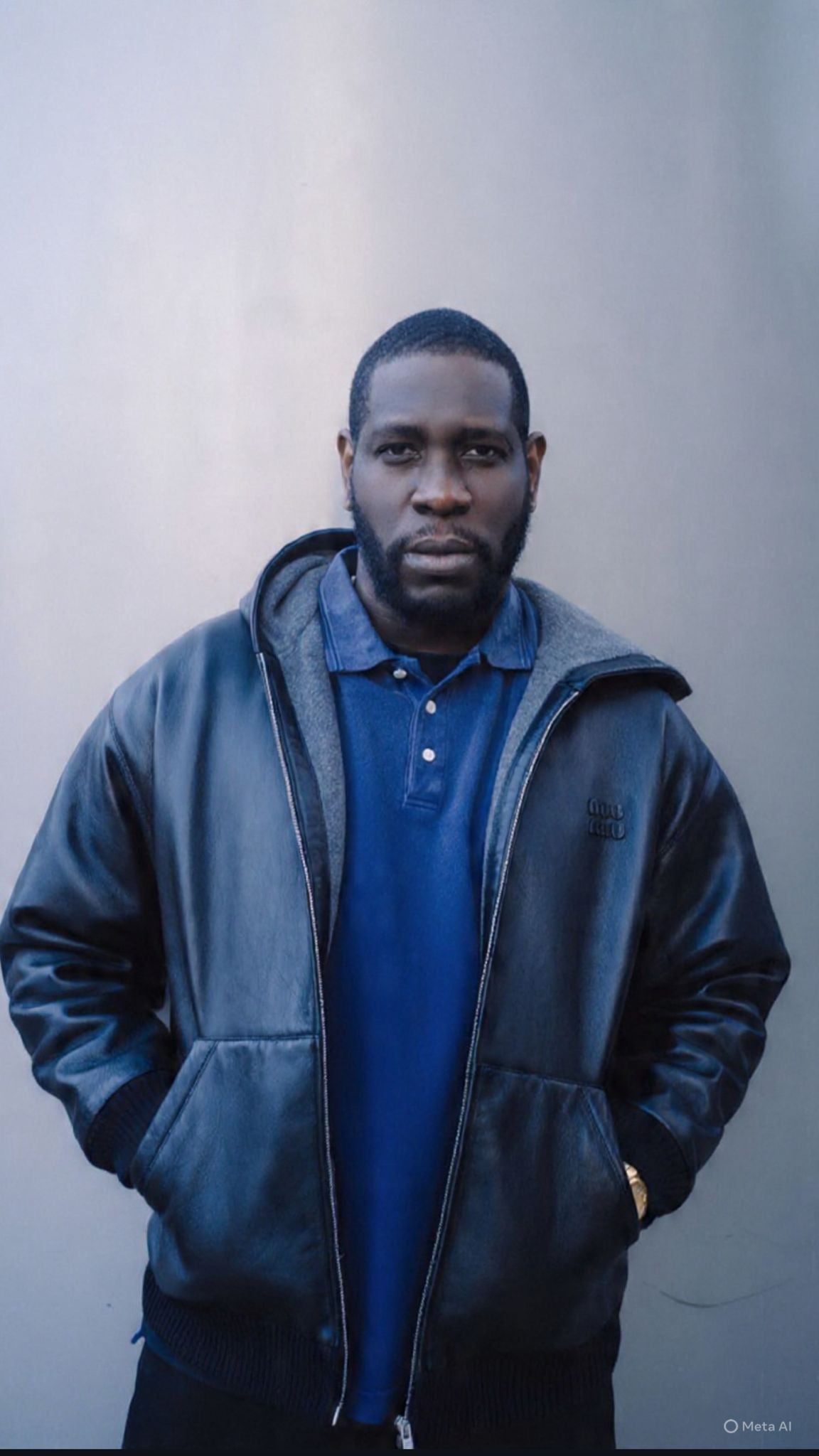

Patta x Wax Poetics Cover Story with Easy Otabor
-
magazine
-
Music
-
magazine
-
Music

Words: David Kane, originally published in Patta Magazine Volume 6
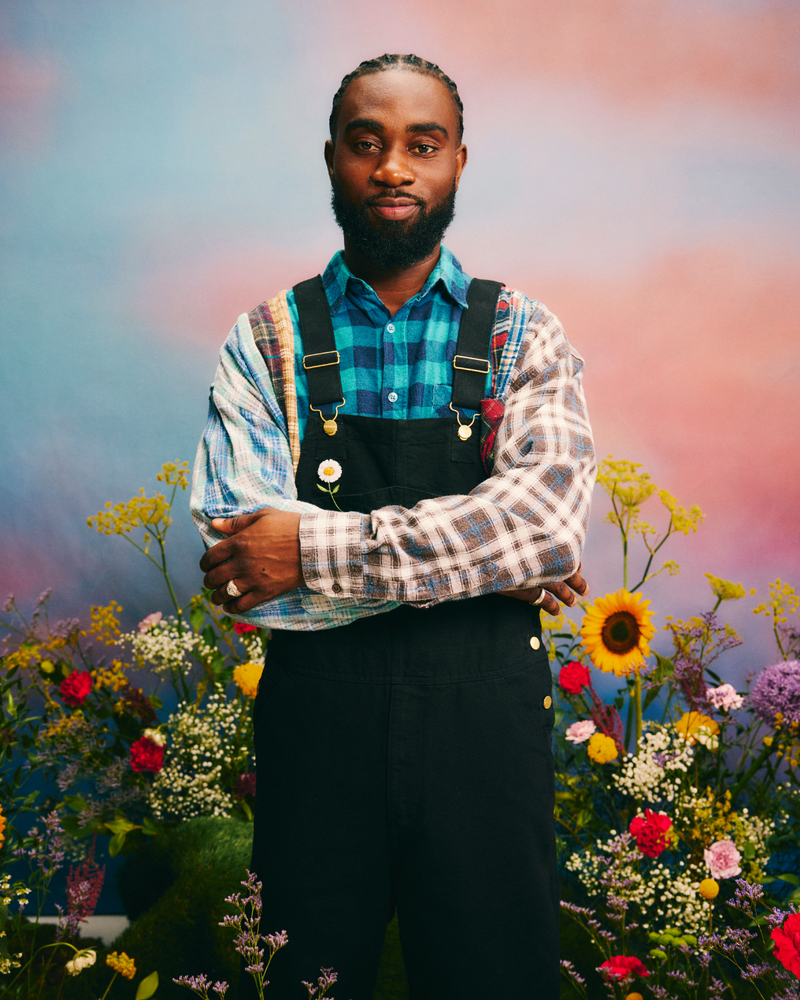
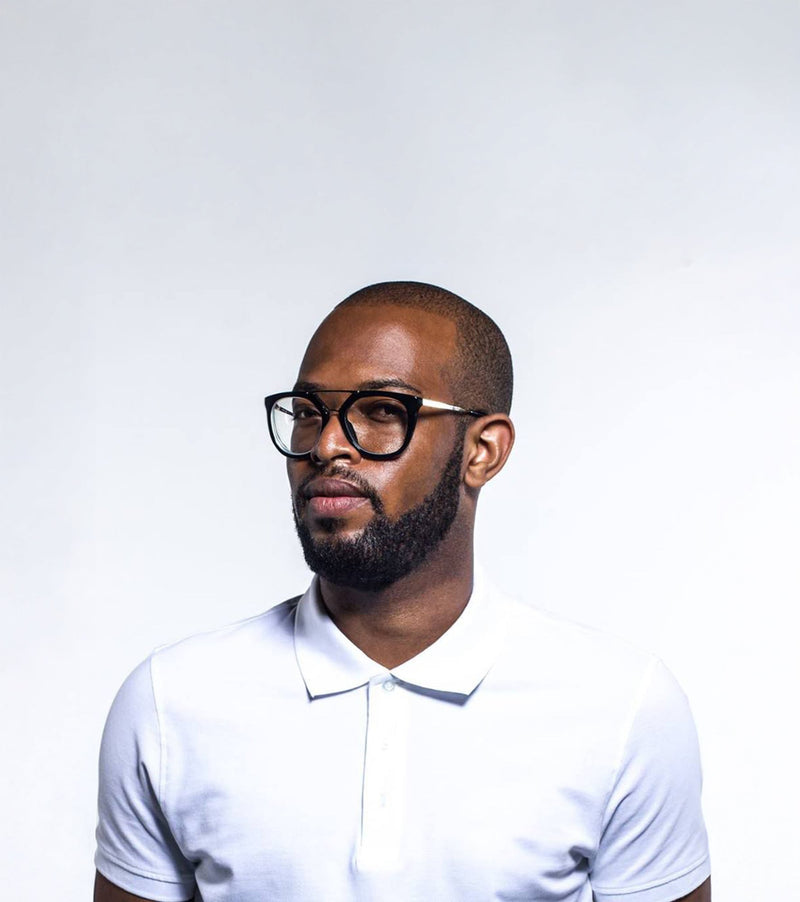
Isimeme “Easy” Otabor selects Nas’ timeless classic as his ‘cover story’, a long-running collaborative column between Wax Poetics and Patta. Illmatic is a fitting first in the series to feature in Patta Magazine.

At this point, there’s little we can say about Nas’ Illmatic that hasn’t already been said. Nasir bin Olu Dara Jones aka Nasty Nas, aka Escobar, was aged just 20 when he released his musical masterpiece to an unsuspecting world with a little help from his producer friends — DJ Premier, L.E.S., Pete Rock, Q-Tip, and Large Professor (who must be kicking himself for turning down the opportunity to executive produce the record) — which has gone on to transform hip-hop, modern music and the wider pop culture canon.
Yet despite more than 30 years of lore-building, there are still some lesser-known aspects of the album and the greater cultural fabric it is woven into — and the millions of people's stories it continues to soundtrack.
Otabor is a Chicago-born curator and gallerist whose work bridges contemporary art, fashion, and community-forward programming. “Born and raised in Hazel Crest in the south suburbs. My parents are both from Nigeria — first generation — they came here in their early twenties and tried their best to make a way for us. I started in sneakers, working at all the sneaker stores as soon as I could get a work permit.
“I went to school for fashion, worked at RSVP Gallery with Don C and Virgil (Abloh), and learned by doing whatever needed to be done. That led to (the clothing brand) Infinite Archives and then Anthony Gallery, named after my dad,” he explains over a call from Florida. He’s often on the move, listing off Amsterdam (where he recently launched the second Anthony Gallery), Berlin, London, and Tokyo as recent destinations.
Something of a Japanophile, Easy’s initial touchpoints into art came through anime like Akira, Fist of the North Star, and then Takashi Murakami, thanks to his work on the cover art for fellow Chicagoan Kanye West’s Graduation album. Easy credits his brother Ade for his omnivorous approach to culture.
“He introduced me to Illmatic — really, all the music I know came through him. I was lucky to have a brother who knew what was happening, who was open to different sounds and always tuned into what was next.”
The Illmatic cover operates as a kind of cultural Rorschach — the same image, endlessly reinterpreted. For some, it’s a portrait of lost innocence; for others, a map of inevitability, where place and identity are already fused. What you see says as much about you as it does about Nas.
“Honestly, whenever I think of Illmatic, I think of that cover first. There’s a quote I can’t fully remember, but it’s about true genius being found in simplicity. You see where Nas grew up, merged with a childhood photo, those piercing eyes — but also this sense of knowing what he was about to do. Even the background, driving through his neighborhood, all comes together. It’s a perfect blend. You feel like you see yourself in it. No matter where you’re from, you can relate to that feeling of reflecting on your past while being ready for the future, and the present.”
The 30th anniversary of Illmatic in 2024 coincided with a global tour, a 7” boxset release, and the publication of a cluster of new and archived content celebrating the record, including a musty interview recording with Nas’ father. In one video, Olu Dara, a successful jazz musician in his own right, recalled the moment the photo was taken. It was when he returned to the States after a long tour in Europe, found Nas and his brother in Queensbridge, who both excitedly ran towards him. Olu said he saw it in Nas’s eye — “his mind was saying, wow, what a world.”
In addition to Olu — who in the same recording mentions a “man with a camera” rather than explicitly claiming to have taken the photo himself, as is popular belief — the artwork was part of a cross-generational collaboration that included photographer Danny Clinch, with art direction by Jo DiDonato, and design by Aimée Macauley — the latter two, employees of Columbia Records. Clinch photographed Nas and his crew in Queensbridge, the largest housing project in the US. Six images appeared across the original vinyl and CD releases.
According to Large Professor, speaking to DJ Vlad, the portrait of Nas, in which his hand obscures his face — complete with a small rip — was always meant to be the cover. The tear was accidental. “He had it under a piece of glass, and I guess when he went to grab it, the glass must’ve stuck right there, so that’s the rip right there.” It stayed because it felt right.
Illmatic is widely considered to be the first of many hip-hop album covers to feature a child — from Biggie through to Lil Wayne, and Kendrick Lamar. Ghostface would later infamously call out rappers (supposedly Big) for biting the cover art during a skit on Raekwon’s Only Built 4 Cuban Link. Though Nas later dismissed the critique — but it’s not the first outside the genre.

When I send Easy a Discogs link to A Child Is Born (1972) by The Howard Hanger Trio, he chuckles at the artwork. “If I had to guess,” he says, “it’s probably a record his dad had in his collection.” The resemblance to Illmatic is uncanny: a child’s face, roughly the same age, gazing directly at the viewer, superimposed over a crumbling city street. Musically, it’s a deep, almost spiritual modal jazz record, featuring eerie interpretations of Simon and Garfunkel’s Scarborough Fair, and Eleanor Rigby, by The Beatles.
When it surfaces, A Child Is Born now sells for three figures, likely inflated by its accidental proximity to one of hip-hop’s most revered LPs. The trio released just three albums between 1970 and 1977 before quietly disappearing. Howard Hanger himself came from a lineage of principled Methodist ministers; a family history marked by civil rights activism, anti–Vietnam War protest, and the defence of same-sex unions.
No official link has ever been acknowledged between the two covers. Which only reinforces the point: the difference isn’t what you take — it’s whether you make it yours.
The red thread here might just be family. As Easy explains, “My older brother changed my life. I probably wouldn’t be where I am without him. Even recently, with a Jordan release, I made sure it landed on his birthday.” Easy’s referring to the 2025 release of the Infinite Archives x Air Jordan 17 Low, inspired by the OG model by Wilson Smith, the first Black sneaker designer for the Jordan brand.
Long before culture was flattened into clicks and stories, Easy Otabor was dedicating himself to moments — overlooked and era-defining — that once felt abundant and now feel increasingly rare. As for Illmatic today?
“I go back to it all the time. There are just so many records on there — ‘Life’s a Bitch’, ‘The World Is Yours’, ‘Halftime’, ‘It Ain’t Hard to Tell’. The whole album stays in rotation. So when the question came up about album covers and what they mean, it was a no-brainer.
“It’s as timeless as the record itself. It taught me not to overdo it — that less really can be more, and sometimes more powerful than anything complicated. Every time I look at it, everything stands still for a moment.”
Related Articles
-
Interview by Liesje Verhave | Photography by Nick HeldermanFor most people, a debut novel would be enough of a creative milestone. For Xillan Macrooy, it became one part of a much larger transformation. Over the past year, the Surinamese-born multidisciplinary artist has expanded beyond the role of musician with an ambitious three-part project spanning literature, theatre and music. Beginning with a debut novel recently nominated for the Hebban Debuutprijs, continuing through an award-nominated theatre production and culminating in an upcoming album, the work traces a deeply personal journey through queerness, memory, identity and self-invention.Xillan Macrooy doesn't see these projects as separate disciplines. They're different manifestations of the same impulse: storytelling. Long before studying music at conservatory level, before performing on stages across the Netherlands, and before writing songs from a queer perspective, he was a child drawing pictures inspired by books and inventing stories to accompany them. Somewhere along the way, music became the dominant medium. The last few years have been about remembering that it never had to be the only one.At the centre of this creative expansion sits a question that has followed him throughout his life: what becomes possible when you allow yourself to be more than one thing? We caught up with Xillan to discuss storytelling, Suriname, language, queer representation, artistic transformation and why his latest body of work is ultimately about learning to let go.You recently published your debut novel, Mensen als zonnen en mensen als manen, but writing seems to have been part of your creative life long before that. When did you realise you wanted to be a storyteller rather than simply a musician?Music has been my main focus since I was a teenager. I moved to the Netherlands to study at the conservatory, and over time, music became such a central part of my identity that I almost forgot how I worked as a child. When I was younger, I moved naturally between different forms of creativity. If I read a book, I would draw something inspired by it. If I painted something, there was usually a story attached to it. I wasn't separating disciplines in the way we often do as adults. Everything was connected.At some point, I realised there was something that still felt incomplete. I love music and I always will, but when I started asking myself why I make songs in the first place, the answer wasn't that I wanted to sing. It wasn't even that I wanted to make records. The answer was that I wanted to tell stories.Once I started saying that out loud, things began to happen. People started responding to that idea. The publisher who eventually released my novel heard me talk about storytelling during a podcast and asked if I'd ever considered writing a book. It was a question I'd secretly wanted someone to ask my entire life.Writing a novel always felt like one of those dreams reserved for a very small group of people. It seemed distant. Unrealistic. But by that point I was already beginning to accept that I didn't want to be limited to a single artistic identity. I wanted to experiment. I wanted to move between worlds. I wanted to be a shape shifter.The novel began as a memoir before becoming fiction. Why did that change?Initially, I thought I was writing a coming-of-age memoir. I spent months creating timelines and mapping significant moments from my life. But the deeper I went into that process, the more I realised it was triggering things I wasn't ready to relive exactly as they happened. What I discovered was that I needed control. As a child and teenager, there were many moments where I felt powerless. Through fiction, I could become the director for once. I could decide what happened. I could alter reality without abandoning it entirely. The book became an alternate version of my life rather than a direct recreation of it.I'm very inspired by Afro-surrealism and shows like Atlanta, where the world appears familiar but something is slightly different. The rules are bent rather than completely broken. That's how I approached the novel. It's not only a story about what happened. It's also a story about what could have happened. About the versions of myself I might have become, the versions I never became, and the versions I'm still trying to become.That's why I didn't give the main character my own name. I wanted readers to understand that this was connected to my life without pretending it was a documentary. It's an alternate reality. And in some ways, that's closer to how memory works anyway. Two people can experience the exact same event and carry entirely different stories about it for the rest of their lives.Queerness sits at the heart of the novel. Why was it important to make that impossible to ignore?When I started writing, I was thinking about the stories I needed as a child growing up in Suriname. For a long time, I believed those stories didn't exist. I thought there were no books written from an openly queer Surinamese perspective. Later, while researching both the novel and my theatre work, I discovered that wasn't entirely true. There are writers who came before me. There is a queer legacy. There are people whose shoulders I can stand on. Finding that legacy made me happy, but it also made me angry.Because if those stories existed, why didn't I know about them? How different would my life have been if I'd encountered them earlier? How much confusion, loneliness and shame could have been avoided? That realisation gave me courage.I didn't want readers to wonder whether the story was queer. I didn't want the central relationships to be interpreted as friendships or hidden beneath layers of implication. The queerness is the heart of the book. It's not a subplot. I felt a responsibility to make that visible in a way I didn't always encounter growing up.The novel centres around twins. Why was that dynamic so important?Partly because I'm a twin myself. But more importantly, twins allowed me to explore the idea that there is no single way to experience queerness. We often focus on outcomes. We celebrate the moment someone comes out, finds love, becomes successful or arrives at some version of themselves. But the journey there is rarely straightforward. There is no blueprint for growing up queer in Suriname. There isn't really a blueprint for growing up queer anywhere. The twins allowed me to explore different responses to the same circumstances. Different ways of processing trauma. Different ways of finding joy. Different ways of surviving. I hope readers recognise themselves in both characters. Not because they're identical, but because they're not. That's the point. There isn't one correct way to be queer. There isn't one correct way to heal. There isn't one correct way to live a meaningful life. I think that's a lesson we still struggle with as societies. We want things to fit neatly into categories. We want a single version of the truth. But there are always multiple truths existing at the same time.Language plays a huge role in the novel. Why was it important to include Dutch, Sranan Tongo and Surinamese Dutch?That was one of the first conversations I had with my publisher. I said that if I'm writing a story about a boy growing up in Suriname, then the book needs to sound like Suriname. I wasn't interested in simplifying that experience for a Dutch audience. When I was growing up, I read books from all over the world and often had to work to understand them. Sometimes I didn't know the references. Sometimes I didn't know the words. But I still entered those worlds. I wanted readers here to experience something similar.What I love about Suriname is the fluidity of language. People move between languages constantly. Within a single sentence, someone might switch from Dutch to Sranan Tongo and back again depending on what they're trying to express.Language isn't just communication. It's culture. It's history. It's rhythm. In Suriname, multilingualism feels natural. It's alive. I wanted to celebrate that. I was also inspired by writers like Edgar Cairo, who challenged traditional ideas about how Dutch should be written and whose work embraced the reality of how people actually speak. That gave me permission to do the same.You describe language almost like music.Because for me, it is. The writing process felt surprisingly musical. I realised very quickly that language has melody. It has rhythm. It has tempo. A lot of the time, I knew a sentence was right because I could hear it. I wasn't analysing grammar or structure in those moments. I was listening. The same instincts I use when writing songs became part of the writing process. I would hear the cadence of a conversation, the flow of dialogue, the rhythm of a scene. In that sense, writing the novel didn't feel like leaving music behind at all. It felt like discovering another version of it.The novel, theatre production and upcoming album all form part of a larger three-part project. What have you learned from working across different mediums?The biggest lesson was realising how much I could trust my writing. Whether I'm writing a song, a play or a novel, storytelling remains the foundation. What changes is the medium. Theatre taught me about presence. About using the body as an instrument. About creating a moment that only exists for the people in the room that night. The novel taught me patience and depth. It gave me the space to explore things I didn't yet have the courage to write about in songs. And the album became something different because of both experiences.What's been fascinating is seeing how each project keeps influencing the others. The book inspired songs. The theatre production changed how I think about performance and even got nominated for the BNG Theaterprijs. Certain scenes in the novel gave me access to emotions I hadn't been able to reach musically before. The projects have been in constant conversation with one another.You've described this entire body of work as an act of shedding.Very much so. I had to write about a lot of things that I needed to let go of. That's one reason why I've decided to end the theatre production this year, even though there are opportunities to continue performing it. I need to move on. The project has served its purpose. Of course, there are moments of joy throughout the work, but much of it required me to revisit difficult experiences. I've learned what I needed to learn from that process.Now I'm interested in exploring joy more deliberately. Not because darkness isn't valuable, but because I've spent a lot of time there already. I want to see what happens when I direct the same level of curiosity toward joy.The album, ACT III: Time Traveler and Graver, arrives later this year. How does it fit into that journey?The album feels like a return, but not a return to who I was before. Music has been my primary medium for so long that it feels natural to end the project there. But I'm returning to it as a changed artist. I'm not going back to being a musician. I'm still a storyteller. The challenge now is bringing everything I've learned from theatre and literature back into music. Making sure those experiences remain part of the work. The album is probably the most shape-shifting project I've ever made. It moves between languages, sounds and perspectives. It's deliberately resistant to being placed in a single box. That feels important to me. For a long time, people wanted clear definitions. They wanted to know exactly what kind of artist I was. This project is my way of saying I don't want to choose.What excites you most about the future?Change. I've always been fascinated by transformation. Being a shape shifter isn't about abandoning previous versions of yourself. It's about carrying them forward while continuing to evolve. I think people are often afraid of change, both individually and collectively. We want certainty. We want stability. But I find change exciting. This project feels less like an arrival and more like a beginning. For the first time, I feel like my vision and its execution are aligned. The work looks the way I imagined it. It feels the way I imagined it. Now I want to see what happens next. I want to keep experimenting. I want to keep surprising myself. And most of all, I want to keep telling stories.Mensen als zonnen en mensen als manen is available now. The final chapter of Xillan Macrooy's three-part project continues later this year with the release of his debut album ACT III: SON. To introduce the final chapter of his project, Time Traveler and Graver will release a double single. Before that, audiences have one last chance to experience the award-nominated theatre production "A coming of (r)age ritual" live during its final performance. -

Tales from the Echobox: JLSXND7RS
Interview by Passion Dzenga and Chalice Cox-Hynd | Photography by Fien BulsingLaunching in 2021, Echobox has been forging a path for community radio by showcasing the diverse characters and concepts that surround their station. In this feature, we will be looking into one of the broadcasts that you can tune into, so get locked in and don’t touch that dial. Echobox resident JLSXND7RS doesn’t talk about grime like a genre; he talks about it like a force. An energy that can travel, mutate, and still stay true, even whdocden it’s born in one city and raised somewhere else entirely. Long before the Dutch scene had any real infrastructure for 140, he was already tuned in: not through hype or trend cycles, but through obsession, the kind that starts with family instruments in an attic, turns into studying producer credits in The Source Magazine, and ends up on late-night forums where exclusives were passed around like contraband.Growing up Moluccan, music wasn’t an extracurricular; it was culture. And when UK sounds began bleeding into his world, they didn’t feel foreign. Hearing DJ Zinc’s “138 Trek” in Amsterdam opened one door; catching Dizzee Rascal’s “I Luv U” on TV – gabber-style 909 kick drums colliding with rap – kicked the next one clean off its hinges. From there, it was instant messenger group chats with producers like Spyro and Teddy Silencer, digital dubplates in the inbox, and Fruity Loops learned through community rather than classrooms. While others chased validation through parties, JLSXND7RS was building in isolation: outside the big cities, away from noise, developing a relationship with the UK that was direct and long-term.That connection eventually became physical. London wasn’t a pilgrimage. It was an extension of a network he’d already earned his way into. From early collaborations to being embraced by key figures, he speaks about UK support with the kind of disbelief usually reserved for origin myths: Slimzee driving him around the city, opening doors, showing real love. But the deeper story is what London unlocked sonically, a “full-circle moment” where rhythm and intent snapped into focus.Now, that same curiosity has pushed him far beyond the boundaries people expect from a grime producer. Through Scratcha DVA, Surreal Sessions, and a deep dive into South African sound, he found Gqom’s raw minimalism and recognised the same spirit that made grime matter in the first place: making something heavy from limited tools, prioritising swing and groove over polish. It’s a perspective that explains everything from his uncompromising radio selections to a Hyperdub collaboration with Ikonika, to the global ripple effect of his “Silo Pass” remix, a track he made almost casually, only to watch it bridge scenes worldwide.This tale from the Echobox is less a career recap than a map of how a sound survives: through family, through underground networks, through the stubborn refusal to play obvious tunes, and through the belief that music is something you learn, guard, and pass forward and not just consume.You’ve been pushing this sound for some time. Before we even get to grime, where did music start for you?Music came first, before grime. I started really young. It's kind of funny looking back. I grew up in a musical family. I’m Moluccan, so music is just part of the culture. At my grandma’s house, everybody gathered, nine children, and everyone played something. So music was always around. I started off on drums, which I loved. But when I was around 12, my older cousins got into gabber and trance, and they gave me all their hip hop CDs—Snoop, Wu Tang, all that good stuff. I became obsessed. I’d just sit there drumming along to them in my uncle's room. It was my way of vibing with that sound, and it really shaped my love for rhythm and beats as I got into different genres later on.I wanted to know how things were made. I was a nerd with it, reading CD booklets, checking producer credits, buying magazines like The Source, looking at what got the five mics and ordering CDs from the record store.So what was the moment UK sounds really grabbed you?Alright, so here’s how it went down. It all started with garage music in the Netherlands. I was at a party one time, and there was this DJ - by DJ Zinc - playing a track called “138 Trek”—it blew my mind! I couldn't believe the vibe and the energy. I wanted more of that sound. Then, I stumbled upon Dizzee Rascal's 'I Luv U' and it hit me; he was rapping over those gabber kicks. I was like, 'What is this magic? I need to know more!' I started digging deep online, finding all the grime I could, joining forums, and chatting with artists. I met people from London through those spaces, and added them on MSN. That’s really where grime became a big part of my life. It was a whole, wild journey that really opened my eyes to the scene."That early internet grime era was crucial: forums, MSN, exclusives flying around. What did those spaces mean for you outside the UK, and how did they shape the way you started producing?Those spaces meant everything, because that’s how you got the music and the community. At first, I wasn’t producing like that; I was just a serious listener. Everyone wanted to be the guy with the exclusive tunes, so being in those MSN groups was the whole thing.I’d be in MSN group chats with people like producers. That’s how you’d get the files. People would send you exclusives straight to your inbox, and you’d be sitting in the Netherlands with tunes people couldn’t even get elsewhere. That was the culture: the feeling of being close to the source, even if you weren’t in London.Then, through that network, I started trying production. Someone showed me Fruity Loops, gave me a copy, and showed me the basics. But even then, I never really connected with the Dutch scene the same way. The only people I was truly connected to here musically were Axel from NoizBoyz and a couple of others like SunOC. I wasn’t watching what everyone in the Netherlands was doing. I was in my own world, and living outside the big cities helped that. No distractions, no noise, nobody telling me what to make. I just developed my sound and my relationship with the UK.Do you feel like something got lost when grime moved away from those tight-knit online communities, the dubplate mentality, the competition, or did it need to evolve?It definitely changed. Back then, it was competition, everyone guarding tunes, everything feeling exclusive. I’ve still got unreleased tunes from almost twenty years ago. When I play them to certain people, it’s like, “Ahh you got that too.” But it depends on where you are.In London, that exclusivity means something very specific. In the Netherlands, most people don’t even know what they’re hearing, they’ll just say “this sounds cool,” not “that’s a rare 2005 white label.” So the meaning of exclusives changed, but the culture still exists.And the blog culture used to be wild, too. Back in the forum days, someone played a VIP and within hours, there was a rip going around. Now it’s different, but don’t get it twisted, the headsy culture is still there. People still want to own things other people can’t access. Grime has always been framed as London-centric, but you built a real identity from the Netherlands and not even from a major city with infrastructure. How much of that is your roots, and how much is the UK connection you built online?First, grime. It’s energy. It’s not just a sound. People sometimes talk about it like it’s only tied to one place, but the reason it connected with me is because of where I’m from.Where I’m from, there is poverty, survival, and madness. And in the Moluccan community, we’ve got our own history in this country. Our neighbourhoods were built like that on purpose. A lot of toxic stuff came with it, drugs, rebellion, tension with the government, and the community became very closed off. That’s real! You grow up with that in your head as a kid. Then living in London? Man, it was a wild ride. You meet so many people, and everyone’s grinding, trying to make it happen. Honestly, it was that mix of the hustle and the creativity that really shaped me. You learn a lot just being around all that talent and vibe.So when I lived there and connected with UK people later, they’d tell me, “Bro, you’re just like us, how is that possible?” But it’s possible because the environments are similar. The infrastructure might be different, but the reality of certain neighbourhoods isn’t that different. Pirate radio built grime, but you’re still heavy on radio in the post-pirate era. What does radio mean to you now, and what did it mean when people like Slimzee and the other key DJs backed you early?It meant a lot because those are serious people. Slimzee is the first big DJ to really play my music and push it: it was around 2014 and my track 'Undertaker.' was really making waves, and Slimzee got wind of it and that was it. He is genuinely one of the realest people in the scene; he did for me what he’s done for other key artists. When I came to London, he told me to call him. He drove me around, showed me everywhere. I was in his family home with his mum, all of that. That’s not normal. Since then he's been a huge support for me. I can't tell you how many times he’s messaged me asking about new stuff. He's just genuinely invested in my journey. Plus, if you check his socials, he's always posting about old music—it's clear we both have a love for those roots.Radio now, for me, it’s still important, but the function has changed. I do radio to show people I’m a sick DJ too, not just a producer. And I’ve got endless music, unreleased, rare, weird stuff, stuff people won’t hear anywhere else. I don’t play obvious tunes. Especially in the Netherlands, the clubbing scene can be so cliché, people want the same instrumentals, the same moments. I hate that. We should be teaching people music, showing new things. With Echobox I’ve got freedom: grime, trap, sometimes techno, whatever. I’ve earned my stripes. Now I can have fun.After years of grime, you pivoted into Gqom. What unlocked that shift? And how did working with Scratcha and Surreal Sessions change how you think about rhythm, space, and sound design?The shift came from hearing South African sounds properly and then doing my nerd research. In London, Wiley was playing a lot of Amapiano – softer stuff. That was my first real exposure.But Gqom hit different. After that Boiler Room Festival, I went deep. What is Gqom, where is it from, what’s the history? I love the older, raw 808-driven style – percussion, 808, bass. I don’t need much more than that. That’s why stuff like old-school gqom connects for me. It’s raw, and it has groove.Surreal Sessions taught me a lot about the South African approach, the spacing, the swing.And the bridge is limitation and approach. A lot of producers there aren’t working with powerful computers or crazy plug-ins. They use what they have. Fruity Loops stock sounds, simple tools. Over here, we can get too clean, too designed. I tried recreating log drums with my own synths and using grime-style sound design what ive noticed is that they want the sound to stay what it is. If you make it too polished, it stops being Gqom; it becomes like a caricature. So I learned to respect the rough edges. That’s the authenticity.You talk a lot about the culture, the scene - backers like Slimzee and connections that become real friendships, across not just grime but gabber and techno. Is there a connection there with the harder genres and keeping it on a level?So, I've got this theory about it. Making music is like a release, right? You pour all your anger and frustration into it, and then it kind of calms you down. It’s almost like meditating through the music. You hear some of the hardest styles, and yet the people behind them are often super humble and down to earth. It’s like when you lay out your feelings in the music, it transforms that energy and makes you chill as a person. I think that’s why you see a lot of nice people in genres that go hard; they’re turning all that intensity into something beautiful.Beyond being a producer, an engineer and managing Chamber 45, you’re also a DJ. How does that fit in to the bigger picture for you?Being a DJ for me is a bit wild. Back in the day, if you weren’t producing, you weren't really getting booked. So, I made tunes to swap with other DJs; that was how it worked. I think everyone wants to be a DJ now, but in grime, you had to have that dual skill. I’d make a track, and big DJs would hit me up for it, and I’d share tunes, sometimes even unreleased gems from big producers. It’s funny because the same thing happens back to me—now I have tracks that people shouldn’t have! It’s all part of the grime culture.What’s your process when it comes to producing? What inspires you?My process really depends on what I'm feeling at the time. I draw a lot from the grooves in songs I love—like 80s pop, Madonna, Billy Idol, and George Michael. I also stumbled upon some weird rock music from my dad's old CDs, which sounds almost like the background music in old animes—those crazy instrumental tracks that have a unique vibe. I try to capture those rhythms and emotions when I create. Interestingly, I don't really listen to grime as much anymore; it's more about the eclectic influences that inspire me in different directions.If one era was about proving yourself, what’s 2026 about, creatively, personally, and in terms of what we can expect next?2016-2019 was trying things, building, linking with people, bridging worlds. I was moving between grime and dubstep, in the middle, people like Mala cutting my tunes to dubplate, people across scenes playing my music. London gave me that full-circle moment where I understood my sound on a deeper level.2026 is about a bigger, more personal body of work. I’m working on an album that’s literally everything I like making, all the genres that shaped me. I’m into old “freestyle” music too, that 80s Hispanic electro singing/rapping vibe. I play it in my shows, and it connects to things in Brazil too.I’m also experimenting with Scratcha’s drum kit in ways people wouldn’t expect: drum techno, drum trap, drum drill, pushing the tools into different spaces.Speaking of creating and building, you recently went viral with a song that’s been out for a decade. How did that come about?Yeah with my song Marching. So Makten, he was going outside with his decks, and then he went to Shoreditch with D Double E. And he played my song. And this went crazy viral. Like, you know, Popcaan, this Jamaican artist, he posted it on his Instagram. Like, big people from the world were all posting on Instagram. And that was, for me, that. That’s been a highlight in my musical career, basically because I made that song 10 years ago, and for it to come back was crazy. The song also got used during Red Bull Culture Clash where D Double E was part of Jamaican artist Spice team.There's even an interview that Makten did with Chucky, from London. And they touched down for 10 minutes about me, like, “who is this guy who made the song?” And they go on my Spotify. Oh, he made this and he made that. It's very funny to see, cute. So big up Makten. When that happened, a lot of big people on the scene messaged me, you've got one meaning. I've got a timeless banger. That's my pile, my oil, whatever you want to call it, that's mine, if that makes sense. So I have a certified classic in grime. So like, yeah, that’s it forever now.Last one: the name JLSXND7RS - it’s such an enigma and you don’t really talk about it. Can we get the big reveal?Alright, so the name JLSanders—it’s got a bit of a backstory. The 'J' is a nod to me, Justin, you know? And the 'L' comes from this Dutch soap opera character named Ludo Sanders, who's like the tough guy you don’t mess with, kind of the Phil Mitchell of our scene. I thought that was fitting. There’s more to it but I’m going to keep everyone guessing.Tune in to Echobox, broadcasting from below sea level every week, Wednesday until Saturday.-
Tales From The Echobox
-
-

liquid blackness presents Kahlil Joseph
In 2016, liquid blackness invited Khalil Joseph for an artist talk. liquid blackness presents: Holding Blackness in Suspension: The Films of Kahlil Joseph. This talk was a panel between Khalil Joseph, Dr. Lauren Cramer (Pace University), and Dr. Alessandra Ranego (Georgia State University). But what is liquid blackness? “liquid blackness” is a term that describes several things at once:It is the name of a research group, founded in Fall 2013 by Alessandra Raengo, now Distinguished University Professor at Georgia State University, Atlanta, GA, to collaboratively study of radical aesthetics in the visual arts and filmmaking of the Black diaspora, from the 1970s to the present;the name of an online scholarly journal, published at GSU from 2014 to 2017 and acquired by Duke University Press as liquid blackness: journal of aesthetics and black studies in 2020, which offers a forum for the exploration of experimental methodologies for the formal analysis of blackness in contemporary visual and sonic arts and popular culture at the intersection between the politics and ethics of aesthetics;a theoretical concept that probes the intersection of Black Studies and aesthetic theory and practice;[1]an immanent and object-oriented methodology that prioritizes the experience and ethics of the creative practices under consideration, whereby it is the object that each time dictates the terms of its engagement;an inclusive experimental pedagogy that exposes BIPOC students to the history of their expressive cultures and encourages them to write themselves into these same archives; a digital archive of primary and secondary materials included in the Library of Congress’s collection of Historic Internet Materials for its “cultural and historical significance”;a curatorial practice that generates original interpretive frameworks; a praxis of community-building that gathers like-minded scholars, creatives, institutions, and community partners through its research projects and events.The same term is deployed the same term in all of these cases because, “liquidity” describes also a praxis, i.e., a way of doing things, a mode of practicing “black study” and experimenting with improvisational forms of sociality.Early on liquid blackness developed a process whereby, as part of its research projects, the group organizes critical encounters around art that simultaneously addresses scholars, artists, curators, and local communities, which are then developed into open-access publications, where the same research questions are opened up to contributions from the larger academic community.-
Film & Documentaries
-
-

Get Familiar: KINGH
Get Familiar: KINGH
Words by Passion Dzenga | Photography by Olive GilsonBefore we discovered KINGH's DARE TO DREAM EP, we caught up with the London-based artist to talk about identity, ambition, faith, and building a creative universe on her own terms. Born in the UK, raised in Italy, and now back in London, KINGH's journey sits at the intersection of cultures, sounds, and disciplines. From working alongside Shy FX to directing her own visuals, she's an artist committed to honouring her vision while creating space for others to see themselves in the process. At a time when many are questioning what's possible, DARE TO DREAM arrives as both a statement and an invitation. One rooted in belief, self-trust, and the understanding that when we share knowledge, inspiration and opportunity, we all grow. Read on as KINGH reflects on creativity, community, trusting the journey, and the power of daring to dream.You were born in the UK, raised in Italy, and now based in London, your music feels shaped by both places. How has moving between cultures influenced the way you see yourself as an artist?I’ve always felt in between worlds. It gives a unique perspective. Growing up between British and Italian cultures taught me that there isn't just one way of understanding life. I've always been influenced by different sounds, different ways of communicating, different energies. I've learned to embrace all the various parts of myself. My roots naturally feed into my music and the way I create.The title DARE TO DREAM feels almost like a manifesto. What were you dreaming about when you wrote it, and what did you have to overcome to allow yourself to believe those things were possible?At its core, DARE TO DREAM is about allowing yourself to imagine a bigger version of your life. I believe anything is possible. Ambition and drive have always been at the essence of who I am, so in many ways, the title has always lived within me. But something I had to focus on was total surrender and trust. Trust the timing, trust the process, and trust that what's meant for me won't pass me by.You describe the song as being about giving yourself permission to want more. Why do you think so many people struggle with that, especially creatives?Creatives spend a lot of time putting themselves and their work out there, which can make you second-guess yourself. Doubt is a part of being an artist. But your power lies in your uniqueness and in leaning into it. I felt a real shift when I realised that the more I embrace who I am, the more I can channel.There's a sense of optimism running through the record, but it doesn't feel naïve or escapist. How do you balance ambition with the realities of trying to build a creative career?Building a creative career comes with challenges and uncertainty. I've worked hard and made sacrifices to get myself here, but I am here. Times are uncertain and the world can feel like a scary place these days. If my music can help people believe a little more in themselves and what's possible for their lives, that's important to me. I focus on creating a feeling of possibility and aspiration. My job is to stay connected to myself and the reason I started. Belief keeps me moving forward, but trust keeps me grounded. I'm surrounded by people who understand and support what I'm building, and that's gold.Your collaboration with Shy FX feels like an interesting meeting point between generations and scenes. How did that relationship first develop, and what did he bring out of you creatively?Some of my early demos reached Shy and he invited me into the studio. We connected straight away. We have similar tastes and found we naturally gravitate towards a lot of the same sounds. He understood my story and encouraged me to dive deeper into myself. He helped me learn to trust myself more.Shy FX is known for creating music that connects deeply with sound-system culture. What did working with him teach you about songwriting, production, or trusting your instincts?Working alongside Shy, I’m a student every day. He rarely stresses and trusts that things reveal themselves when they’re ready. The way he approaches not just music, but life, is different from anyone I’ve ever come across, and that’s what sets him apart. He watches how people listen and move to music, and instinctively knows what grooves will connect with them. Being around that has taught me not to overthink, and to be led by my instincts.The production on DARE TO DREAM draws from rare groove and street soul traditions. Were those sounds already part of your musical vocabulary, or did this project push you into new territory?Thanks to my parents, I was naturally exposed to an eclectic range of music, but I always resonated most with sounds that felt raw, soulful and real. With this project, I was able to dive deeper into those influences and explore them more fully. It felt very natural. Like reconnecting with and deepening sounds and emotions that were already within me. A big part of my collaborative relationship with Shy is talking about and sharing music. When we first started working together, we'd have listening sessions where he'd introduce me to records and artists I'd never heard before. I call him the Human Jukebox. The way he absorbs, understands and stores music is unlike anything I've ever seen. There wasn't a better person to go on this journey with.The Street Soul sound had its roots deep in club culture. What are some of your favourite hits from the sound?Too many gems to mention... From the music that came out of the Manchester scene, like 5th Of Heaven, to the more well-known ones like Loose Ends and Soul II Soul. Anything that carries authenticity and connection.You've worked across music, film, fashion, and creative direction. Do you see these as separate disciplines, or are they all part of the same creative language for you?I see them as different expressions of the same thing. For me, creativity isn't really separated into categories. Whether it's music, film, or fashion, it’s all world-building. Each medium allows me to communicate something slightly different, but they're all intertwined, and I am the anchor.You directed the video for DARE TO DREAM yourself. What interests you about storytelling through visuals, and how important is creative control to you?Visuals have always been a huge part of how I think. I went to film school and I've always been a visual artist too. I see the songs whilst I write them. It all comes from the same place and gets channelled through different mediums. Creative control is everything to me. As artists, we work with sacred energy and we are responsible for honouring the message. We can't play with that.London has a long history of artists crossing between different creative worlds—music, fashion, art and film. Do you feel part of that tradition, or are you carving out something entirely your own?London has always been special because of that crossover, which is one of the reasons I came back. I think every artist is constantly trying to find their own language and build their own world. I'm inspired by that space and mentality, but I'm ultimately focused on building something that feels authentic to me. I value feeling free to expand into whatever feels right.There's a growing conversation around artists needing to be multidisciplinary just to survive. Do you think being able to move between different creative fields has become a necessity today?I think it depends on the person. Not everyone needs to do everything. But I do think having a broader understanding of creativity is valuable. For me, moving between disciplines feels natural because that's how my mind works. But it comes from genuine curiosity and instinct.Your music carries a strong sense of faith, mindset and belief in possibility. Where does that optimism come from?Some things you can’t explain, you just know and feel. I have always been driven by something bigger than me, and that’s what keeps me moving forward. Looking back at the version of yourself who first moved to London, what do you think she would make of the position you're in now?I think she'd be proud. She had a lot of dreams and a lot of belief, but she couldn't have known exactly how things would unfold. I think she'd be excited to see that I'm still following the things that mattered to me back then. I would definitely tell her to relax.The EP is called DARE TO DREAM, but once you achieve one dream, another usually appears. What are you daring to dream about now?I am constantly stepping into new versions of myself, so I'm excited by the idea of expanding the world I'm building and creating music that reflects where I am now. At the moment I'm focused on growth, new material, and continuing to evolve creatively.Beyond streams, followers and industry milestones, what would success actually look like for KINGH five years from now?Success would be having the freedom to create at the highest level without limitation. To continue making meaningful work and to still have the ability to keep channelling and connecting with people.If somebody discovers your music through this EP, what do you hope they understand about you after listening from beginning to end?I hope they feel immersed in a world. I hope they feel a sense of connection. I write about my life and the layered experience of being human, with all its ebbs and flows. I hope they feel encouraged to lean into their essence, like I am on my own journey. I hope they discover the power of committing to themselves. I hope they dare to dream.If you've got love for music that speaks to purpose, possibility and authenticity, make sure you spend time with DARE TO DREAM. Whether you're chasing your own ambitions, navigating uncertainty, or simply looking for something real to connect with, KINGH's latest project offers a reminder that growth begins with belief. Get familiar with KINGH and step into the world she's building. DARE TO DREAM is out now.-
Get Familiar
-
-

Get Familiar: Shavero Ferrier
Interview by Passion Dzenga and Liesje Verhave | Photography by Fidelio Faustino Ferrier-OlivieiraFor Shavero Ferrier, punk was never just a sound. It was a way to survive, organise, connect and build something where nothing existed before. Growing up in Paramaribo, he found himself drawn to skateboarding, heavy music and alternative culture at a time when rock music in Suriname carried heavy stigma. To be visibly different was not always easy, but it also gave him a reason to create.Over the years, that instinct turned into bands, tours, documentaries, festivals and an entire production platform. From early projects like De Rotte Appels and Skafu to the heavier world of Luguber and the current force of Mutha Flac, Ferrier has helped shape one of the most unexpected underground stories in the Caribbean. Through Phara0h Productions and events like Alt Market, he has created stages for punk bands, metal bands, underground rappers, DJs and alternative kids who might otherwise never have had a place to gather.Ahead of the release of Mutha Flac’s new single Leven and their collaboration with Patta for Keti Koti, we spoke with Shavero about discovering punk, growing up alternative in Suriname, building a scene without infrastructure, connecting Caribbean underground communities, and why the frustrations he wrote about as a teenager still feel urgent today.Growing up in Paramaribo, what first drew you towards punk rock?I was always an alternative kid in some way. As a teenager, I was already skateboarding, listening to metal and looking for things that felt different from what everybody around me was doing. Then one of my friends, who was also skating at the time, told me I needed to stop listening to all that metal stuff because he thought it was whack. He gave me this documentary called Punk’s Not Dead, and the moment I saw it, something clicked.That documentary changed everything for me. I got inspired immediately. I started listening to all the old school bands: Minor Threat, Bad Brains, Black Flag, all of that. I got the mohawk, I started dressing differently, and I fully stepped into punk rock culture.What caught me most was the DIY spirit. It wasn’t just the music. It was the way the community seemed driven to do everything themselves. They made their own shows, their own flyers, their own records, their own spaces. I saw a lot of similarities with my friends and me, because we were already trying to do things together without much support. Punk gave me a language for that. It showed me that you didn’t need permission to start something.Before punk, you were already into skateboarding and heavier music. Did being alternative already feel like part of your personality?Yes, definitely. I was already into heavy music before I discovered punk properly, so the guitars and the aggression were already part of what I liked. But punk gave it more direction. Once I got into punk rock, I started playing guitar more seriously. I got an electric guitar, and that was really the beginning of everything.Being alternative in Suriname at that time was not easy, though. Around the early 2000s, there had been a big situation where some alternative teenagers who were into occult stuff murdered different homeless people in Suriname. When people found out they were into black metal and alternative music, it created a huge stigma. It was in the newspapers, parents were warning their children not to listen to rock music, and people started associating that whole culture with something dangerous.So between the early 2000s and maybe 2008 or 2010, rock music was really taboo. If you looked alternative, people would stare at you in the street. They would assume things about you. They would connect you to that story even if you had nothing to do with it.It was a strange time to be into this kind of culture. You were just a kid who liked guitars and skateboarding, but people looked at you like you were part of something evil.How did you move from listening to the music to actually playing it?The guitar was my first instrument. I had an acoustic guitar at first, but I didn’t know how to play anything. So I went to guitar lessons and music school, and the moment I learned power chords, I basically stopped. That was all I needed. I wasn’t trying to become a technical guitarist. I wanted to write punk songs.After that, I gathered a few friends and started a band. In the beginning, it was just us riffing in my room. But after watching Punk’s Not Dead, I became so inspired that I immediately wrote a couple of songs. One of those songs is actually the first song that appears in the video clip we made for this campaign.That song has crazy lore because it goes all the way back to me being a teenager. It was one of the first songs I ever wrote, and now it’s coming back in this completely different context years later.How did your early bands lead into Skafu?The first band was De Rotte Appels. That started around 2010. Around that same period, there was another punk band in Suriname called A Distant Head Disorder. I was blown away when I discovered that other people were making punk rock music there too. One of my good friends played in that band, and I asked him to join mine because I had written some songs.For a while, both bands existed at the same time. Eventually, we realised we were doing the same kind of thing and moving in the same direction, so we decided to merge the bands. De Rotte Appels and A Distant Head Disorder became one band, and that became Skafu.That period really felt like the beginning of a scene. It wasn’t like there were hundreds of bands around. It was small, but there was this energy. People were finding each other, joining each other’s bands, sharing ideas and trying to figure out how to make punk work in Suriname.Later, when you came to the Netherlands, De Rotte Appels returned in a different form. How did that happen?De Rotte Appels have a long history, but the version people saw in the Netherlands came from a very specific situation. When I first came here, I didn’t have all my other band members with me, but there were shows arranged at venues like Melkweg and other places. I really wanted to play.So I reached out to Gerold, who used to play with The Rotten Apples. We hadn’t played music together in almost ten or fifteen years, but I asked him if he would be willing to do the band with me again. He immediately said yes.That’s how I reformed De Rotte Appels for that period. We played old songs, some Mutha Flac songs and a few things from other projects. It wasn’t necessarily my main band anymore, because Mutha flac is my main focus now, but it was a beautiful way to reconnect with that earlier chapter and bring those songs into a new space.What did Mutha Flac allow you to express that you couldn’t do through Skafu?Skafu stopped playing around in 2019 because the singer moved to Malaysia. After that, I formed Mutha flac with some of the remaining members. At first, it wasn’t supposed to be too serious. It was mostly jokes between my bassist and me at the time. We were writing songs, messing around, and just having fun.Then we released Bastard Son, and people in the community started connecting with it heavily. Suddenly, people were asking us to play shows. At that point, we didn’t really have a choice anymore. We had to take the band seriously because people were responding to it.With Mutha Flac, I wanted to create a more old-school punk sound at first. I wanted it to feel like early Black Flag and classic hardcore punk. But as the band developed, the sound started shifting. I began revisiting songs I had written years earlier with De Rotte Appels, especially Dutch-language songs that had never been properly released or recorded.Over time, Mutha Flac became less strictly 80s hardcore and moved more into a mix between old school punk rock and pop punk. I think that balance makes sense for us. Punk can be raw and countercultural, but it can also be catchy and direct. I like that tension.The documentary Tra Fasi introduced a lot of people in the Netherlands to the Surinamese punk scene. How has the scene changed since then?Most people in Suriname have not seen the documentary yet. Although, the scene is much bigger now than it was before. In the documentary, you see one of our events, and at that time, there hadn’t been an event like that in a while. A lot of people came, but looking back, it still felt kind of mild compared to what’s happening now.These days, if we announce a show, hundreds of people can show up. The alternative scene in Suriname is really picking up. A lot of people want to experience what happens at these shows. For many of them, it’s their first time seeing a mosh pit, seeing punk bands play or being around all these different underground genres in one place.I also think alternative music has become more visible globally because of TikTok and the internet. Younger people are discovering punk, metal, emo and alternative fashion differently now. They want to be part of it and see what’s happening locally.But the documentary definitely helped create awareness. Even if people in Suriname haven’t all seen it yet, the conversation around the scene has grown. People know something is happening.What are the biggest obstacles to building a punk community in Paramaribo?The biggest obstacle is infrastructure. In the Netherlands, you have pop venues and spaces that are built for live music. In Suriname, you have to do everything yourself. You have to go to venues personally, explain what kind of music you play, convince them that people will actually show up and hope they trust you enough to let you organise something.In the beginning, we got a lot of weird looks. People would ask who was going to come see a punk band play. They didn’t understand it. But over time, the fanbase grew and the community got bigger.Another challenge is that there aren’t many bands. If there’s only one punk band in the whole country, it’s hard to build a scene. So we had to combine different underground sounds. A show might have a punk band, an underground rapper and a hardstyle DJ, because the goal was to bring together people doing things outside the mainstream.For me, the biggest goal was always to inspire people to create more. Don’t just come to the show and enjoy it. Start your own band. Make your own music. Organise your own thing. If people had music, I would tell them to send it to me and we could find a way for them to perform.A scene survives through participation. If people only consume, it dies. If they start creating, it grows.Is that what led you to start Phara0h Productions?Yes. Phara0h Productions came from the fact that I was already doing all of this for my own bands. At first, the goal was simple: create shows so my band could play. But then I noticed other artists had the same problem. They also didn’t have a stage. They also didn’t have spaces where their music made sense.So I started organising events where different artists could perform. That slowly became something bigger.I never really had a straight job. I quit school early, and the only thing that truly mattered to me was playing in bands and organising shows. Around three years ago, I had a moment of self-reflection. I was almost turning 30 and I asked myself what I was going to do with my life.I realised that if I really wanted this to work, I had to give it everything.That’s when I started Phara0h Productions properly. I went all in. I began organising festivals, and one of the main projects became Alt Market. The first edition was a huge success. Around 500 people came, which meant a lot because this was an alternative festival in a country where people often say that kind of scene doesn’t exist.Seeing so many alternative people in one place showed me the potential. That was the moment Far Production became real to me.Have you noticed that Suriname is connected to other Caribbean alternative scenes? The main thing I do now is create alternative events, and Alt Market has become the biggest one. We do it at the end of the year, and through that festival, we’ve been able to bring in bands from different places.Two years ago, we had a band from Columbus, Ohio come over. The year before, we had a hardcore punk band from Trinidad and Tobago. This year, we’re working on bringing bands from Guyana, maybe the Netherlands, and Aruba.The idea is to bring the Caribbean alternative scene together.There’s a really strong alternative scene in Trinidad. They have amazing rock and punk bands. Back in 2016, one of my bands participated in the Wacken Metal Battle Caribbean, and that connected us with bands from Trinidad, French Guiana, Aruba and other places. Since then, we’ve stayed in touch with a lot of those communities.The scenes are small, but they’re real. They face similar challenges, but there are people making music, organising shows and trying to build something. The internet helps, but the real connection happens when people travel, play together and see each other in real life.You’ve also played in heavier projects like Luguber. What did that band mean to you?Luguber started when I was living in Nickerie, which is about four hours away from Paramaribo. I moved there around 2011 and lived there for five years. In my last year there, I met Akeem, who became the drummer of Luguber.I had always wanted to make heavier music, and when I saw Akeem play drums, I got inspired immediately. We started writing songs right away. The original idea was to make a doom stoner metal band, which is why we ended up with a stupid name like Luguber. But eventually the sound shifted more towards hardcore.By that point, because I had already played in De Rotte Appels and Skafu, I understood how being in a band worked. I knew we had to write songs, get into the studio and record them quickly. With Luguber, we did that. We recorded EPs, played Wacken Metal Battle in 2016, and that event really helped shape the band.The last thing we did was a split EP with Anti-Everything, a punk band from Trinidad and Tobago. As far as we know, it was the first inter-Caribbean hardcore split EP. That means a lot to me because split records are such a classic punk tradition. It’s how bands connect scenes and share audiences.Let’s talk about Guillotine, which appears in the Patta campaign. What is that song about?Guillotine is about corruption in Suriname. It’s about bad leadership. It doesn’t matter who takes charge or which government comes in, it often feels like the same thing keeps happening. People get into power and put money in their own pockets while society keeps struggling.The song is dramatic, but that’s the point. It comes from frustration. It’s about people being tired of corruption and tired of leaders who don’t do anything for the people.The title is extreme because punk is extreme. It’s not meant to be polite. It’s a song about anger, frustration and resistance.How does your songwriting usually begin?For me, it usually starts with something catchy. I like hooks. I like music that sticks in your head. A lot of the time, I’ll hear a chorus first. It starts in my head, then I write it down, and once I have the chorus, I build the rest of the song around it.After that, I usually make a small demo on my computer. I open my DAW, put in some sample drums or something simple, record the idea and send it to the band. If everybody likes it, then we start working on it together and give it our own twist.Punk music is built on repetition and directness. Power chords, hooks, choruses—that’s where the energy comes from. So, for me, it makes sense to start with the part that people remember.You recently came to Europe for the No Borders Tour. How did that come together?The No Borders Tour was partly about promoting the Tra fasi documentary and bringing more attention to the Surinamese punk scene. But it is also connected to years of networking.Back when I had my first band, De Rotte Appels, we played at this random jam session in the middle of Paramaribo. After we played, a tourist came up to me and said I reminded him of himself when he was younger. He had played in a hardcore punk band in the 80s. He gave me his contact details and added me to a Facebook group called Punk Rock Netherlands.That was around 2010.From there, I started connecting with people in the Dutch punk scene. I learned how things worked here. So when I finally came to the Netherlands years later, it felt like a full circle moment. I went to shows and already knew people there.The No Borders Tour came from that network. I planned it with my friend Lucas from Frankie Teardrop in Zaandam. We did shows in Zaandam, Rotterdam, Amsterdam and Haarlem. It was all DIY. We did it ourselves, which made it feel even more meaningful.You’ve had a lot of cameras around you recently, from Tra fasi to the tour footage and now this campaign. How has that experience been?At first, it was strange. When Charity first came to film me, I had to get used to people following me around with cameras and trying to capture everything I did. I’m not really a polished media person, so it felt uncomfortable at the beginning.But after doing Tra fasi, I got more used to it. By the time the Patta campaign came around, I felt more comfortable taking charge and thinking along creatively. With Fidelio, it felt very natural and organic. We discussed ideas together, built the deck together and figured out how to make the music video work collaboratively.That experience helped a lot.I still find it hard to watch myself. When I see myself in the documentary, I cringe. It’s like hearing your own voice note played back. You think, “Is that really how I sound?” But then I see how other people react to it, and that helps me put those feelings aside.At the screening in the Netherlands, especially with Surinamese people who left in the 70s, the reaction was powerful. They couldn’t believe this kind of punk scene existed in Suriname. Some people came up to me and said they never imagined seeing something like that back home.That gave me hope.The new single Leven is also part of the campaign. Why did you want to include that song?Leven is one of the first songs I ever wrote. When I was in the Netherlands for the No Borders Tour, I finally got the chance to record those early songs properly with Gerold, who used to drum for The Rotten Apples. The idea is to bring those songs out, but in a modified form.When I wrote Leven, I was around sixteen. It was about everything that disturbed me at that age: a messed-up government, feeling rejected because I was alternative, hating school, feeling like society didn’t understand people like me. It was all of those frustrations in one song.When I listen back to it now, it feels like an interpretation of how I saw the world as a teenager.But the crazy thing is that not much has changed.That’s why it still feels relevant. The frustrations I had then are still present now. That made it the right song for this campaign, because it connects the beginning of my story to where I am today.What should people look out for next?Mutha Flac’s new single Leven comes out on July 1st. For us, this campaign felt like the perfect opportunity to release it. When Patta reached out about making a video around us, it made sense to connect it to this song because it carries so much history. The single is out today on all platforms, and we’re excited for people to hear it properly. It’s an old song, but it still speaks to the present. That’s the whole point.More than a decade after discovering punk through a borrowed documentary, Shavero Ferrier has become one of the key figures shaping Suriname's alternative music landscape. What began as a teenager learning power chords in his bedroom has grown into something far bigger: multiple bands, international tours, a documentary, a festival platform and a growing network connecting underground scenes across the Caribbean.Throughout our conversation, one theme surfaced again and again: participation. Ferrier's work has never been solely about creating space for himself. It's about proving that those spaces can exist at all. In a country where alternative music once carried stigma and where artists often have to build their own infrastructure from scratch, every show, festival and release becomes an act of possibility.That spirit is perhaps best captured by Leven, a song written as a frustrated teenager and released years later to a very different audience. The details may have changed, but the desire to challenge systems, create community and imagine alternatives remains the same. If Tra Fasi documented the emergence of a scene, Ferrier's work today suggests something even more significant: that the scene is no longer emerging. It's here, it's growing, and it's inspiring a new generation to pick up instruments, start bands and build something of their own.As Mutha Flac prepares to release Leven and continue its journey beyond Suriname's borders, Ferrier remains focused on the same DIY philosophy that first drew him to punk all those years ago. Don't wait for permission. Create the thing you want to see.-
Get Familiar
-
-

BLKNWS: TERMS & CONDITIONS - THE ENCYCLOPEDIA
BLKNWS: TERMS & CONDITIONS - THE ENCY...
BLKNWS isn't interested in reporting the news as we know it. Conceived by Los Angeles artist and filmmaker Kahlil Joseph, the project began as an installation inside Black barbershops before evolving into the feature-length film BLKNWS: Terms & Conditions.Rather than following the conventions of a traditional broadcast, Joseph constructs a living archive that moves fluidly between fiction, documentary, historical footage and cultural memory. The result feels less like watching the news and more like being immersed in the rhythms, conversations and complexities of Black life across the diaspora.Structured more like a music album than a film, BLKNWS brings together poets, journalists and novelists instead of a conventional writers' room. Together they build a narrative that challenges mainstream media while expanding what storytelling can look like. It's not concerned with delivering headlines—it's about creating an experience that asks audiences to feel, question and engage with Black culture on its own terms.-
Film & Documentaries
-
-

What went down at Fête de la Musique
Last weekend, we took over the streets of Paris for a full day of music, community and connection. From our block party to a live broadcast on Oroko Radio, the energy carried from afternoon into the evening with DJs and artists from across Paris, New York, Amsterdam and beyond soundtracking the celebration. Thank you to everyone who came through and made it one to remember. Until next time, Paris.-
What Went Down
-
-

Benny Sings - Parachute
After years of touring the world, Benny Sings took a step back to focus on family and songwriting, resulting in what he calls his most personal album yet.His latest single, "Parachute," reflects on growing up with a mother living with severe depression. A personal story told with Benny's signature style. Originally written in Dutch, the song balances vulnerability with uplifting melodies, proving that dancing and crying can coexist. Watch the self-directed music video for "Parachute" now-
Music
-
-

Get Familiar: Faria van Creij-Callender
Interview by Liesje Verhave | Photography by Tengbeh KamaraFor Faria van Creij-Callender, painting is more extensive than just image-making. It’s a method of navigating identity, space, and belonging. Drawing from personal memory, family archives, art historical references, and recent experiences in Suriname, the Dutch-Surinamese artist creates dreamlike worlds that sit between reality and imagination.Her paintings explore what it means to exist between cultures without the need to choose one over another. Figures emerge from layered compositions that blend observation, memory, and fiction. Reflecting a lived experience that is deeply personal and widely relatable. Whether exhibiting in museums, developing new bodies of work inspired by travel, or preparing for major art fairs, van Creij-Callender continues to build works with a visual language rooted in nuance, curiosity, and self-discovery.Following her recent solo exhibition at Lang Gallery and being exhibited at the Dordrechts Museum for winning the Scheffer Kunstprijs 2026, we caught up with the artist to discuss representation, Surinamese identity, painting practices, and the creative impact of her first visit to Suriname.How did you first get into painting?My mother was a painter, so art was always accessible to me. There was always paint around the house, so making things felt very natural. But that being said, I never planned on becoming an artist. I first studied several different subjects at university before realising that art history was what interested me most. At some point, I realised: I don't just want to study art, I want to contribute to it. Through trying different things that didn't quite fit, I realised that everything I felt passionate about could be expressed through painting.I studied illustration before moving into fine arts at KABK, and once I got there, I never really questioned it again. It felt like the right path.Your work is currently being shown at the Dordrechts Museum as part of De Scheffer Kunstprijs. How does it feel to see your paintings in a museum setting?It's incredibly special. It was the first time my work had ever been shown in a museum.There is always this balancing act of how people perceive your work. You don’t want to be seen only as a Black artist. For me, being Black and Surinamese is where the work starts, but there are many other aspects to my identity. My family comes from many different places, and there are many layers to who I am.Seeing my work in a museum felt like a meaningful step forward. Simply having that presence as a Surinamese artist in that space already means a lot.Has recognition changed your confidence as an artist?Recognition is always nice. After graduating from KABK, there was a real question about whether I could continue my practice full-time or if I would need another job.A few months later, I was very fortunate and received the Royal Award for Modern Painting in 2025, which gave me both recognition and practical support. It helped me pay for studio rent and materials. But the most important validation comes from the work itself. Every time I finish a painting, I feel a sense of peace. It reminds me that this is what I'm supposed to be doing.Many of your paintings embrace multiple identities rather than choosing between them. Why is that important to you?Growing up, I often felt like I had to choose between different sides of myself. My mother is from Brabant and my father's family is Surinamese. There was always this feeling of being asked to identify with one side or the other.But that wasn't my reality. I've always felt like I existed somewhere in between. When I was studying, I found inspiration in Black American artists and saw parts of myself reflected there. But I still wanted to express something more specific to my own experience. I couldn't really find images that reflected that feeling of existing between cultures, so I decided to create them myself.Your work often exists somewhere between reality and imagination. How do your characters come to life?It happens in many different ways. This year, I visited Suriname for the first time and took hundreds of photographs. Many recent paintings are based on those images and the people I encountered there. Other works begin with art history. I'll look at Renaissance paintings or 18th- and 19th-century works and borrow elements like compositions, poses, or gestures. I also use family archives, old photographs, objects from daily life, and references from my own surroundings.Then I start cutting, combining, and pasting everything together until it becomes a world of its own. All those references merge into a world that feels grounded in reality but also dreamlike. It’s important to me that I recognise something from my own life within the work, but also that I recognise my community and people who look like me. You mentioned that aspects of yourself appear throughout your paintings. What role does self-portraiture play in your work?Whenever you paint faces long enough, they eventually start looking a little bit like you.For me, it begins with wanting to recognise myself in the work. Sometimes I use my own features as references because it's practical. If I need to understand how an eye tilts or how light falls across a face, I can simply photograph myself. But I don't necessarily want every painting to be a portrait of me. I use myself as a starting point, then move away from it.You recently visited Suriname for the first time. How did that experience affect your work?It had a huge impact.I took so many photographs and filled sketchbooks with ideas. I wasn't painting while I was there because I wanted to fully experience the moment, but I was constantly drawing and collecting references. Being in Suriname for the first time made that process even more meaningful. I wanted to capture the atmosphere, the colours, the air, the feeling of being there as quickly as possible so I could hold onto that experience for longer.When I returned to the Netherlands, all of those experiences immediately became paintings.Would you describe yourself as a nostalgic person?I’m definitely a nostalgic person. Memory enters my work in different ways. Sometimes I'll experience something and feel an immediate urge to paint it. I'll come back to the studio and want to begin as soon as possible.Other times, a memory takes much longer to reveal its importance. Some moments only become meaningful years later, and then I suddenly feel the need to return to them through painting. Because I work with so many references and images, memories often become layered. Sometimes a memory isn't complete on its own and needs other references to help build the image. Different memories move at different speeds.For example, one of the paintings behind me was inspired by my girlfriend in the Surinamese jungle. I remember taking the photograph and immediately wanting to return to the studio and paint it. There was a sense of urgency to that work. At the same time, another painting contains two figures in the distance who appear to be sharing their first kiss. That image was also inspired by a moment in Suriname, but it developed much more slowly. It required many different elements to come together before it felt complete.So memory exists at different paces within the work. Some moments arrive immediately, while others take years to fully form.What does a typical day in the studio look like?I usually start with a run in the morning and then head straight to the studio.I work with oil paint, so planning is important. Each layer needs time to dry, which means I usually have three paintings in progress at the same time.What part of the painting process do you enjoy most?The third layer.The first layer is about structure. The second introduces colour. But it's the next stage where the painting really starts revealing itself. That's the moment I love most because I can finally see whether the image is becoming what I imagined. It's the point where the painting begins to tell me where it's going. It's not finished yet, but suddenly I understand its direction.Your recent solo exhibition at Lang Gallery was inspired by your trip to Suriname. What did that show represent for you?It represented a very immediate response to the experience.I returned from Suriname with so many ideas and was able to translate them into paintings almost immediately. Then, shortly after finishing them, I was able to show them to an audience.That felt incredibly rewarding. The opening also incorporated Surinamese food, which made the exhibition feel multi-layered and communal. It became a broader celebration of the experience and the culture that had inspired them. Where do you usually find inspiration?Travel definitely helps, but it's not my only source.I spend a lot of time looking at historical paintings and visiting exhibitions. I'm particularly interested in how artists capture light, posture, and atmosphere. Running is also surprisingly important. That's often when ideas come together. Things that feel complicated in the studio suddenly become clear when I'm moving. My girlfriend and I always try to run together, wherever we are. We even kept running while we were in Suriname, although doing that in 32-degree heat was definitely intense. It was very sweaty, but we still did it.Running has become such an important part of my routine that I take it with me wherever I go.What's next for you?The main focus right now is preparing new work for Unfair Amsterdam. I'm also working towards several upcoming exhibitions that I can't fully announce yet, but they're very exciting. For now, I'm concentrating on making the strongest work possible and continuing to build on everything I've learned over the past year.Faria van Creij-Callender's work is currently on view through the Dordrechts Museum Kunstprijs exhibition, and will show a new set of works at Unfair Amsterdam later this year. Visit her work in person as she continues to explore identity, memory, and belonging through vibrant paintings that bridge personal experience and collective histories.-
Get Familiar
-
-

Mutha Flac - Leven / Guillotine
To honour this year's Keti Koti, we partnered with Surinamese punk band Mutha Flac to create a music video that celebrates the spirit of self-expression, resistance and cultural pride. Punk has always been a vehicle for challenging norms and reclaiming space and Mutha Flac embodies that energy through a distinctly Surinamese lens.This is a tribute to the generations who fought for freedom and to those who continue to define what independence means today. Because independence is not only about looking back at where we came from, it is about amplifying the voices that are shaping where we are going.-
Music
-