Finn Askew at Patta London
-
Events
-
Events

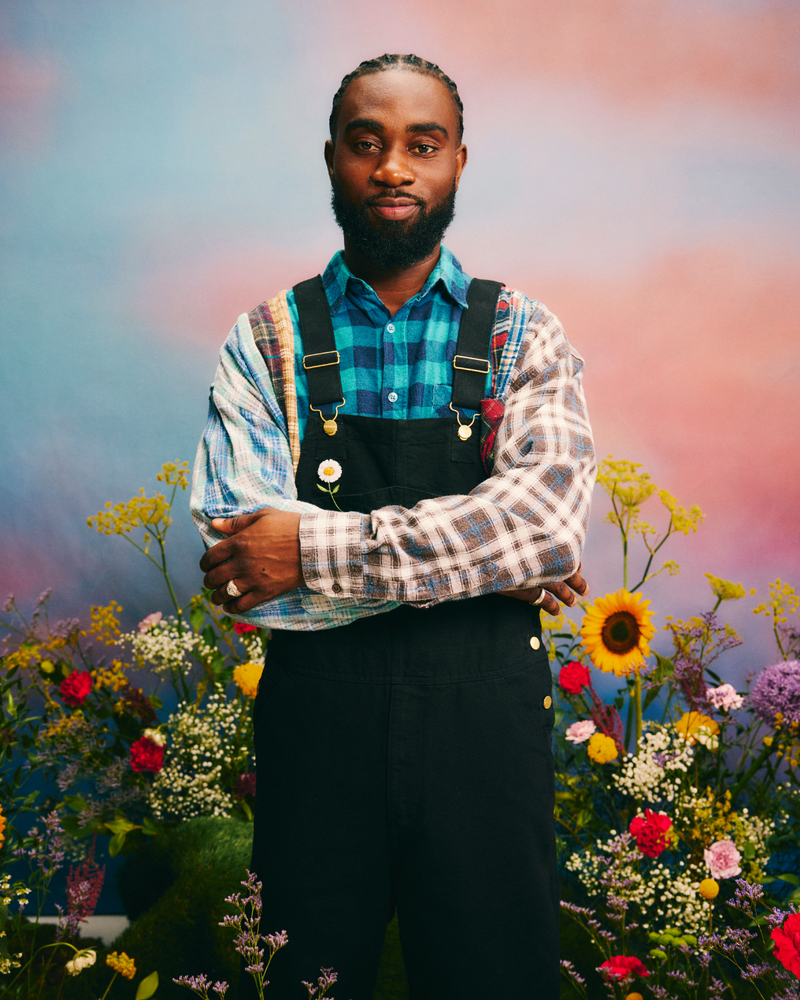
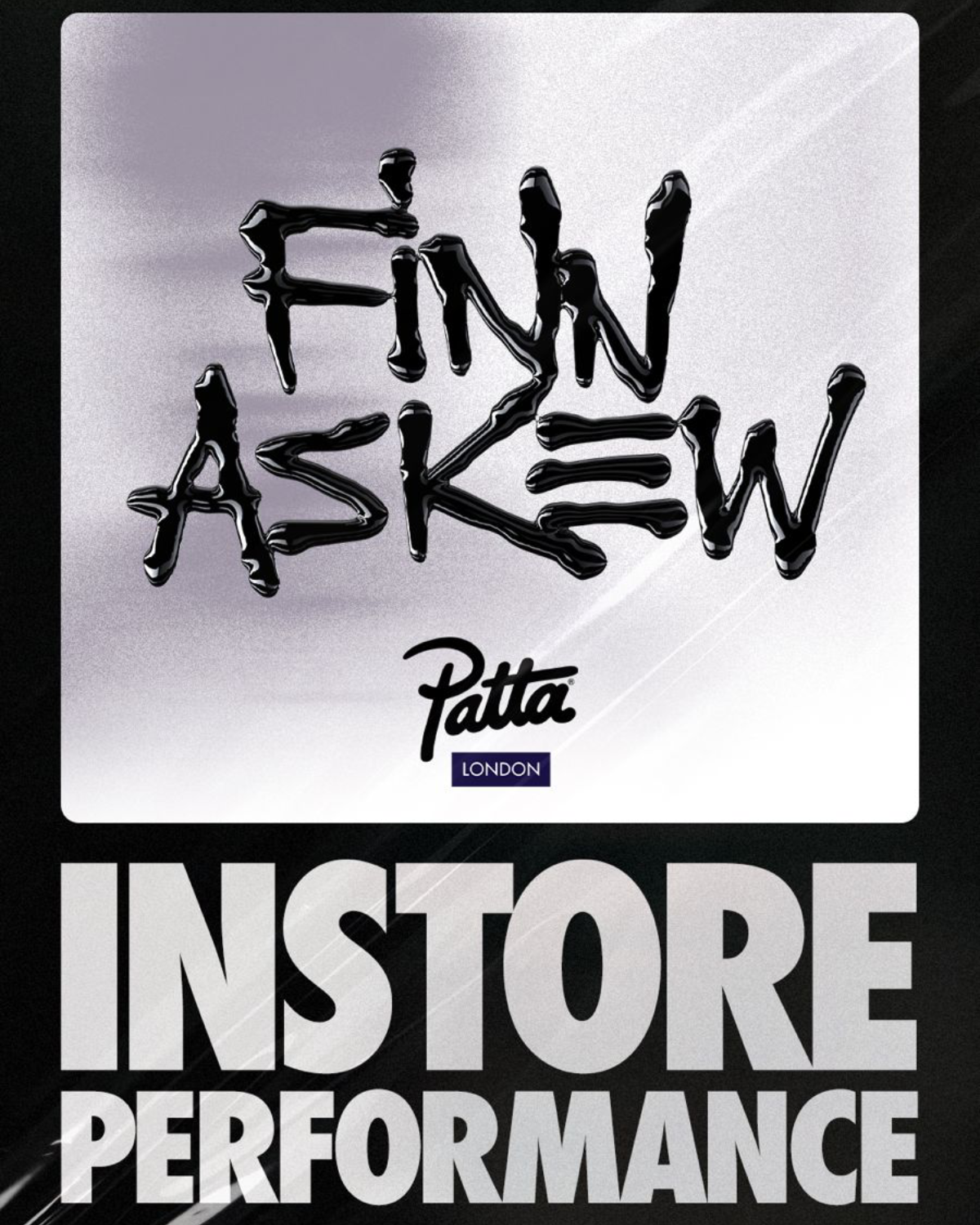
Join us at Patta London on Thursday 23rd April 2026 between 18:00 – 20:00 for a special evening with Finn Askew as he celebrates the release of his new EP.
We’re hosting an intimate in-store listening event where Finn will perform an exclusive acoustic set, giving you a closer, stripped-back experience of his latest project. If you’ve been following his sound, this is the kind of setting where it really lands: raw, direct, and personal. Entry is first-come, first-served, and everyone’s welcome, so pull up early to secure your spot. To keep things moving, we’ll have food provided by Wingstop, along with drinks courtesy of Mirchi and Peak. Come through, tap in with the music, and spend the evening with us.
Related Articles
-
After our King’s Day Block Party wraps up, we’re not slowing down! We’re taking things inside. From 20:00, we head into Radio Radio to keep the energy alive all the way through to 06:00. A limited number of tickets are available online, with plenty more held for the door, so come early - first come, first served. Capacity is doubled as Radio Radio is opening up the space at the Krakeling for extra dancing room. Expect sets from Moxes b2b Emvae, Monty DJ b2b Hannecart, Aldonna b2b Kyra Khaldi, Lil’ Vic b2b Cinnaman, Passion DEEZ, bebe bad, and styn. Find us at radioradio.radio.Doors open at 20:00, 21+ only. -

What went down at Reclaiming Queer Spaces
What went down at Reclaiming Queer Sp...
Last week at Patta Amsterdam, we came together to create space beyond nightlife. Centering reflection, dialogue and connection. While the dancefloor remains vital, this gathering was about slowing down and engaging with what it means to build, lose and reclaim queer spaces today.Queer spaces are never fixed. They are shaped through conversation, care, tension and community; constantly evolving alongside the people who inhabit them.With candid conversations between Jinan Viyet, Chloe Heyat, Daniel Smedeman and Sierra Durgaram, the session opened up important reflections on safety, belonging, and navigating creative and public life. Thank you to everyone who showed up and shared. The conversation continues.Photography by Pebbles Bazur-
What Went Down
-
-

In The Dance - Manga Saint Hilare, Morenight & Freeza Chin
In The Dance - Manga Saint Hilare, Mo...
Manga Saint Hilare released his new music video for "In The Dance", a release to heat up spring, preparing us for the festival summer. Check it out now!-
Music
-
-

Get Familiar: Finn Askew
Interview by Passion Dzenga & Liesje Verhave | Photography by Dorian Day With BLUEBOY, Finn Askew sounds like an artist stepping into sharper focus. The Somerset-born songwriter has always known how to bottle emotion, but this latest mixtape feels broader in scope and more deliberate in its storytelling, pulling as much from cinema, made-up worlds and other people’s lives as it does from his own. Still rooted in intimacy, but no longer confined by autobiography, the project marks a clear shift in both confidence and craft.Ahead of his Patta London in-store performance, we caught up with Finn to talk about building BLUEBOY alongside Ezra Skys, learning to trust his own instincts again, finding clarity after a period of self-doubt, and why he’s more interested in telling universal stories than simply retelling his own. From Somerset to Soho, and from bedroom writing sessions to major co-signs and growing international attention, Finn Askew is moving with the kind of quiet certainty that suggests this is only the beginning.What keeps you busy when you’re not making music?Music is basically all I do, even when I’m not trying to. I’m always humming something or thinking about melodies. But outside of that, I’m with my friends a lot, I game a fair bit, and right now cinema is probably my biggest influence. If I’m not in the studio, I’m either in the cinema or in my bedroom making music.So there’s a lot outside of music feeding the music?Definitely. Especially with this mixtape, cinema was probably the biggest influence. I feel really inspired by other people’s stories. A lot of artists talk about writing from the heart, and I get that, but I don’t think that should be the only way to make music. If you only ever write from your own life, you limit yourself. I can’t relate to every single person in the world just through my own stories, and I want the music to reach everyone. So sometimes it’s about making up new stories, or stepping into somebody else’s world.That’s what cinema gives me. You watch a film and suddenly you’re inside a whole different emotional universe. I could write a song about Darth Vader and betrayal if I wanted to. That’s the fun of it.That’s interesting, because in the past your music felt a lot more autobiographical. This tape feels like it opens outwards. Were there any films in particular that fed into BLUEBOY?Yeah, weirdly enough, The Amazing Spider-Man 2. I watched it recently and Peter Parker and Gwen’s relationship, that whole romantic tragedy, really stayed with me. That idea of love and loss definitely influenced some of the songs. There’s a rom-com element to parts of the tape, that sort of dramatic romance.Let’s talk about the mixtape itself. You worked closely with Ezra Skys on this one. How did that relationship come together?I met Ezra about a year ago, and it all happened pretty naturally. We didn’t even release our first track together, which was “Vows”, until maybe six months ago, so in that sense it formed quite quickly. But it just clicked straight away. On our second session together we made “Vows”, and that ended up becoming the first track on the tape.I’d never really made a full project with one person before. That was always something I wanted. I’ve always said I’d love to find one producer I can really build a world with, because coherence and continuity were always things I struggled with in the past. When you’re bouncing between loads of people, it can get messy. But when you’ve got one person you trust, and you’re going back and forth together across every track, it becomes a much more unified thing. That’s what this tape gave me.What does that workflow look like in practice? Are you walking into sessions with finished ideas, or are you building everything from scratch?It changes every time, which is why it stayed fun. Sometimes I come in with an idea already. “Green Light” was something I started at home before bringing it in. Other times Ezra will just build something and I’ll trust it immediately because I know he makes sick beats.That trust is the main thing, really. There’s never any pressure in the room. It’s never like, “We have to finish this today” or “This needs to become a song now.” I can just tell him, “I’m not feeling this anymore, I’m going to take it home and write later.” That happened with “Vows”. We made the beat together, then I took it away and finished it at home because sometimes being on your own lets you try things you wouldn’t do in the studio. Not because you’re uncomfortable, but because the energy is different. You can sit with it more.Most of the melodies are freestyled, though. That’s usually where everything starts. But because the process kept shifting from song to song, it never felt stale.You’ve always sat in an interesting space sonically. There’s singer-songwriter DNA in your music, but you’ve also found a lot of support in more urban spaces, from London to Toronto and beyond. How do you think about your place in music now?I still don’t feel like I’ve fully broken out, to be honest. I feel like I’m breaking into spaces, but I’m not where I want to be yet. Coming from Somerset, there wasn’t really anyone for me to look at and think, “They did it, so I can too.” I didn’t have that local blueprint. A lot of people in bigger cities grow up with examples around them. I didn’t really have that.So for me, it’s been a bit surreal seeing the music travel and connect in different places. That’s always been the dream, though. To make something that goes beyond where I’m from.You’re still based in Somerset now, right?Yeah. I lived in London for about two years, but I moved back around a year ago. London just got a bit lonely for me. Where I’m from, not many people leave, so when I moved there I didn’t really have a built-in crew. Everyone else had their little circles and I was like, where’s mine? Then I realised my people were back home.Until life gets so busy that every day becomes madness, I’m happy being close to my friends and family and just travelling when I need to. London’s only about an hour and a half away anyway, so it’s not some crazy distance.There’s something healthy in knowing where your centre of gravity is. Has the increase in visibility changed your day-to-day much?Not massively, if I’m honest. When I first moved to London, that felt like the biggest lifestyle change. Now, even though the music’s doing really well, my day-to-day still feels pretty grounded. And sometimes that can mess with your head a bit, because you think, “If things are going up, when does life actually feel different?”But I’m also enjoying that not much has changed yet. It makes me stay hungry. I do want the lifestyle to change eventually. I want to tour more, fly more, do bigger shows, live a bigger life through the music. But right now I’m happy where I am in the journey.On “Save My Time”, you talk a lot about slowing down and realigning yourself. What inspired that song?That one came from a very real place. Growing up, and even later on, I spent loads of time in my room writing music, smoking weed, playing games, just kicking back. There was a point a few years ago where I kind of thought I’d already made it. Things were moving, people were paying attention, and I got too comfortable. That was the worst thing I could’ve done.I lost my drive a bit. I was wasting time, really. That’s where “Save My Time” came from. It was me looking at myself and realising nobody else is going to do this for me. I had to snap out of it and fix what wasn’t working. That song really was about seizing time and taking responsibility for my own momentum again.And then you’ve got a song like “London”, which sounds deeply personal, but you’ve said a lot of this project wasn’t necessarily written from your own life. How do you approach that line between personal and universal?That’s what I love about it. “London” sounds personal, and that’s great, but it’s not really my story. It’s more like fiction, or someone else’s perspective. I don’t even know whose story it is exactly, but I know people hear it and think, “That’s me.” That’s what I wanted.I like the idea that something can feel deeply intimate to the listener without literally being my autobiography. That’s the power of storytelling. It doesn’t have to come from me for someone else to feel it in a real way.Which song on the mixtape feels most vulnerable to you, then?Probably “Save My Time”. That’s the one where I really feel the emotion. It’s the one that cuts closest to something I actually had to work through. “Vows” is a real one too, because I wrote that about my girl, so there’s love in that one and that’s definitely personal. But “Save My Time” was me confronting something in myself, and I don’t usually write like that.I’m not really a sad person. I’m pretty upbeat, pretty energetic, so to have one song on the tape where I was like, “Nah, this one is really me,” that felt important.When you look back at the earlier releases, what do you think has changed most in your approach?I think I’ve finally found myself. That’s the biggest thing. For a long time, that was the real issue. I had good people around me, opportunities around me, a lot of things lined up, but I just wasn’t ready. If you haven’t fully figured yourself out, it doesn’t matter how much support you’ve got, people won’t connect with it properly.This tape is the first time I really feel like I know what I want to sound like, what sort of records I want to make, and how I want it to feel. That inner shift is the biggest change. The music changed because I changed.So what have the last few months taught you about yourself as an artist?That I can actually do this. There was a bit of self-doubt before this tape, and I’d never really had that before. I’ve always been confident. Maybe even cocky at times. But there was definitely a period where I questioned things. Then these songs started landing, people started reacting, and I was like, why did I ever doubt myself? I’m good at this. These songs are sick.So yeah, what I’ve learned is: don’t doubt yourself again. There’s no point.And for people going through that same kind of doubt, what would you say?Just trust yourself. If you didn’t doubt yourself before, there’s probably a reason for that. Chase that earlier feeling. That’s usually the real one.We’ve got you in-store this week at Patta London, performing your new EP. What can people expect from seeing you live in that sort of intimate setting?I’m really excited for it. It’s sick to work with a brand I genuinely mess with so heavily. That’s something I’m loving at the moment, being able to work with brands and spaces that actually make sense for me.As for the set, it’s going to be all acoustic. Six songs from the mixtape, stripped back. It’s a small space, very intimate, so I’m just going to let the voice and the guitar do the talking. Good vibes, good energy, proper personal. I’m excited.You mentioned gaming earlier. What are you playing right now?At the moment I’m playing Lord of the Rings: Return to Moria with my brother. It’s kind of like Minecraft, but Lord of the Rings. It’s sick. I also love Cuphead. I need games to challenge me, otherwise I get bored and never finish them, and Cuphead definitely does that. Then there’s Balatro as well, which has had me hooked. Dangerous game, that.You’ve also picked up some major co-signs over the years, from people like SZA, Kehlani and Justin Bieber. What does that kind of validation do for you?It’s mad. Justin Bieber is the big one. That will probably always be the biggest one. He was my idol growing up. There isn’t really anyone else on earth I’d rather have had a co-sign from, so I kind of hit the jackpot there.That sort of thing is crazy because if you told my younger self I’d be speaking to Justin Bieber one day, I wouldn’t have believed you. And yeah, obviously you shouldn’t rely on external validation, but in moments where you are doubting yourself, it helps. It’s nice. It reminds you the music is cutting through.A lot of people know you through different doorways now. Some know the songs, some know the visuals, some know the cosigns, some just know the mood. What keeps you grounded in all of that?Probably home, family, friends and just staying locked into the work. I’m not trying to become some mad version of myself. I’m just trying to get better, make stronger music, do bigger shows and keep evolving. I think if you stay focused on that, everything else becomes a bonus.What can people expect from you over the rest of the year?I already want to start the next tape. I love this mixtape and I’m grateful for what it’s doing, but I’m already onto the next. I miss writing when I’m not writing. So hopefully there’s another project by the end of the year if I can make that happen.We’ve also got a big headline show at coming up, which is at the biggest headline I’ve done so far. That’s going to be crazy. I’m nervous, but excited. Then there are some festivals too, Paris, Copenhagen, stuff like that, and hopefully a few more things land in between. It’s really just about getting busier than I’ve ever been before.So the pace is only picking up from here.That’s the plan. Join us at Patta London on Thursday 23rd April 2026 between 18:00 – 20:00 for a special evening with Finn Askew as he celebrates the release of his new EP.-
Get Familiar
-
Music
-
-

Patta x Nike Kingsday
On Monday, April 27th, from 12:00 until 20:00, Patta will be hosting an outdoor Kingsday event at Radio Radio, Amsterdam. This will be open to the public and is free to enter. Due to limited space we suggest arriving early to avoid disappointment.On Saturday, April 25th and Sunday, April 26th the Patta x Nike KNVB Prematch Jersey will be available for early access exclusively at Patta Amsterdam. Buy your jersey, sign up for customization and secure your slot for Kingday.The customization will take place from 12:00 until 16:00 on Monday, April 27th at Radio Radio. No jersey means no access to the personalisation station, and if you miss your slot, there is no second chance to sign up due to limited spaces.-
Events
-
-

Art Bar SEXYLAND with Bonne Reijn
Art Bar SEXYLAND is back! On April 22, we are hosting the 30th edition with Bonne Reijn at Cafe ‘t Mandje. Art Bar SEXYLAND is a café you go to on Wednesdays when you are stuck for ideas, to talk about art or show your work to a renowned artist or curator from the field who acts as your bartender for the evening. It gives emerging or established artists the chance to ask these artists questions in a safe environment without sitting in a Q&A-style setting, because the person is simply standing behind the bar. The motto is bad bartenders, great ideas, so the awkwardness is partly shared by all of us. From Jo-Lene Ong, Rein Wolfs, Rineke Dijkstra, Farida Sedoc, Renzo Martens, Zippora Elders, Wolfgang Tillmans, Kenneth Aidoo, to Iriée Zamblé and Raquel van Haver, every edition features a seasoned artist or curator serving you terribly poorly poured beers but incredibly good ideas.Bonne is a curator, fashion designer, and cultural entrepreneur, as well as the initiator of the Warmoes Biennial. His practice does not originate from the studio, but from the street, specifically the Warmoesstraat and its immediate surroundings, where he grew up and works. Rein’s work is closely connected to the question of how a neighborhood can redefine itself. Driven by a strong commitment to the Warmoesstraat, an area often reduced to tourism and clichés, he uses art as a means to present a multi-voiced and layered image.In this context, the Warmoes Biennial functions as a collective attempt to shift the dominant narrative and activate new forms of community. Through art, the biennale infiltrates the neighborhood; shops, snack bars, churches, and nightlife spots are temporarily transformed into exhibition spaces. Here, art does not appear as a destination, but as an intervention in everyday life.His role moves between curator, designer, and initiator: he creates not objects, but circumstances. In this context, art becomes a social process, a temporary infrastructure in which encounter, friction, and imagination converge. -

Finn Askew at Patta London
Join us at Patta London on Thursday 23rd April 2026 between 18:00 – 20:00 for a special evening with Finn Askew as he celebrates the release of his new EP.We’re hosting an intimate in-store listening event where Finn will perform an exclusive acoustic set, giving you a closer, stripped-back experience of his latest project. If you’ve been following his sound, this is the kind of setting where it really lands: raw, direct, and personal. Entry is first-come, first-served, and everyone’s welcome, so pull up early to secure your spot. To keep things moving, we’ll have food provided by Wingstop, along with drinks courtesy of Mirchi and Peak. Come through, tap in with the music, and spend the evening with us.-
Events
-
-

Get Familiar: Conrad Soundsystem
Interview by Passion Dzenga | Photography by Charlotte van der GaagSpread across cities, schedules, and parallel lives, the Conrad Soundsystem only occasionally occupy the same room, but when they do, something immediate and unfiltered happens. Their music isn’t the result of endless iteration or remote file-sharing, but of short, concentrated bursts: weekends carved out of busy lives, where ideas collide and instinct leads.Formed during the stillness of lockdown in The Hague, the project grew out of living room sessions on Conradkade, a literal sound system between friends that quickly evolved into something more defined. Alongside their label and event series Fish Tapes, and a deep connection to the coastal energy of The Shore, they have built a world that feels both personal and communal, rooted in friendship, but outward-facing in its intent.That same tension runs through their music. There’s a push and pull between raw intuition and careful refinement, between high-pressure rhythmic tracks and more expansive, emotional compositions. Their latest release on United Identities, West End, captures that balance perfectly: a record built as much on restraint and tension as it is on release.At a time when electronic music can feel increasingly polished and predictable, Conrad Soundsystem lean into something more human — embracing imperfection, trusting the moment, and treating each track as a document of time spent together.You’re a three-man collective with a close personal connection. Can you talk a little bit about those relationships and how they play out when you’re in the studio?We’re very close, but in practice, it actually takes effort to come together. We don’t naturally bump into each other all the time anymore. Some of us are in different cities, some of us are working on projects abroad, and everyone has their own schedule, so being in the same room has to be planned very intentionally.That definitely shapes the music. When we do get together, there’s a certain pressure, but it’s a good pressure. We know the time is limited, so there’s a lot of energy in the room. We’re never short on ideas. It’s never like, “What should we make?” It’s more about how to use the time wisely and pour all the ideas we’ve been carrying individually into one session. Because we don’t see each other constantly, everyone comes in with fresh thoughts, and that creates this explosion when we finally link up.So it’s less about struggling for inspiration and more about maximizing the window you have together?Exactly. It’s always about time, never ideas. That’s why the sessions tend to be so intense and so focused. We just try to get as much as possible out of the time we have.From my understanding, the mixing and mastering also stays in-house. How does that help define the Conrad Soundsystem identity?The three of us are together for the core creative part, and then the final shaping also stays very close to home. What matters most to us is keeping the first impulse intact. We don’t want to overproduce the music or polish out the parts that made it exciting in the first place.There’s a nice tension in that process because technically, we all come from different places. Some of us are much more instinctive and rough with how we build things, and some of us are more trained and detail-oriented. So there’s always this back-and-forth between wanting to clean something up and wanting to leave it alone because it just feels right. Sometimes a snare is too hard or something isn’t technically perfect, but if it sounded sick in the room and all three of us felt it, then that becomes part of the character.That’s also why the music can sound a bit as if it exists in its own vacuum. Sometimes we wonder if we should sound more like one scene or another, but because of the way we work, it always ends up sounding like us. That can make things harder at first, because people don’t know where to place you, but it also becomes your strength over time.Speaking of interpersonal dynamics, there’s also family involved here. Did that make things smoother or more complicated?It honestly helps. Music is the basis of the connection anyway. Even outside the studio, that’s what pulls everything together. At family gatherings, we’ll end up in the corner talking about tracks while everyone else is having normal conversations. It probably looks a bit ridiculous, but that’s genuinely how we stay connected.That’s also the nice thing about having relationships outside of music — you understand each other beyond just the work. You don’t have to explain everything from scratch every time. There’s already a shared language there.One thing I really like about the project is that you move like a trio. Do you always build in the same room, or do you ever send ideas back and forth?We used to send projects around a lot more, especially during COVID. One person would start something, then another would work on it, and by the time we got together there was already quite a developed sketch. But that’s changed.Now we prefer going into the studio almost blank. We keep ideas in our heads and save them for when we’re together. Then everything happens in the room. That feels much better for us now because it keeps the process intuitive and immediate. Instead of continuing separate demos, we’re smashing all our ideas together in real time.It also makes the tracks feel tied to very specific moments. Some of the songs really hold the memory of the session inside them. That’s something we love. If you build a track over weeks by sending it back and forth, it can become more universal, but if you make it in one intense session, it captures a very particular feeling. For us, that makes it more fun and more real.It also feels like a way of documenting friendship. Like these records become time capsules.Yeah, definitely. As you get older, life gets busier and more fragmented, so being able to make music with people you actually love becomes more valuable. These tracks really do feel like little time capsules of where we were, what was happening, and how we were feeling when we made them.I was first exposed to your music through the United Identities compilation around the end of COVID. Was that when Conrad Soundsystem really started?Yeah, pretty much. The real kickoff was during COVID. One of us had just come back from Berlin and got re-energized musically. There had already been a shared love of music, shared listening, sending each other radio shows, jazz, strange club tracks, all of that. Then lockdown hit, and suddenly there was time and space to do something with it.We started playing records together at home, throwing little living room parties with our turntables, speakers, and record bags. The street we were on was Conradkade, and that’s basically where the name came from. It started as a very literal sound system in a house.At the same time, there was already someone in the orbit who understood music in a slightly different way — not just emotionally, but technically too. We’d play tunes and talk about why they hit, and he’d immediately hear how they were made, what was going on structurally. That made it feel natural to move into making our own music together.Around that same time, Fish Tapes also starts to take shape. What was the impetus there?Fish Tapes came out of necessity at first. We had made a lot of music early on and built up an EP, and we were sending it around to labels because we really believed in it. That didn’t lead anywhere that felt right, so we thought: let’s just do it ourselves.At the same time, we got access to a studio space and there was an opportunity through friends to start doing parties at The Shore. So suddenly the music, the events, the studio, the friendships — it all landed at once. Fish Tapes became the umbrella for that world.It’s basically our little playground. We release our own music there, release music by friends, do compilations, and use it as a platform to build events around the artists we love.And The Shore became a real key part of that world.For sure. The Shore gave us a space to build something without overthinking it. The early parties were free, really open, really mixed. We didn’t want them to feel too serious. It was just about good music, good people, and creating a vibe.Over time it grew way beyond that. Suddenly there were huge crowds, bigger stages, serious sound systems, and proper lineups. But the spirit stayed the same. It still feels like a place where we can book our favorite artists and try things out. That’s where we’ve brought people like Carista, Tash LC, T.No and a lot of others. It’s become a seasonal ritual for us, and also a place where we can test our own music on a real system.There really is a special energy to partying by the water in Scheveningen. It gives The Hague its own identity outside of the PIP ecosystem.Definitely. It’s a different energy. The Shore has its own character, and that’s part of what made it such a special place for Fish Tapes to grow.Let’s talk about the new release on United Identities, West End. It sounds built for big sound systems. What was the starting point for that record?We’d had United Identities in mind for quite a while. After the Modern Intimacy compilation, there was already a connection there, and Carista had basically told us: send over whatever you’ve got. So when we started making the EP, that label was very much in the back of our minds.There were definitely a few key reference points. Tracks like Rhyw’s Honey Badger and Joy Orbison’s Flight FM were in the air for us — those records that create this huge sense of momentum and tension without necessarily relying on the obvious drop. We love tracks that feel hectic, restless, a little bit unstable.A lot of West End came together in a weird studio space near an indoor beach volleyball place, which already had its own strange energy. We’d go outside to take a break and see people playing volleyball in the middle of winter, then go back in and make this tense, wired music. So the surroundings were bizarre, but that kind of fed into the record.The title also came from where it was made — part of our naming logic is very literal like that. But there’s also another layer to it, with one of us having moved west, so it held that too.One thing that really stands out on West End is that it never fully releases. It keeps stretching the tension.That was very conscious. We’re really drawn to that feeling — making something uneasy, but in a good way. We love tracks that don’t just build, drop, resolve, repeat. Sometimes, the most exciting thing is when a track keeps you on edge.One of the records that really shaped our thinking was III’s Front by Overmono. It doesn’t really “go” anywhere in the traditional sense, but it keeps shifting and pulling at you. That’s much more interesting to us than just hearing another familiar drop.On West End, a big part of that came from using one main lead sound and constantly evolving the rhythm. The sound itself stays similar, but the phrasing keeps changing, so you’re always being pulled slightly off balance. That was a really fun way of building tension without needing to throw in a huge, obvious payoff.And then the B-side, Lindo, opens up a much darker, more inward space. How did you balance those two records?That’s really the two sides of us. On one side, there’s rhythm, pressure, drums, tension. On the other hand, there’s harmony, big chords, emotional weight, and cinematic feeling. Lindo came out of us, leaning into that second side. It started with these huge synth chords that suddenly made the track feel almost like a score. That was exciting because it gave us a chance to break open the dancefloor a bit instead of constantly pushing it harder. We didn’t want it to be drenched in harmony the whole time though — it’s more about teasing that emotional side, letting those sounds appear and disappear so you really feel the space in between. That’s why the two tracks make sense together. They’re very different, but they need each other. One pushes outward, the other pulls inward.Funny enough, you’re getting almost a 50/50 split on the favorite track from the promo reactions.Yeah, which surprised us a bit, but it’s nice. It means both sides are landing.Before you were musicians, were you DJs first?In a way, yeah. DJing came very naturally out of obsession. Once you start collecting records, once you get deep enough into music, you’re going to want to play it somehow. That’s just what happens. There were different paths into that. Some of us were DJing around PIP very young, buying turntables, building collections, playing with friends. Some of us came from bands first, and then electronic music took over. Some of us have been producing for a long time already. But all of it comes back to the same thing: a deep obsession with music and the urge to share it.Vinyl was especially important in the beginning. It still is, really. There’s something about records that keeps you physically connected to the music. It slows you down in the right way. It makes digging feel meaningful.That’s also what makes electronic music such a self-sustaining culture. It’s its own ecosystem.Exactly. One of the beautiful things about electronic music is that the music itself matters more than the persona around it. Half the records we love, we barely know anything about the person who made them. Sometimes that’s the point. There’s this endless stream of anonymous or semi-anonymous music, and it becomes less about ego and more about contribution.That’s something we really love about the scene. It feels like a long, ongoing conversation where everyone adds something to the pile.Let’s close on what’s next. You have the West End release party coming up. What can people expect?The release party is really about bringing all the threads together. It’s happening in collaboration with Dooorp, who are doing some of the most exciting things in The Hague right now. They’ve got that same mentality we believe in — just doing what feels right, taking risks, making things happen for the love of it.So the party is going to be a full-circle moment: friends doing visuals, close collaborators on the lineup, another stage hosted by people we love, and a proper sound system. It’s not just a release party, it’s a celebration of the wider scene around us. It’s on Friday, April 17th at LAAK in The Hague, and yeah, it’s going to be special.And if someone is just discovering Conrad Soundsystem, where should they start?Anywhere, honestly. The catalog is still small enough that you can really dig through it properly. There are the early Fish Tapes releases, the compilation tracks like 38A and Saturn, and now the new EP. Every track holds a different part of the project. That said, West End probably feels like the clearest statement of where we are right now.West End lands as Conrad Soundsystem’s most defined statement to date: a tense, soundsystem-centric record designed to be felt as much as heard. Out now via United Identities, the release captures the trio at their most focused, balancing pressure, rhythm, and emotion across both sides of the EP. To mark the release, Conrad Soundsystem bring their world to life on Friday, April 17th at LAAK in The Hague, joining forces with Dooorp, Pip Radio and United Identities for a night that reflects the community around them. Expect a full-spectrum experience: heavyweight sound, close collaborators on the lineup, and a raw, unfiltered energy that mirrors the way their music is made. West End by Conrad Soundsystem-
Get Familiar
-
Music
-
-

Reclaiming Queer Space Through Conversation
Reclaiming Queer Space Through Conver...
Join us for a community-centered panel talk at the Patta Amsterdam, this Friday from 17.30 onwards.While nightlife is essential for bringing people together, there is a growing need for environments that allow for deeper reflection and connection. After the Dancefloor is a response to this shift, prioritizing exchange over spectacle and presence over performance.The session brings together voices from across creative communities and beyond to reflect on what it means to build, lose, and reclaim queer spaces today.Queer spaces are never static; they are shaped through dialogue, visibility, tension, care, and community. In a time where questions of safety, belonging, and representation continue to evolve, conversations like these feel increasingly necessary. The talk opens up space to reflect on how queer people navigate creative industries and public life, and how inclusivity is not a fixed state but an ongoing practice.An invitation to slow down, listen, and engage.Limited spots are available, be early as full=full.RVSP here.-
Events
-
-

Skate for Suriname at Skatecafé
On April 18th at Skatecafé, Amsterdam, we’re bringing the community together for a fundraiser to build a skatepark in Suriname.14:00 till 19:00Expect a full day of skating, music, food and energy, all for a bigger purpose.CASH FOR TRICKS16:00 / 17:00 / 18:00€2000 prize purseBBQ + drinks (donation-based). Auction with exclusive items hosted by Akadre.Music by AMARA, Bxxmbastic and Passion DEEZ. Come through, skate & support!-
Events
-