Photography by Karim Sahmi, Zazilie Currie, Dag van Empathie, Luciano de Boterman, Nederland Wordt Beter, New Urban Collective, Mitchell Esajas, Hollandse Hoogte and Raymond van Mil | Graphic by Chayenne van den Brink
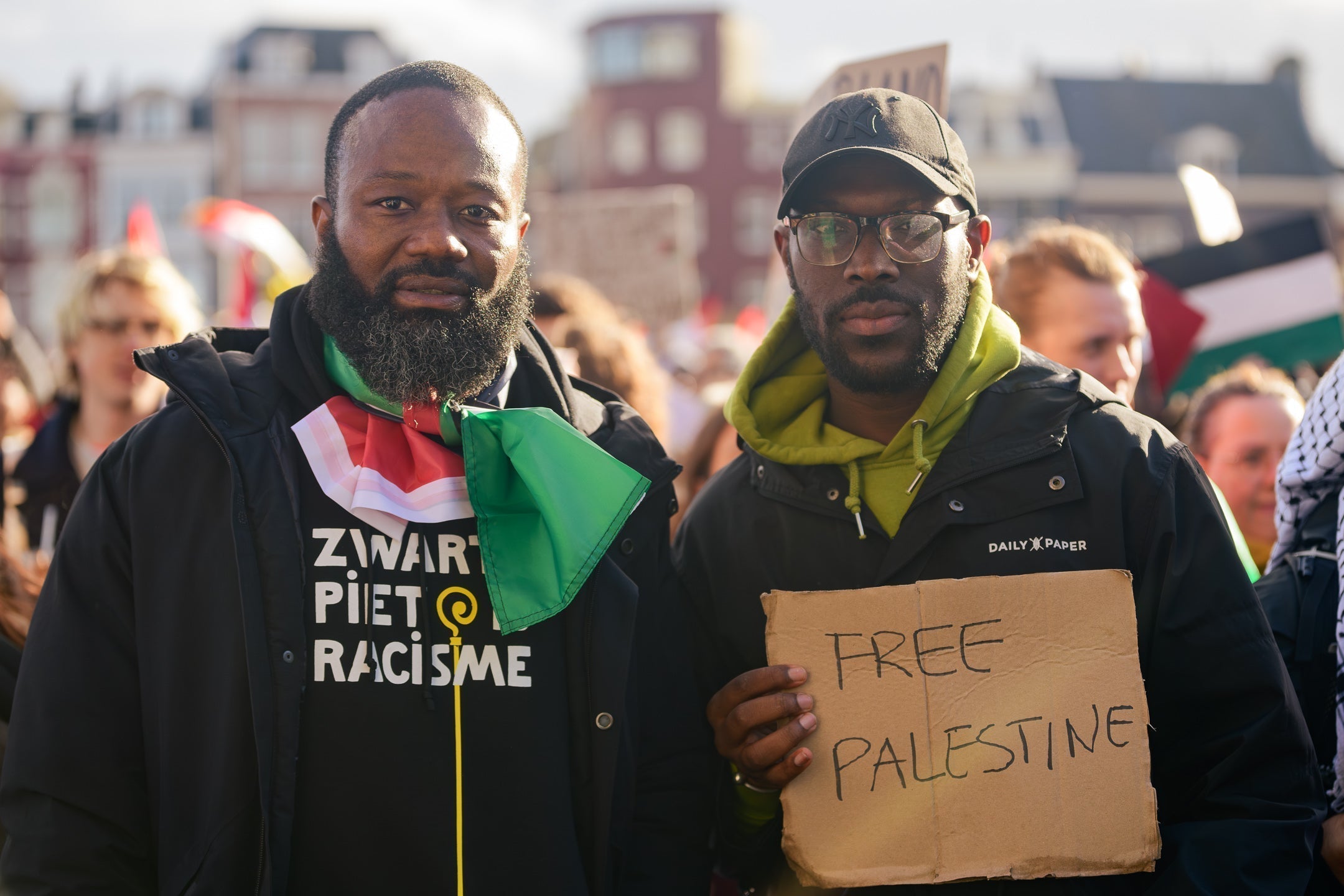
In activism, endings are rare. Movements are often defined by their refusal to stop, by an open-ended urgency that resists closure. To declare an endpoint — to say the work we set out to do is complete — is, in itself, a radical act. That is precisely what Nederland Wordt Beter has chosen to do. From 2010 to 2025, NLWB positioned itself not as a permanent institution, but as a deliberate intervention: a 15-year confrontation with anti-Black racism in the Netherlands, designed with a beginning, a strategy, and a clearly articulated end. On 5 December 2025 — a date long symbolic of exclusion and harm — the movement dissolved itself. Not because racism has ended, but because the goals it set out to achieve have been met. Those goals were neither abstract nor rhetorical. They were concrete, structural, and measurable: the embedding of colonial and slavery history in education; the transformation of the Sinterklaas tradition into an inclusive celebration free from racist stereotypes; and the legal anchoring of the national commemoration of the abolition of Dutch slavery.
To understand the significance of this moment, one must understand the discipline behind it. As Jerry Afriyie — poet, organiser, and co-founder of NLWB — explains, the decision to limit the movement to fifteen years was not a concession, but a strategy. Activism without an endpoint risks burnout, dilution, and institutional stagnation. Activism with an endpoint demands clarity: what exactly are we trying to change, and how will we know when we have succeeded? Over fifteen years, NLWB delivered more than 500 lectures across schools, universities, companies, and government institutions. It produced open-access educational materials, teacher guides, activist handbooks, and a historical calendar documenting nearly 200 moments and figures erased from dominant Dutch narratives. It initiated campaigns that reshaped public discourse — from Zwarte Piet Is Racism to #1julivrij — and helped organise the largest anti-racism protests in Dutch history following the murder of George Floyd in 2020. But the most visible impact unfolded in everyday life.
Fifteen years ago, Keti Koti — the commemoration of the abolition of slavery — was unknown to most Dutch students. Today, it is nationally broadcast, structurally funded, and legally anchored, with an annual budget of €8 million supporting commemorations across both the European Netherlands and the Caribbean. Slavery history is now mandated in secondary education. Municipalities, museums, and ministries have revised policies, curricula, and public narratives. Apologies once considered unthinkable have been issued by both government and monarchy. Perhaps most symbolically, a tradition long defended as “innocent” has been transformed. Where Blackface once dominated public space each winter, two-thirds of the Dutch population now support moving away from the tradition of Zwarte Piet. Nearly all municipalities no longer subsidise parades featuring racist imagery. What was once normalised has been historicized — relocated, finally, to the past.
This transformation did not come easily. The work demanded confrontation, persistence, and personal sacrifice. Afriyie speaks openly about the cost: years of public hostility, professional consequences, physical danger, and time lost with family. NLWB endured surveillance, mischaracterisation, and, at one point, inclusion in a national terrorism assessment — later formally corrected. These were not symbolic battles. They were lived realities. And yet, NLWB refused both martyrdom and vengeance. The movement’s philosophy was pragmatic, not punitive. Justice, not revenge. Structural change, not spectacle. Protest was a means — never the goal. Dialogue mattered, but so did boundaries. Allyship was welcomed, but Black leadership remained non-negotiable. The movement understood that visibility without control risks reproducing the very hierarchies it seeks to dismantle. This is why the decision to dissolve now carries such weight.
NLWB does not disappear into silence. Its legacy is deliberately archived — preserved through partnerships with The Black Archives, the Amsterdam City Archives, and public platforms that ensure future access to its materials. Its final exhibition, Netherlands, Do Better! – The Impact of 15 Years of Black Activism, offers not a victory lap, but an invitation: to study what worked, to learn what it cost, and to ask what comes next. The travelling exhibition extends that question across the country, province by province. The theatrical tribute, The Final Word, honours not only visible leaders but the quiet labour of communities who sustained the work. Now, the movement ends not in mourning, but in celebration — a deliberate refusal to let struggle erase joy.
In passing the baton, NLWB insists on a final truth: progress is not permanent. It must be protected, renewed, and expanded by those who inherit it. The work does not end because racism has vanished; it ends because responsibility has shifted. As Afriyie reminds us, a country can only do better if its people do better — not just for themselves, but for each other. The measure of this movement is not only what it changed, but what it makes possible. The Netherlands is not finished becoming better. But it is no longer allowed to say it did not know.
Who are you — and what are you about?
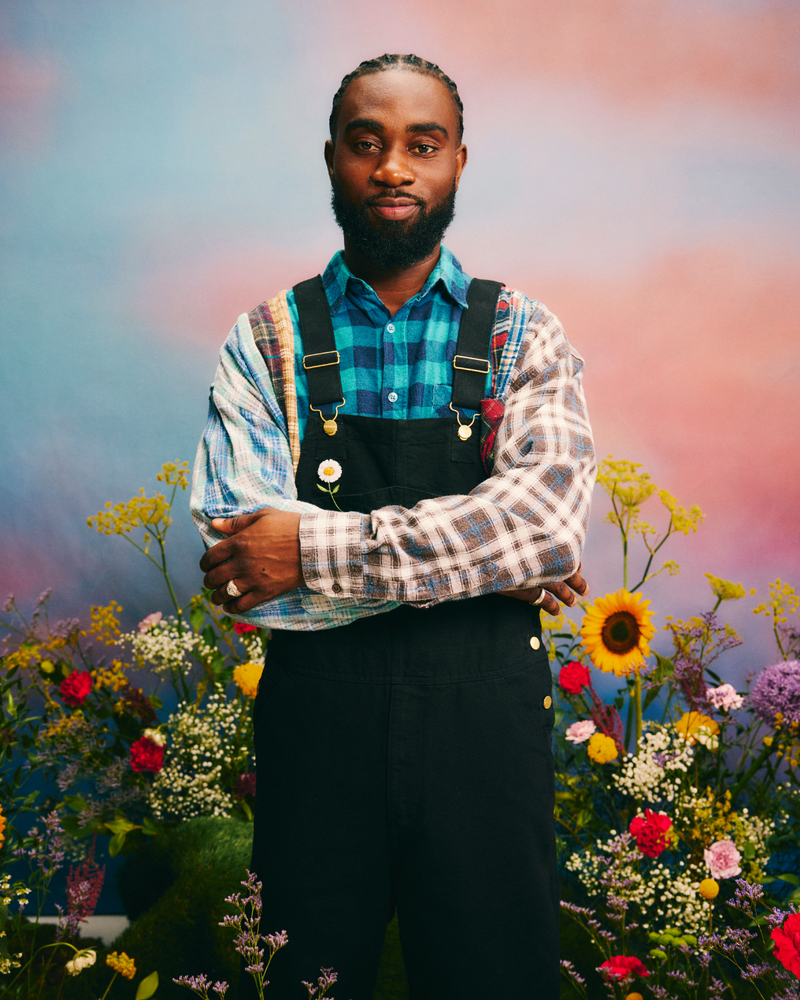
I’m a poet, but for a long time I haven’t been able to fully live inside that identity — because the work of movement-building demanded something else from me. I was originally born in Ghana, raised largely in the Netherlands, and I’ve been here for almost 35 years. I’ve lived my adult life in this country. I know this country deeply — in many ways I know it more than Ghana, because this is where my children were born and raised, and where my community has had to fight for dignity in public, year after year.
You said you’re a poet, but you’ve also been “occupied” by movement work for nearly two decades. How did that shift happen?
From the age of 18, I started organising through an organisation I called So Rebel Movement. That was my starting point — and it was rooted in a very clear mentality: “for us, by us.” A Black-led, Black-guided movement that doesn’t ask permission to exist, and doesn’t need validation from outside the community. But the past 15 years became something else — a kind of intervention. The conditions became so urgent, and the pressure so constant, that I had to stop certain parts of my own life and “finish this job.” In many ways, I’m now returning to what I was always meant to be doing — but with lessons learned and scars that prove the cost of this work.
Independence keeps coming up in your answers. What does independence mean to you in a Dutch context?
My vision — whatever I do next — is to ensure I don’t need anything from the white community to make it happen. I’m very serious about that. For years, the work was focused outward: we were showing white Dutch society racism, discrimination, and the unfair treatment of Black people. That wasn’t because we wanted our lives to revolve around white people’s awareness — it was because the noise from that side was so loud that it blocked everything else. It was interfering with our ability to concentrate on what we wanted for ourselves.
Now I feel like we have shut that noise down enough to get back to work. Because beyond the obstacles — yes, we know the obstacles — the most important question becomes: how do we overcome them by our own strength and our own means? I believe we already have everything we need to lift ourselves up. Sometimes we spend too much time seeking help where we don’t need help.
Your movement is now dissolving. People might read that as “giving up.” How do you frame it?
I frame it like work. If you’re working on a project and the project is finished, it’s finished. That doesn’t mean the whole world is suddenly perfect. It means you achieved the thing you set out to achieve — something big enough to matter, but not so abstract that it becomes a never-ending mission. We chose goals that were structural and measurable, so you could actually say: we did this. And now we can sign it off.
So what were the goals — specifically — and why those?
We had three goals. The first was structural education: colonial and slavery history in the curriculum. Before our movement, those were not meaningfully embedded the way they are now. Today, they are added.
The second was education about racism itself — teaching about racism in schools. This was something we achieved together with another organisation, including a younger organisation that formed after the BLM demonstrations we organised here. It matters to me that younger people picked up momentum and built institutions of their own — because that’s also part of movement success: you don’t just win something, you create conditions for others to organise.
The third was national commemoration. Fifteen years ago, many people didn’t know Keti Koti. Government funding had been cut down heavily — reduced to around 100,000 euros a year. Now it’s moving to 8 million euros per year going forward. And importantly: it’s not only to facilitate commemoration in the Netherlands. It also includes the Dutch Caribbean and Suriname — because our position was always: if something is gained here, those places must receive a fair share too. This is long overdue. And now the commemoration is nationally broadcast on TV and radio.
When you say “it’s measurable,” what does it look like in real life?
I’ll give you a simple example. Fifteen years ago, I would stand in front of classrooms and ask students: “Who has heard of Keti Koti?” Only a few hands would go up. Ask that question today — and all the hands go up. That’s a shift you can feel. It means the country cannot pretend anymore that it doesn’t know. Compare 2010 to 2025 and you can see the difference — not just in policy, but in public awareness. It’s visible.
You also talk about the “noise” being shut down. Do you mean denial?
Yes. Denial, dismissal, pretending it’s harmless, pretending it’s not racist — all the excuses. Our work forced the country to confront what it was doing. And once that confrontation happens at scale, it becomes harder to push the conversation back into silence.
The Dutch king has apologised in multiple places and there’s research being done into royal involvement in slavery. How do you interpret that?
It shows the scale of the shift. There are cities conducting research into their own involvement, writing reports, uncovering records. Because the truth is: the whole country profited from that history — or at least was complicit in it.
These investigations matter because before, it took enormous energy from Black people just to start the conversation. When history is hidden, every conversation becomes a battle over “did it happen?” and “does it matter?” Bringing it to the surface opens the door to honest conversation beyond that.
You said earlier: “removing ourselves is making space for the country.” Why step back now? Why not stay and keep pushing?
Because part of movement maturity is knowing when your presence becomes the reason the conversation doesn’t evolve. If your movement is always the engine, the country can always blame you for “making a fuss.” But once those doors are open, and once the goals are achieved, stepping away forces the country to carry responsibility.
Also, there’s the next generation. Our children — who are now adults — come with a different energy. They’ve seen that you can make a difference. They can choose what difference they want to make.
Was there a moment where you had to decide what kind of movement you were building — reformist, revolutionary, something else?
Yes, and it was painful. I had to ask myself: Do I want justice or do I want revenge? Because if I let anger lead me, my sight becomes blurry and my thinking becomes blurry. That caused heated discussions with people around me. Some people left because the backlash was too harsh, because they couldn’t handle the violence, because they had jobs and children and couldn’t risk it. Some people thought I was too soft. Others thought I was too radical.
But I was always planning based on reality: how many people do we have, how far are they willing to go, what means do we have, what can we sustain? If we had declared “revolution” instead of fighting for pragmatic structural wins, it would have cost even more — and we might not have survived.
What did you refuse to compromise on?
Anything that kept even “a little Blackface.” Not acceptable. There were places that removed the entire figure. Others tried to keep things “close” to the racist element by using variations like “chimney” versions — anything that allowed them to stay emotionally attached to the caricature.
But our view was: the solution is to move as far away from it as possible, so it’s not recognisable — because the harm is in the association. Children will make the comparison. They will confuse Black people for the caricature. That isn’t the child’s fault — it’s because society created a caricature and planted it everywhere.
You keep returning to children. Why is that the centre?
Because the tradition isn’t private — it’s national. It’s in schools, malls, streets, television, public space. People used to tell me stories of elders in their 60s, 70s, 80s who would avoid going outside during that period decades ago — only going out for work or groceries and then locking themselves in. Because the streets were full of people mimicking them, laughing at them, turning them into a public joke. That trauma sits in bodies for a lifetime.
A lot of people remember the first time they realised they were Black. You don’t realise you are “other” until somebody others you. And being mocked publicly by both parents and children is one of the cruelest ways to learn that difference.
What tactics actually worked over 15 years — if you had to explain your “method”?
The biggest key is the first step: you take it, and you don’t stop. You keep going. But also: we diversified. Protest alone won’t get you there. Protest is a means, not the goal. We protested, created educational tools, built coalitions, had dialogues — even with people who attacked me. We didn’t start by begging politicians and media to take us seriously. We went to people in the streets first. The media found us before we even wrote a press release, because we were present — we were talking, confronting, insisting on the conversation where people were.
I’ve spoken with thousands of people one-on-one over 15 years — almost every week, sometimes nearly every day. If you want real change, you have to be willing to do the unglamorous work.
You also talk about allyship. How did you build coalitions without losing Black leadership?
This is crucial: the movement began with around 90% Black people. Over time, more white people joined, and many Black people left — largely because the violence targeted Black participants most directly. So I made sure: even if I was the only Black person in the room, the movement stayed Black-led and Black-fronted. This country listens more easily to white people. But I refused to let white people become the face — because Black children needed to see Black people leading and holding ground.
The allies who stayed understood that. They questioned me sometimes, but they gave me space to lead. And in return, it taught me something too: seeing white people committed to our success made me more committed to other struggles. That’s how solidarity should work.
You mentioned a “price.” What did that price look like in reality?
It cost a lot. People burned out. People lost jobs — including me. People were threatened. People were attacked. We were called terrorists. We were placed in a national terrorism report. There were years I wore a bulletproof vest.
My life was on hold for 15 years. My daughter is 15 — born the same year the movement started. My son is 22 — he was around five or six when it started. I have never been on vacation with them. They went with their mother, but not with me. There were many nights I couldn’t be present the way a father should. That’s not something I say proudly — it’s something I say honestly, because people need to understand what “change” actually costs.
But I also knew: the alternative is worse. How can I accept living in a country where, for two months every year, anti-Black racism is everywhere — on television, in streets, in schools, in malls — and people are having the best time of their life at our expense?
How did you keep people safe in the face of intimidation and violence?
My mindset was: we are fighting a war, and you have to be willing to lose something. That truth is what makes many people leave — and I understand why. But I also believed: none of those reasons would stop me.
And I want to be clear: I never brought people into danger carelessly. I didn’t hide behind others. I took the biggest hit. And over time, I learned how to ask people to take what they could take — not more. But I also refused to “moderate” the truth for comfort. Either you are with us, or you are not.
If you could demand one concrete policy action today, what would it be?
There are two pathways. In the best case: from today onward, a truly fair system. Same treatment in court for the same crimes. Same support and safety for Black children and white children. Because right now you can predict a child’s future based on skin colour — and in a just country, you shouldn’t be able to do that. You are not God. You are not a magician. You can only predict because the system is designed to advantage one group and marginalise another.
But if the country cannot or will not do that — then reparations must be paid to the direct descendants of enslaved people: people from the Dutch Caribbean and Suriname especially. They live with consequences that go beyond economics — even down to identity. Your surname is your address in the world. My name is Afriyie; you can trace where I come from. But many descendants of enslaved people carry names that only tie them to this soil — a soil that still treats them like guests, even after nearly 500 years. So either equality becomes real from now, or the country gives the descendants the means necessary to deal with the consequences of what was done.
What does an “inclusive Sinterklaas” look like in practice — not just in theory?
We confronted it directly in a Black neighbourhood in Amsterdam, and the authorities panicked and told us to find a solution. My view became: stop asking others to do it for us; we’ll create what we need.
So we made a version where everyone is Sinterklaas — “Sinterklaas and his friends.” The children walking around were between four and twelve, all wearing Sinterklaas outfits. We gave them little sacks of candy — tiny hands holding the sacks — and some of them truly believed in the magic. Even after the event, they still believed. They’d hesitate like, “He’s here,” and we’d be like, “No, you’re walking for him now — go give out the candy.” It was joyful. No one was degraded. No one was harmed. That’s what inclusive means: a children’s celebration that is safe for all children to participate in or even just witness — without racism, stereotypes, or hierarchy built on servitude.
You’re leaving behind resources. What are they, and why do they matter?
Because a baton has to be passed, not dropped. When I came into this struggle, the baton wasn’t handed to me. I had to dig it up. That cost us time — at least five years — because we had to learn on the battlefield what could have been shared with us. So we’re making sure the next generation doesn’t lose time the way we did.
We archived the movement carefully: documentation, photographs, records of actions, campaigns, and outcomes. We have educational tools and lesson plans. We’re finishing a teachers’ guide on confronting racism in the classroom. We built a history calendar with nearly 200 historical moments and figures the country should know, with sources and the ability for people to add events. We have an activist handbook that lays out what we learned — what you can expect, what you will face, and how to survive it. And we’re touring around the country with pop-up exhibitions and community dialogues — reflecting on the past 15 years and asking: when we step back, who keeps the marathon going?
Before you ended the conversation, you added something personal about activism. Why was that important to say?
Because while we demand that a country does better, we must also ask ourselves: where can we do better?
I know I’m on the right side of history on racism — but what about women’s rights? Queer and trans rights? Indigenous rights? Disability rights? Palestine? How do we treat others? If you want your community to be safe, you must want every community to be safe. Don’t only call out injustice when it happens to you. Call it out when it happens to others. None of us are perfect. And real progress is collective progress.
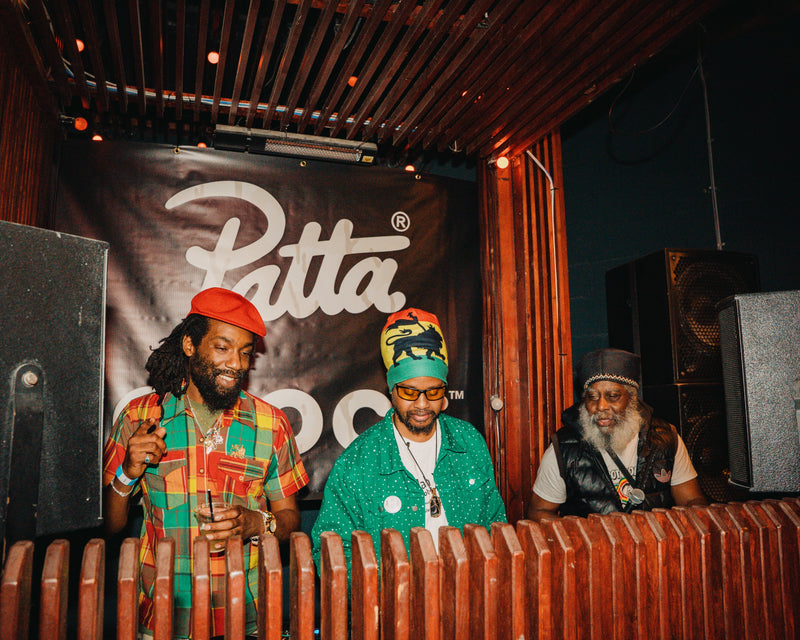
This is not the end — it is a handover. Visit the exhibition Netherlands, Do Better! – The Impact of 15 Years of Black Activism. Engage with the archives. Bring your students, colleagues, and communities. Study what worked. Learn what it costs. Decide what you will carry forward. Progress only survives when people choose to protect it. The baton is no longer in one movement’s hands — it is now in yours. And for those ready to step in even deeper: A super limited Patta x NLWB T-shirt will be available exclusively at the exhibition. Don’t miss out!
Carry the work forward: