Ruff Sqwad's story begins long before the YouTube era—back when youth clubs had vinyl decks, pirate radio ruled the city, and a TDK tape could change your week. More than twenty years ago, a loose neighbourhood posse of about thirty friends tightened into a small music unit—Slix, Shifty Rydos and company—carrying the street name “Ruff Sqwad” into studios, stairwells, and transmitter rooms. Their early education was communal and hands-on: Ghanaian household sounds and pop radio at home, drum & bass and garage on the block, and hours spent DJing and MCing in youth centres that doubled as classrooms. Pirate radio turned that energy outward—bedroom recordings to Deja/Rinse FM reach—while pressing their own vinyl taught business before there was a blueprint.
As Channel U/AKA beamed grime into living rooms, the crew condensed and professionalised, but the ethos stayed DIY: passion first, structure second. In-house producers pushed one another daily, forging a signature that’s emotional and militant at once—heard in era-defining instrumentals like “Together” and “Functions on the Low.” Two decades on, the landscape has shifted from subs to streams, yet the core hasn’t: community, craft, and the mission to move people at 140 BPM. This conversation traces that arc—from youth-club spark and pirate missions to national tours and international stages—and why, for Ruff Sqwad, the music still feels authentic.
Take us back to the very beginning—how did Ruff Sqwad form, and who were the founding members?
It started over 20 years ago as a big neighbourhood crew—about 30 of us hanging out and moving between youth clubs. From that, a smaller music unit formed: myself, Slix, and Shifty Rydos. We kept the larger crew’s name and carried it into the music—Rough Squad. We were about 12–13, learning as we went. Being together every day—DJing, MCing, messing with gear—turned friends into musical partners.
For readers in the Netherlands who didn’t grow up with UK youth clubs—what were they like, and why were they important?
Youth clubs were community spaces with pool tables, table tennis, and—crucially—music equipment. Many had vinyl decks or a little studio. If you had records or a way to get them, you could learn to mix; if you wrote bars, you could practise on the mic. One of my first memories is walking into Devon’s Road Youth Centre (The Linc Centre), seeing a young DJ blending two drum & bass tunes so clean it sounded like one—turned out it was Dizzee Rascal. Without those clubs, a lot of us wouldn’t have developed our skills or confidence.
What sounds shaped you at home and around the ends before grime?
At home: Ghanaian music and whatever was on national radio—pop, rock, chart hits. TV introduced us to the packaging of music—boy bands, pop acts—before we discovered hip-hop, then UK sounds. In the area and at school we heard drum & bass and UK garage, which led us to grime. That mix—African/Caribbean roots, pop radio, and the UK underground—fed into our style. .
When did you first ‘see yourselves’ in the music?
For some of us, drum & bass/jungle came a bit earlier; for others, UK garage intoearly grime was the first time we saw people who talked like us, dressed like us, andcame from where we came from—So Solid, Pay As U Go, that generation. In school, loads of MCs were Afro-Caribbean; it felt natural to step in.
What did the first steps into pirate radio look like, and how did the crew name fit into that journey?
We were making tapes in bedrooms—TDKs recorded at each other’s houses—long before radio. Hearing our first track “Tings in Boots” on air (shout to Triple S Crew on Magic FM) was magical. From there, pirate was the next level. Stations had hierarchies—Rinse FM and Deja Vu had huge reach—so moving from a smaller station to Deja felt like going from a 50-cap room to 1,000 people. Ruff Sqwad started as a street crew name; when radio came into the picture, the name was already established.
What were those early pirate missions like—logistics, crews, and risks?
We were kids travelling across London to abandoned flats or converted council spaces that hosted transmitters and studios. It could be risky—you’d hear rumours about certain areas—but the love for music outweighed it. We usually rolled five-deep at least, sometimes with non-musical friends in the entourage. Pirate radio took us out of our neighbourhoods and showed us the city.
Was there guidance from elders, or was it self-driven?
A bit of both. We were lucky: Dizzee, Wiley, DJ Target, and PAUG were from nearby, so those networks and youth clubs gave us proximity. You’d spit a lyric in a session, someone would clock you and invite you up. Early on, it was about being heard—getting a turn on the mic. When artists started getting signed, it clicked that this could change our lives.
Talk us through your first vinyl—why press it, and how did you make it happen?
“Tings in Boots” had heat on the underground—especially with a young Tinchy Stryder on vocals—so pressing it felt obvious. The model was clear from our peers: build a tune in the underground, get it on radio, cut dubplates, then press. We handled everything: booking studios, getting mixes, cutting dubs for radio, then pressing vinyl and hand-to-handing to shops. Some shops said no (and later those tracks became some of our biggest). Vinyl sales became our first legit income stream before proper shows and bookings scaled.
How did distribution evolve once demand grew?
At first, it was literally records in a car, shop to shop. As demand picked up, distributors stepped in to place stock across the country. It turned DIY hustle into a small business and taught us about the industry—production costs, timelines, margins—while keeping the streets involved.
Looking back, what did that ecosystem—youth clubs, pirates, vinyl—give Rough Squad that streaming can’t?
Access and identity. Youth clubs gave us skills and community. Pirate radio gave us reach, urgency, and a live feedback loop. Vinyl gave us ownership and revenue. Together, they made a pathway for kids from our ends to be heard—before algorithms—by sheer force of sound and consistency.
Channel U/AKA put you on TV screens. How did that shift—from pirate sets and vinyl—change things?
It condensed the crew. We started as 30 friends on the road, became 6–7 for the pirate era, and tightened further once TV rotation kicked in. When one of us started smashing shows nationwide with a bigger camp and then signed a deal, the spotlight widened. It felt strange at first—seeing your guy on other stations while you’re still doing your own sets—but it made sense and lifted the whole name. Tours followed, some of us jumped on those dates, and suddenly we’d gone from radio rooms to arenas of 10–15k.
Mid-2000s grime went entrepreneurial—DVDs, tees, CDs, Star in the Hood, as well as exposure on commercial radio such as BBC Radio 1Xtra and Kiss FM. How did you keep the engine running as you moved from teens to young adults?
Passion first, then structure. We lived together musically—woke up making tunes, passed houses to listen, hit radio twice a week, booked studio, pressed records. It wasn’t Google Calendars; it was brotherhood. Roles emerged: some of us organised sessions, deadlines and drops; others handled mixes, vinyl, videos. Because we were around each other 24/7, decisions happened in motion.
“Together” still erupts clubs. What’s the origin story?
Dirty Danger made the beat at around 14. It began as a loop—open, musical, cinematic. The moment it came through the wall, it felt special. He nearly binned it; we pushed him to finish it. In a later studio run (he funded the time), the hook got laid and the tune became a crew staple. It’s the clarity and space that let everyone paint emotion—that’s why it lasts.
And “Functions on the Low”? How did that sound crystallise?
Nothing was board-roomed. We had multiple in-house producers (each with a distinct palette) feeding off one another—same DAWs, different ears. Friendly pressure kept the bar high: if someone dropped four new riddims today, you weren’t showing up empty-handed tomorrow. We’d build a tune in a week to test it on radio the next. The overlap wasn’t formula; it was shared standards and constant iteration.
Quality control in a big crew is tricky. How did you keep the sound coherent without boxing yourselves in?
By listening—to each other and to the crowd. It wasn’t competition so much as catalysts: one synth line would spark another tune; a drum pocket would trigger a new flip. Because the workflow was relentless—five ideas a day at times—the weak fell away and the strongest ideas defined “the sound” organically.
What’s changed in grime across 20+ years—and what hasn’t?
DIY radio is gone, streaming is king, labels and platforms shifted the power a few times. But the culture cycles back: collaboration is up, the community feel is returning, and people are making grime because it moves them, not just the metrics. It doesn’t feel like 20 years because we never stopped.
Grime’s international pull is real. Why keep bringing the sound to places like the Netherlands?
Because the sound is bigger than us. It sits around 140 BPM, but it’s its own lane—recognisable, iconic, still evolving. We’re grateful to travel with it and rebuild, city by city. The Netherlands has long supported UK bass culture, and linking with local pillars only strengthens the ecosystem.
If your music lived in a film, what genre would it score?
Epic battle cinema—think 300 or Gladiator. Melodic, martial, high-stakes energy. It’s war music.
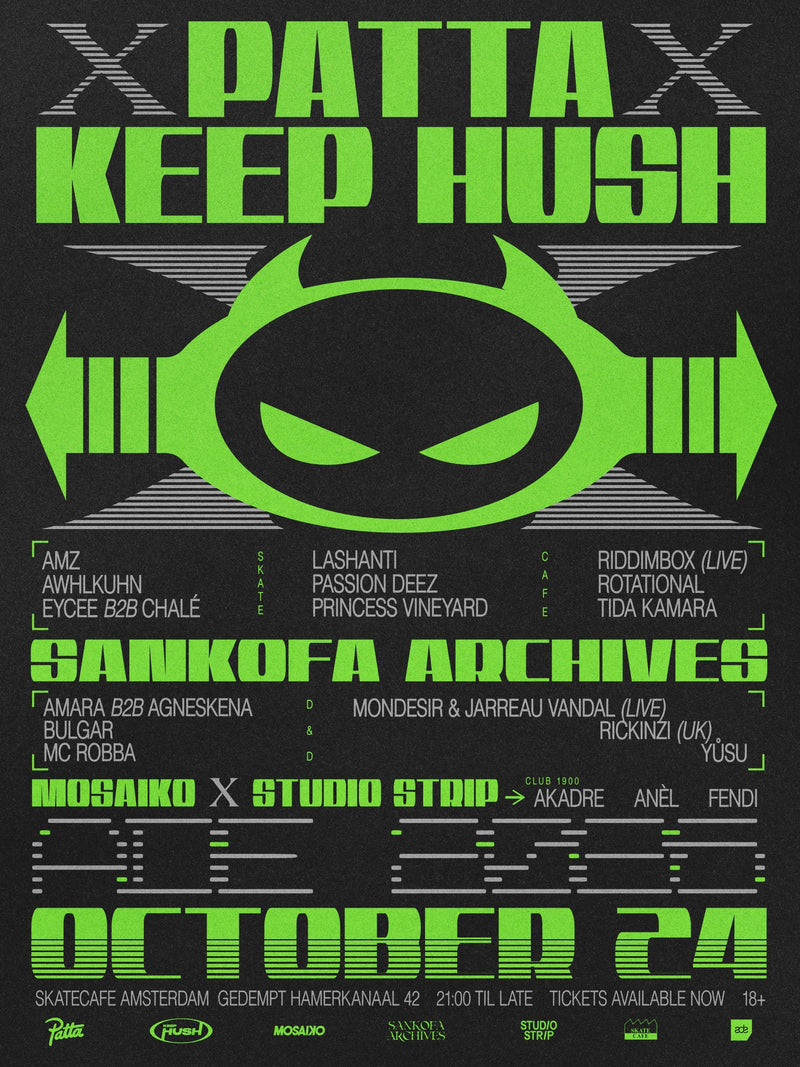
On Saturday, November 1st, La Cassette take over MONO, Rotterdam presenting a crewnight. Bridging the gap between the Netherlands and the UK. Tickets are available now with party contributions starting at €14 and going up to €17.50.
Related Articles
CLUBBB 234! - BBBwithluv
CLUBBB 234! - BBBwithluv
BBBwithluv presents the official music video for “CLUBBB 234!”Stepping further into her own world, BBBwithluv shares the visuals for “CLUBBB 234!”, a new release produced by GØD and written by Malaika.Watch the official music video for BBBwithluv – “CLUBBB 234!” now.
Music
What went down at Patta x Crocs
What went down at Patta x Crocs
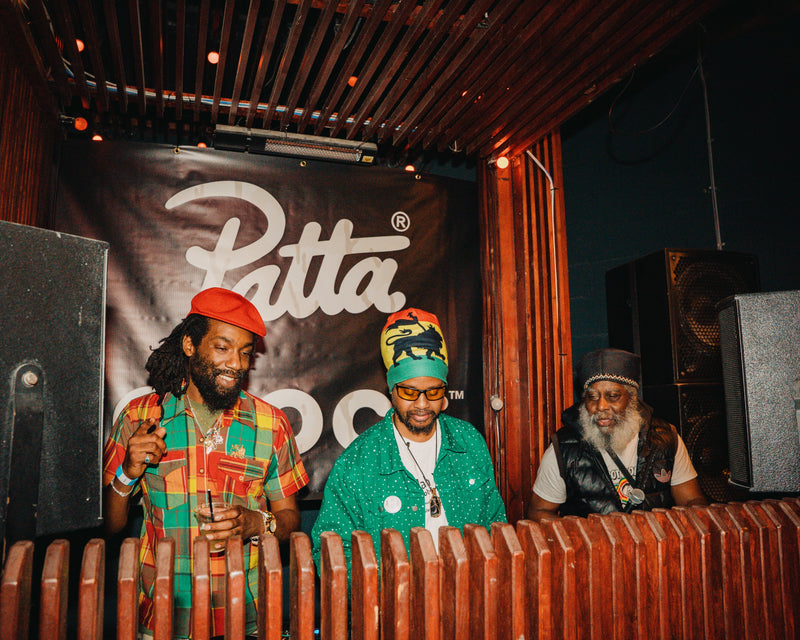
Photography by Sandra NagelOn September 20, Patta and Crocs took over Night Tales in London for a day of music, food and good company, bringing our communities together to celebrate the collaboration. Kicking off at 16:00, DJs provided the soundtrack throughout the day while Sicander held down the BBQ. Beyond the product, the takeover was about making space to connect, catch up with familiar faces and meet a few new ones along the way. Big love to everyone who came through, the DJs who kept things moving, Sicander for keeping us fed and the Night Tales team for hosting us.
What Went Down
Get Familiar: Kofi Stone
Get Familiar: Kofi Stone
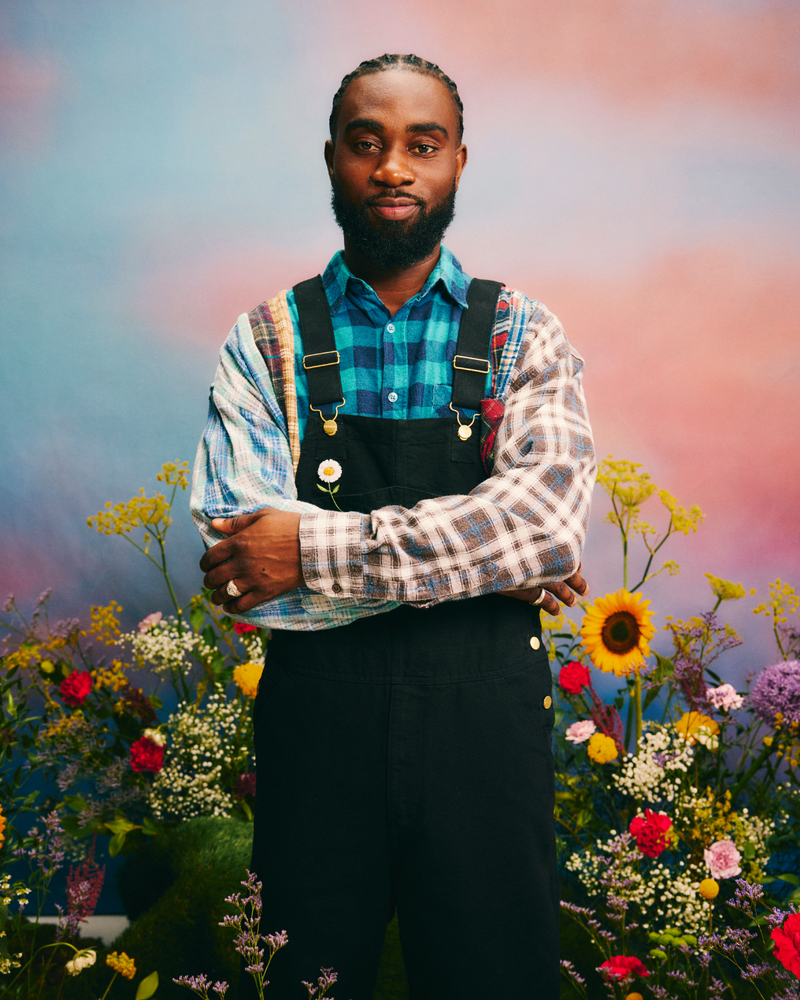
Words by Passion DEEZ Before Kofi Stone was taking his music across Europe, he was recording into a headset on his mum’s old computer and making his little sister listen to the results. Raised between East London and Birmingham, the rapper found his voice through family, faith and artists who showed him there was room in hip-hop to be himself. Those foundations still run through his music today, where personal stories make space for other people to open up too.With ‘The Last Flower to Bloom’, Kofi is taking a moment to appreciate how far he has come. The video for “No Way” brings different versions of himself together to celebrate the journey, rented limo included. But as the crowds grow and the music travels further, he is also figuring out what success means when the goalposts keep moving. We caught up with Kofi to talk Birmingham’s underdog spirit, finding confidence through clothes, collaborations built on friendship and the conversations after his shows that remind him why he does this. Get familiar.For those getting familiar, who is Kofi Stone, and what would you like someone to understand about you before pressing play?Kofi Stone is a man who wears his heart on his sleeve. I make soulful, introspective hip-hop. I’m someone who loves to speak the truth, loves to tell it like it is, and I believe I’m a voice for the voiceless.You grew up between East London and Birmingham. What did each place give you, and where do we hear those parts of your upbringing in your music?The first few years of my life were in East London. I feel like East London has a gritty side to it, and I embodied that. There’s a raw, uncut side to how I approach things, and that’s what I took from East London specifically.Birmingham is similar. It has a very raw edge to it, but I also feel like it’s quite deprived in terms of the arts. When I was growing up, there weren’t a huge amount of opportunities. There was this fighting spirit, this underdog spirit, especially growing up there and almost trying to come back to London to make it.I wouldn’t say I had a chip on my shoulder, but I had a point to prove. There was a hunger that I think you can only understand being a Brummie and being outside the capital. I feel like I embodied that, and it’s in my music.Family was also a big part of my upbringing, and that’s prevalent in my music. I’d say the main themes are love, faith and family. Those have been the most pivotal things in my life.Your dad introduced you to blues, soul and hip-hop, and your mum had her own collection. What do you remember about those early musical moments?I remember a lot about the different sounds, where I was when I heard them and the emotions running through me as a young child. I think it was all building towards me wanting to create my own music.My dad used to play a lot of Nina Simone. We used to take a lot of car journeys from Birmingham to London, and he’d play different music on those journeys. Nina Simone, Nat King Cole, George Benson. He also played a lot of hip-hop: Nas, 50 Cent, G-Unit. Joe, too, on the R&B side. Those are the names I remember from my dad.My mum’s collection was very different. It was more gospel, more R&B and even some pop. I remember Gabrielle. There was loads and loads of music. I was exposed to so much growing up.Your grandfather was a poet. Did you get to read his work, and did it influence your own writing?There are a few poems of his that I’ve read, and that was a big part of why I started writing, actually. I think he inspired me to start.You started recording with a headset on your mum’s old computer. What did that setup look like, and who was hearing those first tracks?I remember that computer. It was my mum’s old computer, and she let me have it. I don’t even know where I got hold of the mic. It was headphones with a telecommunications microphone. I’d plug that in and literally use Sound Recorder on Windows.My little sister was around at the time. I’d make a track, then go and bother her and show her what I’d done. My cousins were around too, so they were aware of me making music when I first started.I was really young, around 11 or 12. I was really keen as a young boy.As you developed your writing, what helped you find your own voice?I think I owe that to a lot of different artists. There was a crop of artists I looked at who were a little bit different in how they presented themselves. I wouldn’t say gangster rap was on its way out, but there was this new crop: your Lupe Fiascos, your Kanye Wests, even Pharrell. They were individuals being themselves in that space.I think I subconsciously took that on board, even in the way I dressed. I understood who I was pretty early. I’d wear Vans and more streetwear stuff. We’re talking mid-2000s, and I’d probably be one of the only ones in my school doing that.The way I dressed helped me find my voice in music. It was almost like, okay, you wear what you want, these are the clothes you like, and this is who you are. You’ve also got to make music that is true to you. What do you want to say?It became one and the same. I feel like that inspired me to live my truth on record.The video for “No Way” brings together a younger version of you, who you are today and an older version of yourself. What sparked that idea?Me and the director were going back and forth with ideas, and I came up with the idea of a younger me and it being a celebration of the journey so far. Those were the foundations, and he took it to another level.Going into this era, I wanted to document this time and celebrate it, so that would be evident looking back. I wanted it to be a coming-of-age thing, seeing how far you’ve come and celebrating the journey.That’s why there’s a limo in there. It’s not something I would normally do. I was struggling with how it would come across at first, if I’m honest. But I felt like, if it was done right, the message would be conveyed.There are little details in there. You can see that it’s a rented limo. It’s almost like you’ve arrived, you’ve got there, but you’re not quite there. You’re celebrating, but you’re still humble. You’re still real. You’re just taking a moment to celebrate. That’s the feeling I wanted in that visual.If those three versions of you could sit down together, what would they make of where you are now?I think the younger me was a little bit more delusional. I think he thought he’d have a mansion at this point, possibly. He used to watch MTV Base and MTV Cribs and think it was easily acquirable.But I definitely think he’d be taken aback by where we are and the things we’re doing: the shows, the amount of support we’ve garnered and all the different little details that are in place now as an artist.Hopefully, the older me has done all that I set out to do. They’d be watching themselves on a journey they’ve already lived. But if it was the older me looking over, I think they’d be proud. They’d say, “This is all that I’d love to be doing,” and it’s been done the right way.What does The Last Flower to Bloom mean to you as a title, and has your understanding of it changed since making the project?To me, it means arriving at your destination, where you set out to go, and everything coming to fruition. In a nutshell, that’s what it means.It hasn’t changed completely, but the goalposts always move. You might achieve a set of things, and that might be what you set out to do. Then you do it, and there’s more you might want to do.What I’ve learned is that there almost is no end to it. Fulfilment is more internal. It’s more of a self-realisation thing than what you can acquire in accolades, or the things the industry or the world deems as success.It’s always changing, and there are different things you might require on your journey to be successful. It’s not just accolades.The project brings together artists including Wiki, Mahalia, Jaz Karis, Children of Zeus, Ady Suleiman and D Double E. How did those collaborations come together?It was nice to work with them because I have a lot of respect for each and every one of them. Some were sessions, and some were sent over.With Wiki, we’d been trying to meet for a while, but we weren’t able to. I’ve loved him for a minute. He’s great, and he shared something that was really dear to him. He really wore his heart on his sleeve on that verse.Mahalia came to the studio. She’s a friend of mine, and we had a great conversation. It was very natural, just like two friends hanging out, and it came together. It almost felt like we weren’t working.Ady was very similar because that’s my bro. We were having a conversation about music and not knowing where to go. He was saying he wanted to do some cool stuff, and I think he felt a bit low that day. I said, “You know what? Let’s just make some music.”In that moment, I made the verses for “Baby Love”. We got into the studio the next day, he wrote his chorus, and that was that. They all came from real moments, which was beautiful.D Double E was unexpected. It was more like, we’ll reach out; he’s a legend, we’d love for it to happen. We didn’t expect too much. Loved him if he did, loved him if he didn’t. Then he hit us back and said, “Yeah, I love it.” He gave us his verse, and it was amazing.There’s also Children of Zeus on there. We did two versions of the song. Jaz Karis was quite recent. I’ve loved her for a minute, and she did great. Everyone did amazing, man. I’m really grateful to have them all on there.Soul runs through your music, alongside hip-hop and jazz. What do you listen for in production, and how do you know when you can tell a story on it?There’s always something that evokes an emotion, that triggers a certain time or a moment in life that’s happened, or helps me find the emotion I’m feeling. I feel like I’m a book of different emotions. That’s one way to describe it.Music has the power to evoke those different emotions. When I hear a certain sound, it helps me tap into that. It might be happy or sad. Depending on how I’m feeling at that particular moment, it can really connect.When I’m feeling a certain way, I look for a certain type of production and hope I can get my thoughts and feelings out. It’s something I can’t really describe, but it’s very much about the musicality. If I’m feeling sad, there’s a certain kind of musicality I look for. If I’m feeling happy or super gassed, there’s a sort of melody I look for. It depends on how I’m feeling.What place does faith have in your life, and how does it enter your writing?Faith is a big part of my music. I wanted to cover it most on my last project, A Man After God’s Own Heart. I try to have it as a running theme because it’s part of me. It’s my upbringing, it’s something I practise, and it’s almost like my cornerstone. Christ being my cornerstone, it’s somewhere I can go when I’m lost, when I don’t know where to go or when I need help.I can draw inspiration from my faith. There’s a lot of knowledge in the Bible, in different parables and things like that. It’s a running theme, and something I feel almost obliged to give my take on as a man of faith in the music industry.I try to be as truthful to myself as I can in the music. If I excluded that, I’d be short-changing people and not being a man of my word. I think it’s important to live your truth, so it’s something I make an effort to have in the music.Your music makes space for vulnerability. Growing up, who gave you the room to be open about how you felt?That’s a really good question. I’ve never thought about who directly gave me that. Growing up, my mum gave me a lot of space to be me, to voice my opinions and my feelings. I think that would have subconsciously had an effect on me and helped me become the man I am today.I grew up in the house with my mum and my sister, so it was a house of women. I think that had an effect on me as a man, learning about that side of things, the softer side. I might have embodied that in some way.Not all the time, but I feel women can be better at being vulnerable, while society says men shouldn’t be. I put that into my music and saw it as a superpower, essentially. There’s strength in vulnerability. I’d say my mum allowed me to be that.There’s also a sense of care in your music: giving people space to be vulnerable and helping them through it. Does that continue in your relationship with listeners?I try to provide that in my music and in person as well. I try to open my doors to individuals. At every show, I speak to every individual who’s there who wants to speak.I’ve had conversations with young men, and some of the stories I’ve heard have been very deep. Some people need comfort. On some of the tours I’ve done, it’s been made evident what my role is as a rapper in this game.Because I’ve opened the floodgates for vulnerability, there are individuals seeking to be nurtured. It puts things into perspective for me. It realigns my purpose and reminds me of my purpose.Your music has taken you across the UK and Europe, with Australia and New Zealand still to come. What has surprised you most about the people and places you’re connecting with?This last tour was a bit surreal. Being a kid from Birmingham, it’s mind-blowing to be able to do pretty busy shows in places like Hamburg and Cologne. Just people turning up, if I’m being honest, is mind-blowing. Every time, I’m taken aback.I think it’s because of the way we’ve built Kofi Stone through an independent route, self-funded. There’s only so much you can do without a machine. The fact that it’s resonating with people in these places, without being forced upon them, is something I first of all owe to God. I can’t say it’s me.I’m always taken aback by it. It’s like, how is this happening? I’m just very grateful.From those first recordings on his mum’s computer to conversations with listeners after shows across Europe, Kofi Stone has kept the people around him close to the music. Family, faith and the freedom to say how he feels continue to guide him, even as his idea of success changes. Spend some time with The Last Flower to Bloom and get familiar with an artist who puts that honesty into every part of the journey.
Get Familiar
Music
Tales from the Echobox: Soft Break
Tales from the Echobox: Soft Break
Interview by Passion Dzenga and Liesje VerhaveLaunching in 2021, Echobox has been forging a path for community radio by showcasing the diverse characters and concepts that surround their station. In this feature, we will be looking into one of the broadcasts that you can tune into, so get locked in and don’t touch that dial. Soft Break moves like a restless signal through contemporary club culture, a Rotterdam-rooted DJ whose sets feel less like genre exercises and more like living narratives. Pulling from jungle, dubstep, and grime, she slides between whispered melody and percussive pressure, from footwork’s controlled chaos to basslines that physically reshape a room. It’s a sound that’s already travelled far: from underground sanctuaries to main stages and institutions, touching spaces like Dekmantel, De School, CTM, RAUM, Garage Noord, and beyond. Always with the same forward-leaning intent.But what makes Soft Break especially vital in 2026 isn’t only where she plays. It’s what she builds. As a driving force behind AMPFEMININE, she’s helped expand the ecosystem for femme-identifying talent through bookings, mixes, mentorship, and hands-on education. At the same time, her Echobox residency has become a kind of sonic laboratory: a place to test ideas the club doesn’t always allow, to take bigger risks, and to treat electronic music as a tool for placemaking. Designing worlds through rhythm, texture, and pacing.In this conversation, we get into the freedom of radio, the discipline of the one-hour format, why skits and quiet moments still matter, and how mentoring brought her back to the core excitement of DJing. We also look forward: toward a three-month Suriname residency that will merge her sound with her visual practice and research into musical migration, diaspora, and the way traditional forms mutate in the laptop age.You have a radio show on Echobox now, and before that you played a few sets on other stations. What has the Echobox residency been like, and what does it bring you?This is really the first time I have had my own show. I have done a few guest sets with my collective, but Echobox made sense for me because there are so many tunes I don’t always dare to play in a club. I feel like I play what I want, but some tracks are just too crazy for a dancefloor context. Radio is another way to explore music and go deeper, and because there’s no direct audience in front of you, you don’t have that pressure of “does this make people move?” It’s more like being in your own living room, listening to music on good speakers.Was it intimidating at first, being on radio?Yeah, at the beginning I was nervous talking on radio because you don’t see who’s listening. Unless people say something in the chat, it feels like you’re talking to yourself, but also not. For my first show I wrote a full outline, minute-by-minute: what I’d say, what track would play when. But it felt overwhelming and took away the experiment. So after the first show, I stopped scripting.How has it evolved since then?I still plan my tracks and I plan my shows. I’ve also done specials, like a 100 BPM special, and my last one was a skit special. But I don’t plan what I’m going to say anymore. Maybe I’ll try again one day now that I’m more comfortable, but that very refined, polished approach doesn’t really reflect me.Your sets often lean bass-driven and rhythm-heavy, but you also have a strong experimental ear. What draws you to those intense, percussive styles?I love a lot of genres, but bass is home for me. I’ve always listened to bass music. And I also love experimental sounds. I’ve always listened to sounds that feel slightly off center), crazy textures, unexpected rhythms, especially combined with dreamy vocals, things you don’t always hear in a club. With radio, you can really explore that because you don’t have to make anyone dance. You can just follow the sound.Does radio give you room to take risks you wouldn’t take in a club?Definitely. I take more risks on the radio because there’s no direct audience response. Like, I might include skits in my club sets sometimes, but I couldn’t do an entire hour of skits in a club. Radio lets you build different kinds of storytelling: voices only, strange interludes, quieter moments.What inspired the skit special?Literally nostalgia. I was listening to classic skits, like the Outkast ones, and I thought, wait… where did all the skits go? There are still skits now, but they’re not as dominant as they used to be, where every album had two or three skits, an intro, an interlude, an outro. I missed that.Do you think streaming and playlist culture killed skits?Yeah, it doesn’t really accommodate them. And it’s probably also an industry thing like why put out a 30-second skit if it doesn’t “earn” the same way. But skits were also a soft break. A moment of quiet between heavier parts.Do you think club culture needs more of those “breaks” too?Yes. It doesn’t have to be 100% intensity all the time. Those little breaks make the impact stronger, it's like a pause to reset your ears.Does the one-hour format change how you build your Echobox shows compared to a club set?It depends. In a club set, I read the room. If I have two hours, my build-up might be half an hour. I’ll start at 130 depending on the slot and the context. With radio, sometimes I don’t go above 140, sometimes I start at 160. I can commit to one specific sound and stay there. Radio is complete creative freedom. Every month I can do whatever I want.Do you like one-hour sets in general?I actually do. I know a lot of DJs don’t, but I like how quickly you can change the feeling. When I first started DJing, I’d play 40+ tracks in an hour because I was so excited. I wanted to play everything. That changed over time because digging takes a lot of work if you mostly want to play with recent tracks and I learned some songs need time; they need a moment. Now I appreciate letting tracks breathe. You’re part of a collective, AMPFEMININE, but your Echobox show is solo. What’s the difference for you?The Echobox show is really for me. At first, I had an idea to invite visual artists. I’m a graphic designer and explore what they listen to while they work, and how visual work could translate into sound. But I realised I also needed moments for myself and my sound. I’ve only had a few guests when I was away, but mostly I want to continue it solo for now.What’s the concept behind the collective’s show?It’s about collaboration, how collaborations come about, the struggles and the beauty of working together. It’s not only about music industry collaborations either. Last year we did a monthly one-hour show, but it felt too short because we wanted to interview a guest and also play back-to-back. So this year it’ll be two hours, every two months, so we can actually go deeper.You also organised a panel talk around staying in music while becoming a parent. Why was that important?It’s something we’ve wanted to discuss for a long time. Nightlife and aging makes you reflect, what happens if you want to become a parent? But also, what if prioritizing a career in nightlife is the path that feels most authentic right now, even if it means not becoming a parent? How do you continue? The biggest takeaway is simple: it takes a village. You need a healthy support system to keep going with the same energy. And online, it can look effortless when people are always out, always active, but it’s not easy, and not everyone has supportive parents or family. The collective also runs DJ education. What gap were you trying to fill?We kept getting asked to do one-hour or two-hour workshops. And honestly, you’re not starting a DJ journey from one hour. So we applied for funding and built a longer course where people can actually learn and experiment. One hour is still better than nothing, but we wanted something real and extensive.What was important about how you structured it?Accessibility. A lot of DJ classes are expensive. Ours was affordable and it was a full package, an eight-week course, press photos, write a unique bio, make your own rider and record a radio set. It wasn’t just “learn to DJ so you can become famous.” It was about discovering music, discovering your sound, learning how genres can connect.What does it feel like seeing people grow through the program?It’s amazing. You see someone in week one who can’t do anything yet, and then later they’re closing a big venue. It’s beautiful to watch. One of the mentees, Meena, just closed Export in Rotterdam.What are the long-term goals?Structural funding and a home base. A place where people can always come to practice. Because if you have to rent space to practice, it becomes less accessible again.Has teaching changed what you personally get from DJing?Honestly, it helped me regain my love for DJing. At some point, I felt like I had to choose between graphic design and music because I was working nonstop, seven days a week, morning to midnight. It wasn’t sustainable. And DJing is even less stable financially than design. So I lost that original reason I started. But mentoring brought it back, and seeing the excitement, the obsession with digging, experimenting, and discovering. That’s the core. It reminded me it should be for you.You work across audio and visual worlds. Do you see a future where those practices merge?Yes, definitely. I actually have exciting news: in September, I’m going to Suriname for a three-month residency. The project is about Surinamese music migrating to the Netherlands and how the diaspora is now playing that music loudly and proudly in the mainstream, while there was a time it wasn’t accepted. I’m interested in how those worlds collide, like mixing that traditional music with techno, or newer club forms. I don’t know the final form yet, but it might become a book or a short film.Does Suriname show up in your DJ identity already?Not directly, but I’m Surinamese, so of course - maybe in how I work with rhythm - changing tempo, switching patterns. It’s hard to explain what I’m doing sometimes. But yes, you could say it’s present in the polyrhythms and the way the bass and groove move, even if the references aren’t explicit.What does this trip represent for you personally?It’s spiritual. I don’t speak the language. I’ve only been back once. My grandparents came to the Netherlands in the 60s, and a lot of my family was born here, so there’s already a gap in connection. Music became my way of connecting without needing words. But now I also want to understand the rituals behind it, the stories, the deeper context.Traditional music forms being made on laptops now, how does that interest you?Because traditionally, some of these forms are made by groups. Live, communal, with multiple people, and now people are making it alone on a laptop with presets. I want to understand what that shift does, and how technology changes culture, sound, and authenticity.Tune in to Echobox, broadcasting from below sea level every week, Wednesday until Saturday.
Get Familiar
Get Familiar: Stapelgang
Get Familiar: Stapelgang
Interview by Passion Dzenga and Liesje Verhave | Photography by Sam Vanacker and Lowie van der GrintenThere is something fitting about Stapelgang taking their name from a street. What began as a group of friends from dance school gathering to listen to music, exchange references and talk about the details hidden inside the songs they loved has gradually developed into something much larger: a musical project, creative community and shared language built from years of moving, listening and working alongside one another.Formed around 2018, Stapelgang grew from friendships established through dance, but the group were never interested in remaining within a single discipline. Music, performance, production, theatre, DJing and visual culture all became part of the same creative vocabulary. Even their name has come to reflect that approach. A stapel is a pile or stack: something built by placing one thing on top of another. For Stapelgang, every experience becomes another layer. Knowledge picked up through dance feeds into music; theatre informs the live show; friendship shapes the studio; and the wider community around them continues to influence what the group can become.Now operating as the trio of Gary “Duimalot” Gravenbeek (vocalist), Jeffrey “Jackson” Loewenicht (producer) and Skeyenno “Kiddy” Talany (vocalist), Stapelgang are pushing that philosophy further with their self-titled EP. Developed through intensive writing camps, tiny rooms, ageing laptops and an instinctive creative relationship years in the making, the project captures a group learning how to turn the chemistry of friendship into something more deliberate without losing the spontaneity that made it exciting in the first place.Following the release of their EP, Stapel, we sat down with the group to talk about growing from dancers into musicians, learning to work professionally with your closest friends, making something from very little, building a live world around their music and why the people surrounding Stapelgang remain just as important as the three standing at its centre.You all knew each other through dance before Stapelgang existed. How did that friendship eventually become a musical project?Gary: Stapelgang started around 2018. We were a group of friends and most of us came from the dance academy, so there was already this whole family surrounding what we were doing. We would have nights where we came together, listened to a lot of music, shared music with each other and really talked about how it made us feel and all the different layers within it. I think that was when the depth of what we were doing together, beyond dancing, really started coming into the room. We started investigating what all of this meant to us individually and what it could mean collectively.At that point there were five of us, including Evan “N4VY” Blaaser - Lumen Atlas and Okke “Orka” Pieters. One night we were outside in Amersfoort and took a picture on this little street called Stapelgang. From there it became “gang”. But the idea of a stapel — putting things into a pile — actually ended up describing us really well. Everything we learn from other work, whether that's theatre, acting, performing or dancing, gets put back into the pile. All of that information comes back into Stapelgang.Jeffrey: We were schoolmates, classmates and dance mates, so our relationships had already developed across all these different layers. That made our connection through music stronger too. Some of us were DJing, some were interested in beats and production, and eventually all of those elements started coming together. We developed a language where somebody can say, “Can you make it more like this?” and we know what they mean because we already understand how the other person experiences music.As dancers, you're embodying the music. Now we're making the music. Those things are connected because you're already trained to recognise what you're looking for emotionally.Was there a clear moment when you decided to start making music, or did it simply become another extension of the way you already related to sound?Kiddy: I think it all comes down to loving music. Dance is one aspect of that love, but there is another realm of enjoying music where you're actually making it. For us, those things add to each other. They're different sides of the same coin.Dance was really the first layer. A lot of us were already interested in how music was made, but dance brought us close together and taught us how to enjoy and analyse music together. Eventually the question became: how do we actually make the kind of music that makes us feel this way? Then suddenly we're vocalists, we're making beats and we're all sitting together in this tiny room that's way too hot with way too many people inside it.Gary: I don't even think there was one real starting point. Some of us grew up around music through our parents, and I was already a vocalist before I seriously started dancing. We were all so obsessed with finding music and listening to SoundCloud beats that eventually somebody had to take the next step and start making it themselves.Because we came from dance, we'd also been exposed to a lot of really high-quality music, so our ears were already slightly spoiled. When you begin producing, you immediately know the thing you're making could be better. You're not necessarily ashamed of it, but you understand that you're still in a process.We'd also worked together creatively before Stapelgang properly became a musical project. We choreographed a performance for the National Theater and had to create music for it, which taught us a lot about how we function professionally. Being friends is one thing; actually being responsible for something together is completely different. By the time we started doing proper studio sessions and writing camps, it didn't feel like we were suddenly jumping into something completely new. We already knew quite a lot about how each other worked.Friendship and working relationships don't always translate easily. How have you learned to work professionally together without losing what made you friends in the first place?Jeffrey: It happened quite organically because we know each other's strengths and we're also aware of each other's weaknesses. I know what I can expect from Gary during a certain part of the day, and I know when his concentration is gone and it's time for me to go to Kiddy instead. You learn each other's rhythm in the room.We've also all worked professionally outside of Stapelgang. We've had our own experiences with companies, groups, theatre and other projects, so we understand what it means to work professionally. We didn't need to spend years discovering basic things about one another before we could actually start creating.Kiddy: The years of friendship matter because we've spent years listening to music together and discussing why a sound hits for one person but maybe doesn't hit for somebody else. After enough of those conversations, you almost start living inside each other's brains.When we're working now, sometimes we only need to look at each other. Somebody can use one metaphor and suddenly everybody understands what needs to happen. We've officially been working together on music for a few years, but in another sense we've been developing this sound and this communication for much longer than that.Gary: And the community around us is part of that too. We're the three people stepping forward now saying, “We're Stapelgang,” and that's true, but the people around us have also been involved in this research. They've listened to music with us, talked about music with us and worked on projects with us.When we did the campaign shoot, for example, there were a lot of friends working on it. Everybody already understood each other's expectations. In some ways, we've already done the work because we've spent so many years learning how the people around us operate.Your self-titled EP came out of writing camps rather than a rigid concept. What were you trying to discover when you began making it?Jeffrey: It started with a writing camp in 2025 that was connected to one of my development projects. Part of my research was about producing, and I already knew Gary and Kiddy were making music individually, so I wanted to invite them into the project.We went into it completely blank. Whatever happened, happened. We knew there were certain colours we were attracted to. We wanted things that sounded cinematic, but we also wanted things that felt raw. Once we were in the room, the direction became clearer.That's basically what the EP represents. It's all of our tastes coming together and what happened between us in that room. There wasn't a meeting where we planned exactly what the project needed to sound like. Somebody would hit the first piano chord and we'd suddenly know: okay, it has to go this way.What were those writing camps actually like? Was getting away from your normal environment important to making the project?Gary: We did two writing camps. The first was almost like being at a Center Parcs-type holiday situation, except we genuinely went there to work. I have to give Jeffrey props for that because writing camps can easily turn into partying and messing around, but we really went in. We'd sleep two or three hours and then go straight back into that little room.The first camp was really about making whatever we felt. Megan was there to take photo’s, Joshua was there to cook the food, and there were people around us who were already friends but who were also there because they're professionals at what they do. That distinction was important. You can be friends and still take each other's craft seriously.The second camp was a little harder because we deliberately tried something different and invited other people in. But both experiences taught us about the conditions we need to make the music hit as hard as possible. Even small things matter. There was catering. Things were organised. We weren't living off instant noodles and turning every night into a party. We ate well and we worked.You've spoken about making music in tiny rooms and sometimes working without ideal equipment. Has limitation become part of the Stapelgang process?Kiddy: Technology might genuinely be our biggest enemy sometimes. When it doesn't work the way you want it to, it can slow everything down. But besides that, these are the people I want to work with for the rest of my life.Jeffrey: We've learned how to work with less. Sometimes all we have is a laptop. My laptop is seven years old now, so it definitely has its moments. The sound treatment hasn't always been right either. But we learned how to ask: if we don't have professional equipment, how do we still make this sound professional? How do we get everything possible out of what we have?That taught me something important about these guys and everybody around us. We don't need to have everything. Whatever we do have, we're going to get the most out of it. Of course, sometimes you just want the great studio, the great microphone and the great laptop. But learning without those things means that when they're finally there, we know what to do with them.Kiddy: That's probably where we shine most. We've always been used to creating something out of nothing. That's part of dancing and it's part of our friendship. Those environments can be difficult, but they're also where we thrive.There is a huge amount of energy around Stapelgang. How much of that comes from the fact that you're creating alongside people you genuinely trust?Gary: The energy feels normal to us. Dance definitely has something to do with it, but I think the bigger thing is feeling safe enough to explore and have whatever outlet you need. Those things create a space where you can do whatever you want.We've worked hard, and my motivation now comes from feeling like everything is possible because I'm working with my friends. I'm really close to them. That's something I want other people listening to us to feel as well: find your people and make something together.That's also part of why we want the music to be something everyone can tap into. I want people to hear what we're saying, find their own clique and move. When I'm standing onstage and I look behind me and see Jeffrey and Kiddy, I explode. That's all I ever wanted. I think everybody deserves to find their own version of that, whatever their lane might be.“FC Stapel” feels like one of the clearest examples of that community becoming visible. How did the track and its visual world come together?Kiddy: We were asked to make an anthem for a dance festival “Freedom City” in Utrecht. Raymond “Baba” Ramdihal, who runs the event, is also a friend of ours. That's what made it special: he's doing his thing by organising an event, we're doing ours, and then those worlds can meet.It gave us the opportunity to work with people like Daring “G” Guermonprez, Arif Gusejnov - Sound Masters Academy, Roy “Royal”, Megan Jane Simons, Trak Studios, Sansho Weynschenk, Jochem van der Velden, Gogo Lupin, Lowie van der Grinten - Lowiegraphy, Macy Sarinah, Joshua Bagano - Shempreh and Elsemieke van Essen. It became another stapel, another pile of different people, but everything still came from the source of who we are.The song itself was funny because we spent two or three days making completely different tracks. We were deep in the process, but nobody was saying anything. Eventually I just told everyone, “I'm not going to lie, I'm not feeling this.” Everybody looked at me like, “Yep. Nobody is.” Then we started again. Jeffrey made the new beat in about five minutes.Gary: We asked him what he actually wanted to make and he basically said: just hip-hop. He found a sample, loaded it in and then we separated. He did his part, we did ours, and suddenly it worked.Kiddy: Then Darin G came in and put his magical fingers on it. After all those days trying to force something, FC Stapel basically just happened.Jeffrey: I think we're free spirits when we're inside the studio. Outside the studio, we're hard workers. But in that freedom, that's where the magic comes from. Some of our songs just happen. When we have too many borders and we're told exactly what something has to be, that's more challenging for us. It's something we're learning, but the songs that arrive organically are often the ones closest to my heart.You all come from theatre and dance, so a Stapelgang performance was never likely to be three people simply standing under a spotlight. What did you want people to experience at the EP release show?Jeffrey: We come from theatre, so we don't want people to simply watch us perform. We want them to experience a moment. There is nothing wrong with just having one light and going raw and rapping, but that represents maybe two percent of who we are.We wanted everything to contribute to the experience: VJing, stage design, outfits and lighting. For me, “Blauwe Vinkjes” was probably my favourite song to perform because everything came together during that track. There was so much happening visually. I'm a very visual person, so when the VJing, lighting and everything else clicked at the same time, I could feel that the whole thing was switched on.Gary: The live setup is important to us because we want it to sound genuinely good as well. We've been working with our own sound engineer and using a MIDI controller within the setup. We play with in-ears and monitors, and then we have the visual stage design around us made by Esmeralda van Kekem — the grass mat, pink objects, blocks, circles. We're still developing it, but we want the technical and visual sides to be taken seriously because the performance isn't separate from the music. It's another part of it.You've built this project through instinct, but you're now talking much more deliberately about organisation and the future. What does the next stage of Stapelgang look like?Gary: This upcoming year is going to involve a lot of focus on the organisational side. We're going to continue releasing singles and keep building the online buzz we're creating now through good music, high-quality videos, funny videos and giving people more depth into who we actually are.We're also looking at fundings so we can plan further ahead instead of constantly reacting. Jeffrey is becoming a father, which means we're thinking seriously about how we can work ahead, unload some of his workload and become more efficient as a group.Kiddy and I are also going to be working together on a theatre performance with two other organisations, which means we're going to be around each other for four months. The plan is to make 32 songs during that period.There's already another single almost ready. It was made during the first writing camp and originally could have been part of the EP, but we decided to leave it off and release it separately.The bigger goal is to create enough music and plan enough of the coming year that we have the headspace to properly develop the organisation around Stapelgang. We want to know who we want to work with, which venues we want to be in, who we need to talk to and where the important moments are going to happen. Then we can plan releases around those moments and make sure the people who need to see us actually see us. It's about building Stapelgang into something where we know exactly what we're doing.For all the talk of releases, writing camps, stage design and future plans, the most important part of Stapelgang might still be the simplest: these are friends who learned how to listen to one another.Long before the EP, they were already building its foundations in dance studios, theatre productions, late-night conversations and sessions spent pulling apart the music they loved. That history explains why so much of their process appears instinctive today. A glance can replace a paragraph. A metaphor can redirect an entire session. After days spent forcing a song that doesn't work, somebody can finally admit it and everybody else immediately understands.That trust extends beyond Gary, Jeffrey and Kiddy. Throughout the conversation, they repeatedly return to the people around them: N4VY and Orka in Stapelgang's beginnings; Megan and Joshua at the writing camps; Raymond and the community behind FC Stapel; and collaborators including Daring G, Arif, Royal, Megan Jane, Trak Studios, Sansho, Jochem, Gogo, Lowie, Macy, Shempreh and Els who helped expand the group's ideas into something larger. Stapelgang may now have three people at its front, but they make it clear that the pile was never built by three people alone.That makes the name feel increasingly appropriate. Every discipline, friendship, limitation, performance and collaboration becomes another thing added to the stack. Nothing has to exist independently when it can feed the next idea.And as Stapelgang move from making music in overcrowded rooms towards a more ambitious live show and increasingly deliberate future, they don't seem interested in abandoning the conditions that first made the project work. The equipment can improve. The stages can become bigger. The organisation can become sharper. But the principle remains the same: find the people who understand your language, make the most of what's in front of you, and keep adding to the pile.
Get Familiar
Get Familiar: Ezra Collective
Get Familiar: Ezra Collective
Interview by Passion DEEZ Ezra Collective’s new album, Here Because of Hope, feels like a record made by a band looking at where they have come from without losing sight of where they could still go. For bassist TJ Koleoso, that growth is less about becoming better musicians and more about developing the patience, perspective and understanding needed to make music about something as complicated as hope.Having grown up playing alongside his brother and Ezra Collective bandmate Femi Koleoso, TJ has spent more than a decade developing the rhythmic relationship at the centre of the band. Along the way, Ezra Collective have gone from Tomorrow’s Warriors sessions to winning the Mercury Prize, being named BRIT Group of the Year and playing Wembley Arena, all while pushing jazz into spaces where it has historically struggled to receive the same mainstream recognition.With Here Because of Hope, the ambition remains, but so does the humility. Speaking with Patta, TJ discusses learning when not to play, the bass as the glue holding Ezra Collective together, what Gary Crosby taught him about confidence without arrogance, the importance of developing away from the spotlight and why the band still wants to be the most ambitious people in every room they enter.You’ve described Here Because of Hope as a record that reflects Ezra Collective growing up. What does that maturity actually sound like to you?I’m not sure I necessarily meant that we’re going from being children to adults as if we’re better at playing now, or as if to say that we were childish in anything previously. I think the theme of hope is one that requires a more mature understanding of humanity and life.The meaning behind a lot of the songs requires a slightly more mature outlook to really grasp what we’re trying to say. Musically, as we’re growing older, there’s maybe an increased patience with getting to a point of release. We’re waiting a little bit more and trusting the journey of certain songs, and more so the journey of the whole album.Femi has spoken about studying West African and specifically Gambian music while making “Only Love”, and how that informed both the drums and bassline. As the actual bassist in the band, what happens when your drummer walks in with a bassline?I don’t always write the basslines for Ezra songs. In fact, it’s probably rarer for me to write a bassline because we’re all songwriters. Everyone spends time writing their own music and brings it into Ezra.At that point, it’s more a case of me putting my bassist hat on and approaching basslines that might have been written by somebody else, then adapting them in a way that I feel is going to sound like me and therefore sound like Ezra. We’re completely used to it. I never think, “Why have you written a bassline?” I love it when people come in with different ideas.The magic comes when each of us takes responsibility for making those ideas sound like ourselves and, ultimately, making them sound like Ezra Collective.You and Femi grew up together, played in church together and have now spent more than a decade in the same band. What can you do together rhythmically now that you couldn’t ten years ago?Ten years ago, I was probably a lot worse at the bass guitar. Not even in a self-deprecating way; I just hadn’t played that much, relatively speaking. I’d played in school bands and was still trying to find my feet in the jazz world.But the thing we prided ourselves on most was always being able to lock in rhythmically, especially on Afrobeat songs. That’s been really consistent over the last decade.Now, there’s probably an increased amount of linking up that we do on certain songs, but there are also more surprises when we play together because we don’t live with each other anymore. We’re not kids anymore. Sometimes when Femi plays certain things, I’m forced to be a little bit more reactive than I might have been in the past, which is great. I love playing with him. I wouldn’t have it any other way.There’s a lot of virtuosity in Ezra Collective, but the music rarely feels like five musicians trying to prove how good they are. As a bassist, how do you know when not to play?I’ve had the benefit of never necessarily seeing myself as a virtuoso in any way, shape or form. I never studied jazz and always felt like I was maybe the least experienced person in the rooms I was in growing up. I just felt an immense sense of privilege to be playing with such talented musicians.Especially having a brother like Femi, who has been playing drums since he was about three, while I didn’t start until I was 11, I was always in a position of humility. It was always: let me listen and play what is necessary.I had a teacher at school who described the bass as the glue in the music because it has the ability to speak rhythm, melody and harmony. Our job is to translate for the rest of the players in the band and make sure everything sticks together and everyone understands.If you take that job as a translator seriously, you don’t necessarily add too much of yourself. If somebody was translating my words and started adding their own opinions and bits and pieces, they wouldn’t be a very good translator.That’s how I’ve always tried to approach bass. First and foremost: what does the song need to tie these different elements together? Sometimes that means doing something difficult or virtuosic, but more often than not it’s sitting down on the groove and providing a beautiful foundation for the more colourful melodic instruments to do their thing over the top.The album asks why so much Black music created through difficult circumstances can contain so much joy. What’s your own answer to that?The only way that’s possible is because of hope.Our predecessors, our ancestors, those who came before us, our influences and inspirations, saw music as a tool for inspiring and invoking a fight in people — a fight for better tomorrows. That inherently is what hope is.Music and writing were often, and still are, used as a means of resistance, survival, faith and community, but always in the direction of something better. When you make that decision to say, “I’m going to hope for a better tomorrow,” sometimes you have to sing it for your soul to believe it. And when your soul believes it, I think your actions are affected by that.On “Only Love”, Pa Salieu is talking from a genuinely difficult period in his life while the band behind him sounds almost euphoric. How do you honour the pain in those words without simply turning it into celebration?I think Pa did that himself. Hearing the music and what we were laying down and deciding to recount moments from his life is exactly what I was speaking about before.If it was just poetry and you were listening to those words, it would be quite difficult to hear that somebody’s life had been like that. But then you think about the tension built up during the verses and what the release is. The release in the chorus is him saying, “Only love is what I have deep inside my soul.”That becomes an anthem of resistance and perseverance. You’re not dwelling or sticking in a bad situation. There’s that release of: this is how I kept fighting, this is how I continue, this is why I’m dancing right now.He’s such a musical rapper that he got that straight away. The theme of the lyrics fits the music absolutely perfectly.You came through Tomorrow’s Warriors, which was co-founded by Gary Crosby, himself a bassist. What did seeing a bass player become a mentor and community-builder teach you about what your own role could be?Gary is a special, special man, mentor and inspiration. His superpower is that he can make you feel like you can do anything.If you play one bass note but play it with your whole soul, he’ll stop the whole class and say, “Well done.” Or you’ll be playing and feeling like things are difficult, and he’ll identify you in the class, walk over and whisper in your ear, “Man, keep going. You’re sounding great. Just dig in a little bit more.”Those moments are invaluable because they make you feel like you can do anything.I take the lessons I learned from him onto the stage every single time we step out there. It’s not about how much you’re getting rated by everybody else. It’s about the feeling you have deep in your soul and the conviction you have when you’re playing the music. That’s what carries out to the people listening.Even if you hit a couple of duff notes, you can hit them properly, if that makes sense.I hope I’m honouring Gary with how I approach bass, not just in what I’m playing, but in trying to have confidence without arrogance. That’s something he definitely taught us.Tomorrow’s Warriors gave you somewhere to develop before there was any guarantee Ezra Collective would become successful. Now that you’ve played Wembley Arena, won the Mercury Prize and won BRIT Group of the Year, what responsibility do successful musicians have to protect those spaces?Tomorrow’s Warriors was a place of inspiration, education and beautiful obscurity, which is needed.We’ve all got examples of child stars who attain fame at such a young age, and we know how that story can go. There’s such an importance in developing in obscurity. There’s a massive place for organisations like Tomorrow’s Warriors where you can hone your craft, but also develop an approach to music that is well-rounded, holistic, always listening, meek, confident and yet not egotistical.It’s our responsibility as people who are maybe a little bit ahead of those 10 or 15 years younger than us to pass on these lessons, teach one another and create spaces where people can grow and develop in obscurity.Someone once told me it’s like taking photographs on a film camera. They have to be developed in a darkroom. If you expose them to the light too quickly, you can lose what could have been something beautiful.I try to hold onto that. Success or the spotlight may happen afterwards, or it may not. But at the very least, young people can have a level of grounding and know that their value isn’t built on success as deemed by other people. It’s about success as deemed by their integrity and the effort they’ve put into what they’re doing.The five of you increasingly have substantial musical lives outside Ezra. What does the word “Collective” mean now compared with when you started the band as teenagers?I’m super happy everyone’s doing their thing. We’re creatives and artists at the end of the day, so there’s spillover and there are projects people want to pursue.I don’t think the word “Collective” means anything different today than it did when we started the band. We are individuals who come together to do something with a common goal and agenda. That’s what a collective really is. It’s the identification of individuals without the veneration of one individual over the others.When we play shows, it feels like we’re making the crowd part of the collective. Our crew, staff and management all know they’re part of the collective as well. There’s this holistic way of looking at the music where we’re all trying to achieve one goal together.It speaks to the five of us as a band, then the whole crew, and then the crowds who come and watch and listen as well.Which bassline on Here Because of Hope are you most proud of — not necessarily because it’s technically difficult, but because it does exactly what the song needs?I don’t know if “proud” is the word, but I do like “Black Flag”. It’s one that I wrote, and I like the way it came about because I’d spent all day working on another song that wasn’t quite happening. Then, in about three minutes, I wrote “Black Flag”, played it to the guys and they were all like, “Yeah, that’s it.”Sometimes it’s a good reminder that there isn’t an equal ratio between how much time you spend on something and whether it’s going to work.If we’re looking at UK broken beat and a bit of what UK jazz sounded like early on, I think that song really nails it. We’ve had that kind of sound throughout quite a lot of our albums, so it’s nice to have that on this one.It is quite difficult to play as well. It kind of burns your hands if it goes on for too long. But yeah, I love that one.If the last ten years were about proving Ezra Collective could take this music into spaces people didn’t necessarily associate with jazz, what do you want the next ten years to prove?Our job is to stay the most ambitious people in the room every time. That’s something me and Femi have spoken about in random chats. We just need to stay the most ambitious people.Whatever that looks like in the next ten years remains to be seen. But if we end up playing a stadium tour, we can’t be surprised by it. Everyone else can be surprised, but we can’t. It was the same with Wembley or whatever accolades have come our way. They’re things we’d spoken about before and said, “You know what? I reckon we could do that. I reckon we could get there.”I see Ezra as having a bit of a mandate to keep going. Whenever somebody says, “the first jazz band to do something,” I’m like, that’s cool, but it’s also not cool because jazz has been around for a really long time. It shouldn’t have taken 100 years for certain things to happen.As long as there are still things to be done first, I see Ezra as having a mandate to knock on that door and see if it opens. The main thing is doing that without losing who we are. Can we be ourselves, play the music we love, not compromise on who we are and still pioneer certain things?The reason we want to do that isn’t for ourselves. When something gets done once, it becomes attainable and realistic for everybody coming after.There are so many bands coming out of the UK from a jazz background, and I’m looking forward to seeing how many of them become staples in UK music and are appreciated by people who, deep down, would probably love the music if they just knew about it.So yeah, onwards and upwards, by the grace of God.For Ezra Collective, ambition has never seemed to be about collecting milestones for their own sake. The Wembley shows, awards and “firsts” matter because each one makes the next possibility feel a little less distant for the musicians coming behind them. Here Because of Hope captures that same outlook: understanding where you come from, believing something better is possible and doing the work required to get there. More than a decade into their journey, Ezra Collective are still looking for the next door to knock on — only now, they know that when it opens, they are not walking through it alone.
Get Familiar
Get Familiar: Marcus Elizabeth
Get Familiar: Marcus Elizabeth
Interview by Marco Sottana and Passion DzengaFor Angelo Marcus Elizabeth, fragrance has always been about more than smelling good. It is a way of holding onto memory, identity and the places that shape you. Born and raised in Curaçao and now based in Amsterdam, Angelo brings those worlds together through Marcus Elizabeth, a constantly evolving creative universe rooted in an Afro-Atlantic perspective.That world now crosses paths with Patta for Saffron Attitude, a warm and confident fragrance built around saffron, leather, incense and woods, with bergamot, ginger and cardamom cutting through the mix. After first introducing the collaboration in Paris, we bring things back home to Amsterdam.We caught up with Angelo to talk about his unexpected route into perfumery, turning confidence into something you can smell, and why the best fragrances need a little dirt under their fingernails.Before we get into perfume, who is Angelo Marcus Elizabeth, and what was the creative journey that brought you to where you are today?I’m a designer and perfumer from Curaçao, now based in Amsterdam. I’ve always been interested in the way objects, clothes, images and scents can carry identity and memory. As a child, I was constantly drawing and paying attention to patterns, colours, shapes and materials. Fashion eventually became the first professional language through which I could turn those observations into something tangible.Fragrance came into my life much more unexpectedly. During the pandemic, I started making scented candles at home, initially because I wanted to work with my hands and quiet my mind. At first, I was making them for myself, then for friends and family, but gradually I became much more interested in the scent itself. I became fascinated by how a handful of materials could create an entire atmosphere, bring back someone you hadn’t thought about for years, or completely change the feeling of a room.That curiosity eventually became Marcus Elizabeth. Today, I don’t really see fashion, perfume and objects as separate disciplines anymore. To me, they are simply different ways of telling and expressing the same story.You originally came from fashion and design. What could working with scent give you creatively that clothing couldn’t?Scent gets past the eye. With clothing, there is almost always an immediate visual judgement: you notice the silhouette, the colour, the styling, perhaps gender or status. Fragrance is much harder to control in that way. Someone can smell something and connect emotionally with it before they have even decided whether they consciously “like” it. I found that incredibly powerful.Fashion taught me about proportion, material, contrast and construction, and I still use all of those ideas when I think about perfume. Fragrance gives another level of intimacy. You can wear a perfume underneath everything and nobody necessarily has to know it is there. It can feel completely private, while at the same time changing the way other people experience your presence. That combination of intimacy and impact is something I find very special.You were born and raised in Curaçao before making Amsterdam home. What do those two places smell like to you?Curaçao smells warm to me. I think of sun on skin, humidity, salt, dry earth, plants just after they have been watered, fruit ripening, flowers, cooking and the sea. There is a certain density to smell in a hot climate; everything seems to project differently.One of my strongest memories is my grandmother’s garden. There were mangoes, mispel, papaya, guava, watermelon and citrus. I had to water the plants every day, and that is where I really started noticing that every plant had its own smell. I loved the lemon tree in particular. Sometimes I would put pieces of lemon peel in my pocket just so I could keep smelling them throughout the day.Amsterdam is completely different. I associate it with cooler air, rain, wet stone, wood, old buildings, coffee and, during winter, sometimes smoke drifting out of chimneys. At the same time, Amsterdam is such an international city that you can turn a corner and suddenly smell spices or food that transport you somewhere completely different.Curaçao gave me warmth and instinct, while Amsterdam gave me structure and contrast. I think Marcus Elizabeth exists somewhere between those two worlds.Are there particular materials, smells or olfactive memories from either place that continue to find their way into your work?Definitely. Citrus peel, green leaves, tropical fruits, flowers, dry woods, warm skin and the smell of the sea keep returning in different ways. But I’m usually more interested in translating the memory than reproducing the smell literally.If I think about fruit from Curaçao, for example, I don’t necessarily want to make a perfume that smells like fruit juice. I might be more interested in the skin of the fruit, its bitterness, a green stem, the humidity around it or simply the sensation of eating it in the heat. Those details often feel more personal and more interesting to me.Amsterdam brings another set of textures into the work: woods, leather, wet stone or mineral notes, smoke and clean musks. Those materials allow me to put structure around the warmth. Again, it is that contrast between the two places that often becomes the starting point.Marcus Elizabeth describes itself as being carried by an “Afro-Atlantic essence.” What does that mean to you personally, and how does something as broad and layered as that actually translate into an olfactive identity?For me, Afro-Atlantic is not a perfume note and it isn’t a formula. It is a way of understanding where I come from. Curaçao sits at an intersection of Africa, the Caribbean, the Americas and Europe. Our language, food, music, architecture and rituals have all been shaped by movement across the Atlantic. There is a lot of beauty in that, but also a very complicated history.I don’t want to reduce something so layered to “tropical notes” or to a stereotypical idea of what a Caribbean fragrance is supposed to smell like. Instead, it influences how I put materials together. I’m interested in warmth alongside discipline, sensuality alongside restraint, something natural against something polished or urban.That can mean a tropical fruit meeting leather, or a floral placed next to something mineral or woody. Something familiar can be made slightly strange. That tension feels much closer to my identity than simply making something and saying: this smells Caribbean.Your journey into fragrance started with you making candles in your attic for yourself, friends and family. Do you remember the first scent you made where you thought, “there might actually be something here”?I remember the feeling more clearly than one exact formula. I was making scented candles very intuitively, without really thinking of them as a business, and then people started responding to them much more strongly than I had expected. They weren’t just saying, “this smells nice.” They wanted to know what the scent was, whether I could make another one or whether they could buy one for somebody else.That was when something shifted for me. I realised that I wasn’t simply making a scented object; I was creating an atmosphere that people wanted to bring into their own lives. From that moment on, I started taking the materials, formulation and the actual craft of perfumery much more seriously.How important is memory to the way you create a fragrance? Are there smells from your childhood that you can still access instantly?Memory is probably one of the most important things in my work. Smell is strange because a memory can disappear from your conscious mind for years, and then one scent suddenly brings the entire thing back. It is not only the image. You remember the temperature, the place, the person and sometimes even exactly how you felt in that moment.My grandmother’s garden is still very accessible to me in that way, especially the citrus leaves and peels, but also bananas, mangoes, flowers and the smell of plants after they have just been watered.I don’t necessarily try to reconstruct those memories literally in a perfume. I use them more as raw material. Sometimes only one small part of a memory enters the fragrance: a green note, a bitter peel effect, a humid floral feeling or a warm wood.For me, perfume can be a door to memory, but the beautiful thing is that it can also create completely new memories for the person wearing it.How do you reference where you come from without becoming nostalgic or overly literal?That is something I think about a lot, because heritage should never become costume. If you translate everything literally, you can very quickly reduce a culture to a set of recognisable symbols: coconut, rum, tropical flowers, bright colours. That doesn’t represent my experience of Curaçao.I would rather take something culturally specific and ask myself what it actually means to me emotionally or materially. What is the texture of that memory? Where is the tension in it? What happened around that smell?From there, I can translate it into something contemporary. The goal is never to recreate the past perfectly. I want the past to have a conversation with the person I am today.When you begin developing a new fragrance, what comes first?A new fragrance can begin almost anywhere. Sometimes the starting point is a material, sometimes a name arrives first, and sometimes it is an image, a person, a place or even a contradiction that I find interesting.The first question I normally ask myself is: what should this perfume feel like? From there, I begin collecting references and materials and start building an accord that captures the central idea. Once that accord works, the process becomes almost architectural. I start asking what needs to support it, where the tension should come from, what needs to disappear and how the fragrance should move from the opening into the skin.I rarely want a perfume to explain itself completely within the first five seconds. I like the idea that you have to discover it gradually.Let’s get into Saffron Attitude. What was the first conversation between Marcus Elizabeth and Patta, and at what point did you realise there was a fragrance to be made together?The first conversation actually wasn’t about making a perfume. It was much more fundamental: we were talking about whether Marcus Elizabeth and Patta were genuinely a good match, and whether bringing these two worlds together could become the beginning of something beautiful rather than simply a one-off collaboration.A big part of that conversation was also about my ambitions as a black perfumer and founder. The perfume industry still has very few black perfumers and black-owned houses with real visibility, particularly at the level where I want Marcus Elizabeth to operate. I spoke very openly about where I want to take the brand, the space I want to create within the fragrance industry and what it means to build that from my own perspective.The question then became: what role could Patta play in that journey? Patta truly asked how can we help? That made the collaboration much bigger to me than simply putting two brand names next to each other. Patta has spent years building a platform around culture and community and creating space for people and ideas that do not necessarily come through traditional routes.Once we realised there was a genuine alignment between us, fragrance became the natural medium through which to express it. Saffron Attitude grew from that conversation and became a fragrance about presence, confidence and taking up space without apologising for it. In that sense, the idea behind the scent is very closely connected to the reason the collaboration exists in the first place.If you had to describe Patta into an olfactive identity before this collaboration existed, what would it smell like?Warm, direct, textured and slightly rebellious. I would imagine spice, worn leather, woods and incense, perhaps with something mineral or metallic underneath. But there would also have to be freshness, because Patta has a lot of energy. I wouldn’t want it to become too heavy or nostalgic.It should smell like someone entering a room without asking permission to be there. And actually, when you describe it that way, you end up quite close to Saffron Attitude.Which side of saffron were you interested in bringing forward for Patta?The leathery, dry and spicy side. We didn’t want saffron to become overly sweet or conventionally luxurious. Saffron can have this almost metallic tension to it, and I find that incredibly contemporary.In Saffron Attitude, leather, incense and woods give the fragrance depth, while bergamot, ginger and cardamom keep energy running through the composition. So the saffron has presence, but it isn’t sitting there like a precious jewel that you aren’t allowed to touch. It has a little dirt under its fingernails.How do you translate something abstract like confidence into the texture, projection and composition of a fragrance?Confidence isn’t necessarily loud. Someone can walk into a room, barely say anything and still completely change the energy. That distinction was important when we were developing Saffron Attitude. I didn’t want to create a fragrance that simply screamed through enormous projection; I wanted it to have presence.You build that presence through contrast and structure. The opening immediately brings energy, while saffron, incense, iris and leather give the fragrance texture and identity. Then the woods underneath create stability and keep everything grounded.The end result has to feel composed rather than desperate for attention. For me, that is confidence: you notice it, but it doesn’t need your approval.How important was the progression, or drydown, to the fragrance?Very important, because I don’t think a perfume should be a photograph. It should be a film. The first spray of Saffron Attitude is bright, spicy and energetic, but then it gradually begins to reveal more texture. The iris changes the surface of the fragrance, incense introduces smoke, and the saffron and leather create warmth and tension.As it develops further, the woods, vetiver and amber become increasingly important. That evolution is part of the personality of the fragrance. You encounter the confidence first, but as you spend more time with it, you begin to understand the depth underneath.Was the contrast between bright and dark, fresh and warm, spicy and woody deliberately built into the fragrance?Absolutely. I’m very interested in contrast because people aren’t one thing either. Patta can be street and sophisticated at the same time, rebellious but also incredibly precise. Marcus Elizabeth similarly exists somewhere between island warmth and urban structure.It therefore felt very natural for the fragrance to contain those contradictions. Without the brighter elements, the leather, saffron and woods could easily become too heavy. At the same time, without those darker materials, the freshness would not have enough gravity.It is really the tension between those two sides that makes the fragrance interesting.Was there a version of Saffron Attitude that almost became the final fragrance but ultimately got rejected?We actually started with three completely different fragrance directions. Two of them were rejected, while Saffron Attitude was the one that immediately stood out to us.What made it feel right was its spicy, bold and warm character. It simply had more presence. There was something about the combination of saffron, spice, leather and woods that connected very naturally with the energy we associated with Patta, while still feeling refined and wearable.The other two fragrances had interesting qualities, but Saffron Attitude had the strongest identity. It didn’t just smell good; it had an attitude. Once we recognised that, the decision became quite clear.What does Patta bring to the fragrance that Marcus Elizabeth might not have arrived at on its own, and what did Marcus Elizabeth bring into Patta’s world?Patta brought a certain directness into the process. Marcus Elizabeth can sometimes be very introspective; we think a lot about memory, ritual, material and atmosphere. Patta brought community, street energy and a kind of unapologetic cultural confidence that pushed the collaboration in another direction.At the same time, I think Marcus Elizabeth brought another sensory dimension into Patta’s universe. Clothing is something you see and touch, and music is something you hear, while perfume is almost invisible yet incredibly intimate and personal.In that sense, both brands pushed each other slightly outside their usual medium, which is when I think collaborations become genuinely interesting. I’m very thankful that Patta gave us the opportunity and trust to create something together in this way.How did you translate the same olfactive idea into the Saffron Attitude candle?You can’t simply pour a perfume formula into wax and expect exactly the same experience. Skin has warmth, movement and its own chemistry, whereas a candle interacts with a flame, a room and the air around it.For the candle, I wanted the saffron, leather, woods and amber to create more of an atmosphere around you. It can be slightly warmer and more enveloping because it is scenting an entire space rather than sitting on one person’s skin.The perfume becomes part of your personal presence, while the candle changes the environment around you. They speak the same language, but they speak it in different voices.Paris was effectively the introduction, but this is a collaboration between two Amsterdam-rooted worlds. Does bringing Saffron Attitude back to Amsterdam for the official launch feel different?Definitely. Paris was very exciting because you have that Fashion Week energy around you, and it was essentially our first opportunity to introduce Saffron Attitude to a wider audience.Amsterdam feels much more personal. This is where Marcus Elizabeth has its atelier, where Patta has built such an important cultural presence and where our communities actually overlap. Bringing the fragrance back here therefore feels a little like completing the circle. Paris was the introduction; Amsterdam is where Saffron Attitude comes home.Has anyone’s interpretation of Saffron Attitude made you smell the fragrance differently yourself?What I really enjoy is seeing how differently people move through exactly the same fragrance. One person immediately finds the saffron and leather, while someone else connects much more strongly with the incense. Others first notice the brighter spices or the softness of the iris.As a creator, you know every decision that went into the composition, so at some point you stop experiencing it completely innocently. Then somebody describes something you made using completely different words and suddenly you smell that part of the fragrance again.I actually like losing some of that control. Once a fragrance belongs to somebody else, their own experiences and memories become part of it too.Who did you imagine wearing Saffron Attitude while you were making it?I deliberately didn’t imagine one specific person. I was much more interested in imagining an attitude: someone who has their own point of view and a certain confidence in who they are.That person could be twenty or sixty. They could be incredibly expressive or extremely quiet. What connects them is that they are not dressing, speaking or living primarily for somebody else’s approval.That feels much more interesting to me than designing a perfume around a conventional demographic.Do you think the traditional idea of “men’s” and “women’s” perfume still has any relevance?As a marketing category, it obviously still exists, but creatively it isn’t very useful to me. Smell itself doesn’t have a gender.Leather can be beautiful on anyone, rose can be powerful, woods can be sensual, vanilla can be dark and florals can feel masculine. Those classifications tell us much more about cultural conventions than they do about the materials themselves.I would much rather ask someone: does this smell like you? To me, that is a much more contemporary and personal way of thinking about fragrance.Do you see Marcus Elizabeth ultimately as a perfume house, or as a much wider creative universe where scent happens to be the starting point?Perfume is at the centre, but Marcus Elizabeth is gradually becoming a wider creative universe. I still very much think of it as a perfume house because scent is our most important language and the place where many of our ideas begin, but I’ve never wanted creativity to stop at the bottle.Artifacts, candles, fashion, objects, imagery and exhibitions can all belong to the same world, as long as there is a clear reason for them to exist. Ultimately, I’m interested in building a universe that you can smell, wear, touch and live with.What do you think people misunderstand most about the craft of perfumery?Probably how much editing is involved. From the outside, perfumery can sound incredibly romantic: you choose a few beautiful ingredients, mix them together and suddenly you have a perfume.The reality is much more precise. A tiny adjustment can completely change the balance of a composition. Sometimes you add more of something because you want it to become more noticeable and somehow it becomes less visible. You remove one ingredient and another suddenly becomes incredibly loud. Something can smell beautiful on a blotter and behave completely differently on skin.A lot of perfumery is repetition, evaluation and restraint. Knowing what not to add is often just as important as knowing what to add.What scent do you personally never get tired of?Fresh citrus peel. I think that probably goes all the way back to the lemon tree in my grandmother’s garden.When you cut or peel a citrus fruit and the oils are released into the air, there is something incredibly alive about that smell. It is so familiar to me, but somehow it still manages to surprise me every time.And finally, when somebody sprays Saffron Attitude and walks out of the door, what do you want them to feel?I want Saffron Attitude to feel like the final thing you put on before leaving the house. You’ve chosen your clothes, your shoes and maybe your jewellery, and then the fragrance is that final gesture that completes everything.Not because the perfume suddenly transforms you into somebody else, but because it brings something forward that was already there. It gives you that final sense of presence, confidence and attitude.You spray it, and you’re ready to go.Saffron Attitude is that final move before you step out the door. It is not about becoming someone else, but bringing a little more of yourself forward. Now, the fragrance comes home to Amsterdam, the city where both Marcus Elizabeth and Patta have built their communities.Come experience Saffron Attitude for yourself this Friday, September 11 at Patta Amsterdam, where the fragrance and accompanying candle will be available in-store.
Get Familiar
Patta x Keep Hush at Skatecafe 2026
Patta x Keep Hush at Skatecafe 2026
We gave you fair warning; now here’s the lineup. Early bird and regular tickets are already gone, so if you’re still figuring out your Amsterdam Dance Event goals, now is the time. Final tickets available now.On Saturday, October 24th, we’re taking over Skatecafe from 21:00 till late for Round 4 of our ADE events, with over 1000 people dancing across three rooms. The night is 18+ and as a little gift from the universe, the clocks go back that night so we get an extra hour on the dancefloor.From emerging talent and local legends to international guests, expect the energy to build from doors open to close. Grime, dubstep, bubbling, soundsystem pressure, leftfield bass, UKG and jungle collide with baile funk, gqom, kuduro, Jersey club, dancehall, Afrobeats, amapiano, R&B, hip-hop and house. Plus two live sets pushing things into different territory, from Caribbean carnival pressure to soulful Afro-electronic R&B. What are you waiting for? Get amongst it!
Events
Get Familiar: Ruby Francis
Get Familiar: Ruby Francis
Interview by Passion Dzenga A year after releasing Pages of Philosophy, Ruby Francis still isn’t quite ready to close the book on it. If anything, the London singer, songwriter, producer and DJ has found another way into the record.Written and produced by Francis herself, Pages of Philosophy sits somewhere between R&B, neo-soul, jazz and electronic music, reflecting an artist who has never had much interest in staying inside one musical lane. Now, a new collection of remixes opens the album up even further, handing its songs to friends and collaborators from London to New York, Australia and South Africa and allowing them to pull the music into completely different spaces.It also arrives as Francis’ relationship with the dancefloor continues to deepen. Alongside making her own music, DJing has become another important part of her practice, changing how she thinks about movement, arrangement and what happens to a song once it leaves the studio.We caught up with Ruby to talk about giving Pages of Philosophy a second life, trusting other producers with her music, the difference between thinking like a songwriter and a DJ, her Jamaican and Italian-British roots, and what comes next.Pages of Philosophy has been out for a year now. When you listen back to the album today, what do you hear differently from when you first finished it?It’s hard to put into words because I feel a lot of different, contradicting things. It still feels brand new to me, and I’m still excited by it and its future. But at the same time, when I listen back, I feel that it’s ageing and nurturing, like good cheese or wine!I’m really proud of it and still feel excited by it. I love the musical and sonic choices I made, and I’m excited to watch it grow. It’s a bit like a baby turning into a toddler.What made this project feel like the right one to revisit through remixes rather than simply moving straight on to the next record?It almost wasn’t my decision! I got such great feedback from people, including a lot of artists, and a few of them asked if they could remix the record. It felt right to honour that, and I’m so happy I did.I’ve also been deepening my knowledge and career as a DJ, and I’m really starting to understand the power of remixes. Whether it’s bringing something onto the dancefloor or playing it on my radio shows, you’re giving the music a new life and giving different people new ways to digest it.I guess if you’re asking me why, my answer is: why not?You wrote and produced the original album yourself. What was it like handing those songs over to other producers and letting them reshape something so personal?If I’m honest, once the original project was released, I felt a sense of detachment from it. It no longer belongs to me. As an artist, I’ve done my part and handed it over to the world.I felt similarly about handing it over to other producers. These are producers I’m a fan of and also friends with, so there was already an element of trust and excitement around it.The remix project brings together artists from South Africa, Australia, New York and London. How did you choose the collaborators?It was all quite organic. I had pre-existing relationships with each of the artists involved and I’m genuinely a fan of all of their music.Geo Jordan is my chosen family. We’ve been friends and collaborators for years. MXXWLL I’ve known for many years too; we’ve always kept in touch online and started working on a few bits when he came to London. Geotheory and Fiji Mageba are artists I’ve been a fan of for a while — I love everything they release and we’ve always been in touch online. Jamie and Basile are friends and are always up to cool stuff, whether that’s playing live or DJing at events around the city.I’m super lucky to be in touch with all of them.Did you give anyone direction on where you wanted them to take the originals?None at all. I honestly didn’t have any expectations, because if I did, I feel like that would defeat the point of a remix.I wasn’t approaching it thinking about making music that sells. It was more about creative curiosity and seeing how each producer would interpret the music individually. I gave no direction to any of them and simply trusted their talents to create something unique to them.Was there one remix that completely surprised you or made you understand the original differently?They all did to an extent. I really loved hearing my vocals on Geotheory’s liquid vibe, and Fiji’s super slow, ethereal one.I also loved how all of the remixes reharmonised the chords I’d written. I’m a huge fan of chords and always love a good reharm. It’s so rewarding to my brain and spirit.Your own contribution is the club edit of “Y U Always On My Mind?”. How does your approach change when you’re thinking like a DJ rather than a songwriter or producer?I’m thinking more about bringing the mood and how it might fit with other songs rather than the arrangement or individual technical bits. I’m thinking, “How can I make people get gassed and move?” rather than, “How can this lyric tell this particular story?” or, “What type of snare should I use?”With this remix in particular, I pretty much just sped it up and made the arrangement longer so DJs can mix it with other tracks easily. I didn’t actually change anything in the production.Your music pulls from ’00s R&B, neo-soul, jazz and electronic music without ever sitting neatly in one space. Have you always been comfortable moving between those worlds?Absolutely. I’m always most comfortable outside the box.Each of these sounds has raised me both as an artist and as a human, and I love being able to pull inspiration from each genre. My expression has never strictly fallen into any one category. That’s just how it has always naturally been for me. I don’t know any different.You started writing and producing from a really young age. What did learning to produce your own music give you creatively that songwriting alone couldn’t?More ways to communicate and express myself — often more than lyrics can. Production says things that words cannot. Sometimes a progression of chords, a melody or an arrangement can say it all.With words, you can say, “I love you,” and of course there are other poetic ways to convey that. But musically, there are limitless ways to communicate the same feeling. It could be through the movement of chords, the space you use, bringing strings into one section and taking them away in another, or through synth lines that are slightly detuned, reverbs and textures.“I love you” can really be felt without the words.Your dad played bass and you grew up around a lot of music. What parts of your Jamaican and Italian-British upbringing do you recognise in your music now?It’s interesting because my cultures didn’t really play a huge part in my musical upbringing. It came more through subtle values at home and my wider family. I’d visit my Jamaican grandparents and hear their beautiful accents and stories from the past, or visit my Nonno and have risotto and learn words with him. Those things trickled down into my home as a child, but they weren’t necessarily the most prominent part of growing up.It’s actually in my adult years that I’ve become much more interested in the music and culture of Jamaica and Italy. Especially Italy. I’m obsessed with Italian film music from the ’50s through to the ’70s. Composers like Henry Mancini and Piero Piccioni have really inspired me.I’m also feeling called to travel to Jamaica and Italy to deepen my knowledge of my Jamaican Black history as well as my Italian history.And through my dad being with an Icelander and moving to Iceland, I now call Reykjavík a second home. I’m often back and forth between there and London and feel really familiar with the culture there too — Björk, hot springs, soup and the Northern Lights!You’ve mentioned everyone from Stevie Wonder and Jill Scott to Björk and Astrud Gilberto as influences. What part of your musical taste do you think might surprise someone who only knows you through your R&B records?Anyone who really knows me would say none of it is surprising! But perhaps people who are more familiar with the R&B side of my sound might be surprised by the more alternative stuff.I love indie, alternative and slightly rocky stuff like Men I Trust, as well as the old-school film music I mentioned earlier.On 10 September you’re performing at Gamla Bíó in Reykjavík around Yasiin Bey’s show. What does sharing a bill with an artist like him mean to you?It’s pretty nuts! It’s a massive privilege to share the stage with such a legend.Although I’m not the most familiar with his music, I love pretty much anything that came out of the Soulquarians, and I love what he stands for lyrically. I’ve heard he’s a wicked performer, so I’m excited to watch him do his thing. That’s the best way to fully educate myself!I also think it’s great that his music is being brought to the small population of Iceland. Big ups to my boy Benni, B Ruff, for making it all happen.The performance itself will be a DJ set by REW, with a few other artists joining for a kind of cypher set with some crazy visuals. It’ll be a vibe.After giving Pages of Philosophy this second life, what feels like the next chapter for Ruby Francis?New music! I’m going to be locking in over the next few months to work on my demos and a new direction.I’ll also be travelling to Jazzy Jeff’s Playlist Retreat this month, which I’m sure will bring about new inspiration and collaborations. I’m excited to finish up and release new stuff.I’m also working on my next live headline show in time for the five-year anniversary of my debut album, Archives.A year on, Pages of Philosophy feels less like a record Ruby Francis is looking back on and more like one that is still finding new places to go. Handing the songs over to friends and collaborators has opened them up to different tempos, dance floors and interpretations, while her own growing relationship with DJing has given her another way to understand how music can move between people.That same curiosity seems to be carrying Francis into whatever comes next. With new demos taking shape, time set aside for writing and collaboration, and the fifth anniversary of her debut album Archives approaching, she is already thinking beyond the world of Pages of Philosophy. If the remix project proves anything, though, it is that moving forward does not always mean leaving old work behind. Sometimes a song just needs a different set of ears, a different room or a few extra BPM to reveal what else was hiding inside it.
Get Familiar
MOSAIKO Block Party
MOSAIKO Block Party
As we prepare to close the doors of Patta Milano, we’re spending the weekend showing love to the people and communities that have made the city feel like home.On September 13, our homies at MOSAIKO are taking over Quarto Oggiaro for the MOSAIKO Block Party — bringing together music, community and some of the people pushing Milan’s creative culture forward.Milan is full of artists, collectives and communities building incredible things every day, but those different worlds don’t always get the chance to meet. MOSAIKO wants to change that.Taking place at ARCI Itaca, the Block Party is about creating a space where people can connect, dance, create and celebrate together. More importantly, it isn’t about bringing something to Quarto Oggiaro, but building something with the neighbourhood.Created alongside Milan-based collectives, artists, partners and local community members, the day is rooted in exchange, collaboration and giving back. Music. Community. People. Energy. We’re proud to support the homies and see Milan come together for this one.