Interview by Passion Dzenga
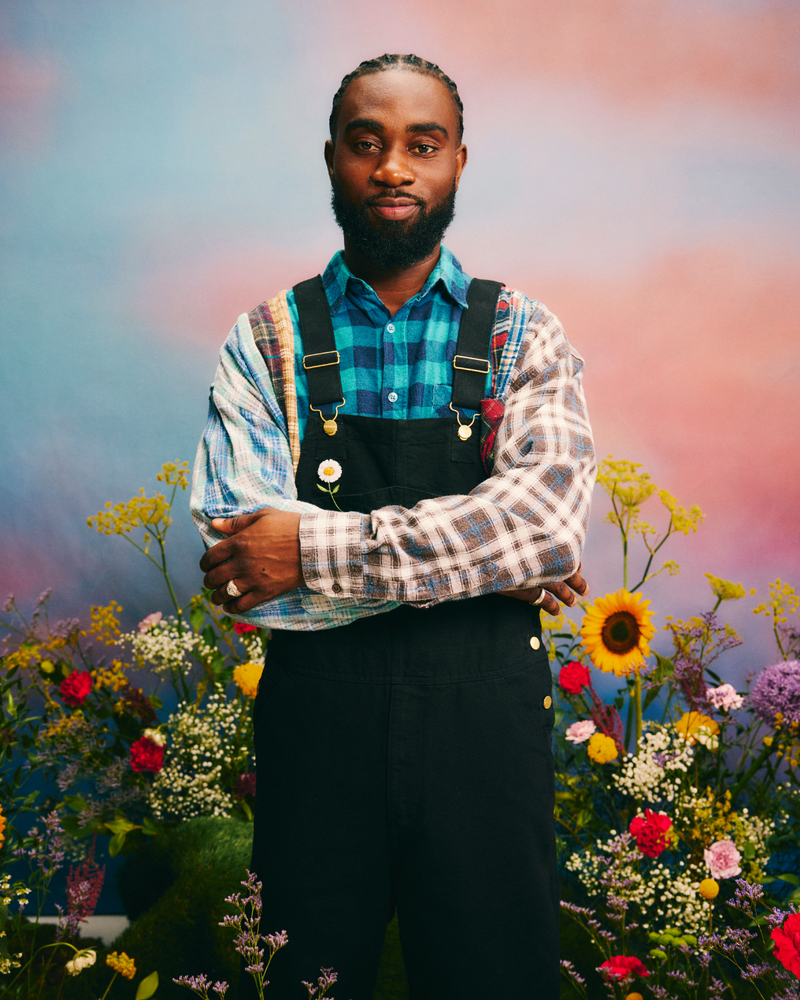
Nicole Blakk moves like someone who’s already lived three careers. In the space of a year, she’s gone from music being “just a hobby” to a full-time reality — powered by viral freestyles, a DJ Mag nomination, and the kind of co-sign that changes how a room listens. But the most telling parts of her story aren’t the headlines; it’s the grind underneath them: 33 jobs that never fit, a sister who kept paying for studio time when nothing was landing, and a leap from Birmingham to London with £60 and zero safety net.
What comes through in conversation is how intentional she is about building: letting the beat decide whether she sings or raps, getting hands-on in collaborations, and insisting every song contains a left turn — a structure switch, a language flip, a new texture. That refusal to be boxed in is also how she navigates a male-dominated industry: she doesn’t argue for space, she takes it, and lets the bars do the talking.
In this interview, she breaks down the real origins of her multilingual flow — from performing French so her grandmother could feel the music, to Punjabi “shop tours” that turned student survival into a viral moment — and reframes “Money On My Mind” as more than a catchy hook: a mantra for staying focused when feelings and pressure try to pull you off course. Grounded in faith, community, and a relentless belief in her own vision, she’s stepping into 2026 with momentum — and with a clear message: she’s not here to be “good for a girl.” She’s here to be undeniable.
 After having such a monumental 2025 — viral freestyles, bucket list collaborations, a DJ Mag nomination — when did it start to feel real to you?
It started to feel real when I met my manager, Wez Saunders. Music had always been a hobby for me. I’ve loved making music since I was young, but I studied Digital Marketing at university, did my Masters degree and kept working. I never thought music would become “a thing,” even though I wanted it — I just didn’t know how to get into it.
My older sister was paying for studio sessions and music videos, and even when it wasn’t going anywhere, she still believed in me and pushed me to keep going. Then I met Wez, and within a year I was on the Glastonbury guest list performing on Shangri-La main stage, did SXSW, had the Dave feature, and DJ Mag nominations… all of that happened within a year. That’s when it became a full-time job instead of me working random jobs.
What kind of jobs were you doing before music became full-time?
Honestly, I’ve had 33 jobs. It sounds terrible, but I was always working on something. Hospitality, even construction — nothing ever stuck. I’d leave a job and already be looking for the next one. I just could never settle because I knew music was what I really wanted.
When you started making music as a teenager, were you already making the same kind of music we hear now? Or did your sound shift while you were finding your voice?
I wasn’t rapping at all back then. I was singing. I was writing poetry and singing. Rapping was new — I only started rapping about two years before I met Wez.
What made you start rapping?
I started rapping because I was trying to make a diss track to my ex. He was a rapper. From there, I just kept going and didn’t stop.
When you’re in the studio, do you approach a track more like a songwriter or like a rapper? What comes first?
The beat comes first. I listen to the instrumental, and the type of beat tells me whether I’m going to rap or sing. A lot of producers, before they even hear my stuff, will approach it like a soft guitar vibe because they see a woman and assume I’m going to sing — melodic, not bars. But I get really involved on the production side. I want my music to feel different. I always make sure there’s something different in every song — adding a language, switching the structure, putting rap in the second verse instead of the first, whatever. I feel like I’m very unique as a person, and I try to reflect that in the music. And I don’t plan what I’m going to write before I get there. I get to the studio first, feel it out, and build it from there.
So it’s not just “writing over beats” — it’s more like you’re building the record with the producer.
Exactly. It’s collaborative. I’m not just jumping on anything — we’re making the music with intent.
You mentioned expectations people bring into the room because you’re a woman — but you’re also unapologetic and empowered. What challenges have you faced navigating such a male-dominated industry, especially in studio sessions?
A hundred percent. It’s frustrating, and I know I’m not the only woman who feels this. In male-dominated spaces, it feels like you have to prove a point. If I wrote the most basic bars and rapped them, people wouldn’t react — but if a man rapped the same basic lyrics, he’d get the craziest reaction. So I have to make sure I’m doing the most: punchlines, language switches, everything.
Even performing — I feel like I have to have the best stage presence, otherwise people hit you with, “She’s alright for a girl.” I heard that once and I was like: no. Don’t add “for a girl.” If I’m next to men rapping, I’m clearly as good as them.
The hardest part is trusting yourself. Trusting yourself as a woman in that space can get difficult, and it’s so easy to start thinking you’re not good enough. Men naturally carry this aura of dominance, so you have to put your foot down. Now, when men come with little comments, I let my music do the talking. I’m like, “Cool — put a beat on right now.”
When I listen to your music, I hear you switching languages a lot. What’s the intention behind expressing yourself in French and Punjabi?
French is actually my first language. It’s the language I grew up speaking. My grandma didn’t speak English — she passed away now — but she was one of my biggest supporters. When I was younger, I’d perform covers like Nina Simone or Ben E. King, and I’d switch some verses into French so she could understand and enjoy it too. I started doing that when I was like 13 or 14, so switching languages just became natural.
Punjabi is a different story. I have Indian heritage, but not from a Punjabi-speaking part of India. Punjabi came from my close friend Sana — we’ve been friends 12, 13 years — I used to spend time at her house and we listened to Punjabi music a lot. Her grandparents would talk to me in Punjabi like I understood it, so I picked up little words and phrases. It became the same idea: putting language in for people to enjoy it too. And then the TikTok moment happened.

What happened?
I was at university, and I ran out of bread and milk. I went to the shop and the guy working there was Indian. I said, “If I sing to you in your language, can I have this bread and milk for free?” I was serious — I had student loan coming in four days, I just needed something to last me. He agreed. My friend recorded it. It went viral on TikTok — to the point I get paid from those videos now. Other shops started inviting me, and I started doing these “shop tours” — going to Indian shops and restaurants, singing, not charging them, helping small businesses with promo, and getting free groceries. It was a win-win.
Your song “Money On My Mind” feels like an anthem for manifestation and shifting your mindset. What does “wealth” look like to you beyond money?
For me, wealth is love and support. I live far from my family — they’re in Watford — and after uni I got used to loneliness. I’m close with my sister and my mum, but it’s different when people are physically there. My manager and his family became a huge part of that for me — and that was before the music even took off. Holidays together, dinners, group chats, song suggestions, encouragement. They live 15 minutes away. That kind of support is richness.
And my older sister has always been that. When I felt like it was pointless, she told me results don’t come straight away. I started at 13 and started seeing results at 22 — that’s 11 years of effort without much back. That was hard. But I’ve always been rich in the sense that I’ve had people who care about me. Now it’s also people online — messages every day, positive energy. I try to give that back too. My real name is Blessing-Nicole, so I try to live up to that — to be what my name says.
Let’s talk about the record itself. When you made “Money On My Mind,” what were you trying to capture?
I’m very empathetic — I feel what other people feel. If I see someone upset, I’ll carry it all day. And before, that could throw me off what I was doing. “Money On My Mind” captures the shift from dreaming to actually doing — when it becomes a career, not a hobby. It’s me telling myself and listeners: it’s fine to be in your feelings, but don’t let it block your bag, your goals. Stay focused even when it’s heavy.
You kicked off 2026 strong — Red Bull Cypher, DJ Mag, everything. What keeps you focused as a young creative?
My faith is a big one. I’m Christian, and without that… I don’t know where I’d be. Things can get hard. I left uni, lived in Birmingham because it was cheaper, then I literally had a dream I lived in London. The next day I moved to London with nothing — like £60 in my account. I lived in a shared house with seven women, didn’t unpack my bags, kept telling myself: I’m not going to live here for long. And now I’m in my own apartment.
It was faith, prayer, and people around me motivating me — my sister, my manager’s family. They let me stay with them when I was struggling, took me out of the country. I didn’t even realise how weird my situation was until I got out of it. And honestly, I had tunnel vision because I had no other choice. I moved with nothing — I had to make it work.
You grew up in Watford, but still made a huge push to live in London. Why was that move so necessary?
I left home at 18 for uni. After my master's, I stayed in Birmingham because the rent was cheaper — I had my own apartment for about £600 a month. It was a simpler life. But I didn’t want to move back home, so I took it as a sign and moved straight to London. At the time, I regretted it — crying in the middle of the night like, why did I do this? I had an apartment and now I’m in a tiny room with strangers. But I don’t regret it. I’m glad I did it when I did. And Watford isn’t London at all. Even the transport costs show it — getting into London from Watford can cost you way more than moving around inside London.
You featured on Dave’s album — that’s a huge cultural moment. What did that experience teach you about yourself as an artist?
That whole experience was transformative. Even getting the call — “Dave wants you on a song” — was crazy. I grew up listening to him, and I was one of those people speculating about his album like everyone else. I didn’t think I’d be on it. That song — “Fairchild” — it felt like the full weight of the story. You can even hear me crying at one point. It’s not just a song — it’s lived reality for so many women. Dave is a master at turning self-analysis into commentary. Stepping into that perspective felt like truth.
And the studio experience wasn’t just recording — the first session was three hours of talking about my journey and the music. That showed me he really cared. He didn’t just want a voice — he was intentional. It made me reflect on myself like… the fact Dave is considering me? That’s mad. It taught me that hustling has purpose — you can create something that lasts. That song feels like it could be used in schools, like it’s bigger than music. Even now, it still doesn’t feel real that I’m on a song with Dave.
Did that collaboration change how people treat you in rap spaces?
Yes. I’m seen differently. I get more respect now in rap spaces. I never bring it up — other people do — but it changed perception. I wish it didn’t take that to make people take me seriously, because I’ve worked hard for a long time. But I’m grateful for the opportunity to showcase myself on such an important project.
Your Red Bull Cypher moments went viral — especially the Punjabi one. Did you expect that level of reaction?
I expected a reaction to the Punjabi one because I was rapping “Heer” by Jags Klimax — a proper old-school Punjabi classic. It’s one of those songs you only really know if you grew up around it. As soon as I heard a Punjabi beat, I knew I had to do it. It went crazy viral — still going.
And the best part is, after that video blew up, I actually went into the studio with Jags Klimax and we recorded a remix together. That was a full-circle moment.
But seeing people react to me beyond the Punjabi stuff — just me as an artist — that surprised me. Red Bull really pushed me out of my comfort zone: time constraints, briefs with specific words, and freestyling about objects in front of you. I’d never done that. I started rapping to diss my ex — I didn’t think I’d be rapping about objects on camera.
They also choose the beats — you don’t. So you’re forced to adapt. I loved that. It made me a better rapper and a better artist. Now if I’m given a brief, it’s not scary — I’ve done it. It boosted my confidence too. My first episode I was the only girl, so I was nervous — but in the comments, people were calling me the standout, the MVP. I’m grateful to even be picked.
You’ve built momentum through platforms like DJ AG, Red Bull, and viral content. How important is radio to you — is it still something you want to pursue?
I’m open to everything. Anything helps. Even if something has three listeners — you don’t know who those three people are. I didn’t know Dave was watching my Instagram; he told me he’d been looking for a while. You never know who’s watching.
So I’m never closed off. If someone wants me on their platform, I’m grateful — they’ve taken time to support me and push me as an artist.
Do you want to do more women-only cyphers too?
Yes. I’ve done all-female cyphers — like the Steeze Factory International Women’s Day cypher coming out soon. I love working with women. Even if we get the same brief as men, we’ll write completely differently. And I feel like I bounce better with women because we have similar experiences — it feels good. I’m not closed off to rapping with men — it’s inevitable — I just have to make sure I’m better than them.
Whilst Defected traditionally is associated with House Music, you are Published by Defected; how does that relationship work?
My manager (Wez Saunders) is the Chairman-CEO-and-co-owner. The Publishing team help with sessions and Wez never puts me in a box. He tells me to create what I’m comfortable with. Some days I’m singing the whole time or writing ballads, some days I’m rapping on a grimy beat. We found a balance and my sound, and I wasn’t rushed.
Defected Music Publishing also partners with Warner Chappell, so I’ve been to writing camps and met R&B artists, grime artists, and producers. Through this, as well as opportunities through Sony Music, I have written with house producers too. I’ve done some house toplines, but it’s unlikely I will make house music. But I’m not closed off, you never know what the future may bring.
After everything you did last year — Glastonbury, SXSW, DJ AGl — are there plans for more live shows in 2026? Europe maybe?
I hope so, but I don’t even know yet. I’ve mostly been recording. But I’m hoping for a similar summer to last year — probably better, because now I actually have music out. Last summer I did Shangri-La with no listeners, no releases — nothing. If I did that then, I have no doubt this summer can be big. I’ve got an amazing team.
Can we expect more music in 2026?
A hundred percent. I’m releasing this whole year. My first release is actually coming out tomorrow.
Before we wrap, what’s the most full-circle “bucket list” moment you’ve had recently?
Opening for Lady Leshurr. I grew up on her — I knew her Queen’s Speech word for word. There’s even an old video of me doing it when my mum was in hospital behind me. My whole family went to see her at a festival, and then the next year I was opening for her. She didn’t know who I was at first, but later she told me she’d been trying to find me — she kept seeing my videos but didn’t know my name. Then she asked me to open her London show and I was like… what? We have each other’s numbers now, she texts me encouragement all the time, and I still scream when she messages me. I’m still fan-girling. I keep it real.
One last curveball: Arsenal. Where does that love come from?
My biological dad supported Arsenal, so I had Arsenal bed sheets, pillowcases, curtains — everything. I played football for about five years — went to a school where Watford scouts footballers. After lockdown, I gained weight and stopped playing, but I’m getting back into it now — training with some girls, planning to find a team in my area.
I love Arsenal, but my favourite player is Cole Palmer — which is strange because he’s not Arsenal. I hope one day he signs. I even wrote a song called “Cole Palmer” and the next day he scored a hat-trick. So… you’re welcome.
With Money (On My Mind) out in the world, Nicole Blakk isn’t just building momentum — she’s setting the pace. Sharp, self-assured and completely in control of her narrative, she’s proving she belongs at the front of the UK rap conversation. And if this is the focus she’s moving with now, understand one thing: she’s only getting started.