Skip to content

News

No results articles found

  • Get Familiar: Blah Records

    Get Familiar: Blah Records

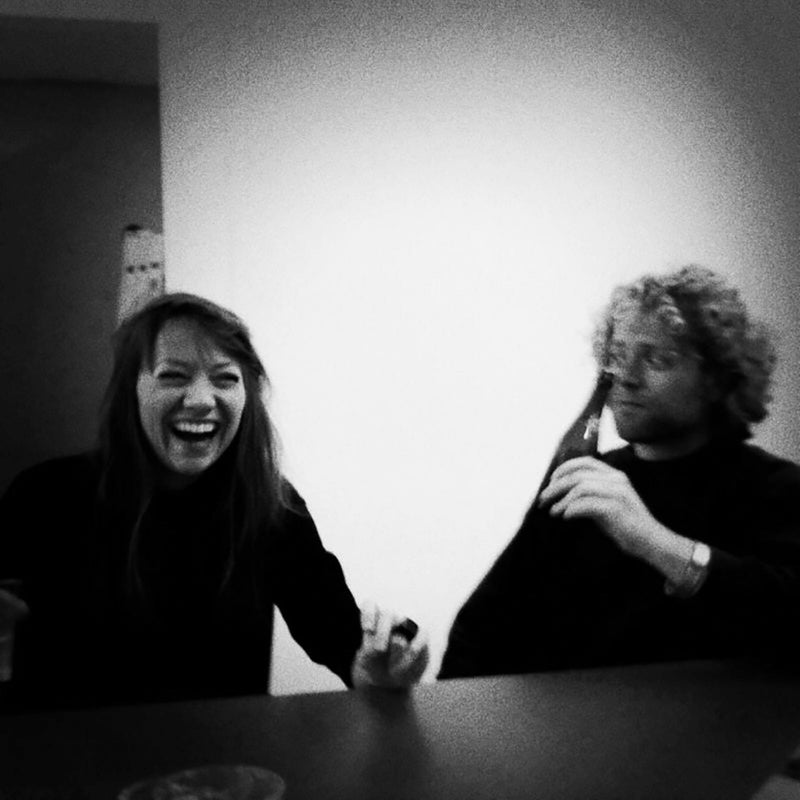
    For nearly twenty years, Blah Records has quietly been proving that there is another way to build a career in music. Not through major labels, algorithm-friendly singles or carefully engineered moments of virality, but through something far less glamorous: consistency. While much of the industry has spent the past two decades chasing the next platform, the next trend or the next shortcut to visibility, the collective has done the opposite. They've built slowly, deliberately and almost entirely on their own terms. That wasn't the plan.When Lee Scott started releasing music in the mid-2000s, streaming platforms didn't exist. Social media wasn't a career strategy and "independent artist" hadn't yet become a marketing slogan. If you wanted people to hear your music, you either convinced someone else to release it or you figured out how to do it yourself. Blah Records was born out of the second option.Long before the label became one of the defining names in British underground rap, Scott and his friends were burning CDs at home, selling them through MySpace and posting them out one order at a time. There was no business model, no investment and certainly no ambition to build an institution. Every milestone that followed was simply the solution to whatever problem lay in front of them.Need more CDs? Get them replicated. Need distribution? Start a label. Need somewhere to perform? Book the show yourself. Need a scene? Build one.Looking back, it's easy to mistake that progression for careful planning. Spend enough time talking to Lee Scott and Black Josh, however, and another picture emerges. Blah wasn't built around some master strategy. It was built through momentum. Every decision led naturally to the next until, almost without noticing, they had created an ecosystem that could survive without asking anyone else for permission.Today that ecosystem stretches far beyond a record label. Blah has become home to one of British rap's most distinctive communities, producing solo records, collaborative projects, Cult of the Damned releases and an audience that has remained fiercely loyal despite existing almost entirely outside the machinery of the mainstream music industry. In an era increasingly dominated by playlists, engagement metrics and fleeting internet fame, that longevity feels almost radical.Fresh from an independently organised Australian tour and preparing to release their collaborative album It Made Sense at the Time, Scott and Josh aren't interested in celebrating survival for survival's sake. They're far more interested in whatever comes next. The conversation moves effortlessly between British rap's formative years, regional identity, creative discipline, disastrous tours and the peculiar satisfaction that comes from solving your own problems. Throughout it all, one idea keeps resurfacing. Blah never waited for an industry to believe in them. They built their own.Ask Lee Scott how Blah Records began and he almost sounds amused that anyone would imagine there was a grand design behind it. "There wasn't some master plan," he says. "We just needed somewhere to put our music out."It's an answer that immediately dismantles nearly twenty years of mythology. Blah has become one of British rap's defining independent institutions, but its origins were almost laughably ordinary. Before the label existed, Scott and his friends were already operating under the Anti-Heroes banner, recording mixtapes, burning CDs at home and selling them directly through MySpace. Every sale arrived through a tiny PayPal button embedded on a profile page. When somebody placed an order, another disc was burned, packaged by hand and taken to the post office."It was DIY before people even called it DIY," Scott recalls. Eventually the limitations of that approach became impossible to ignore. Burning individual CDs wasn't sustainable, so the group ordered a thousand professionally replicated copies. Suddenly they had boxes of records stacked around them and no way of getting those records into shops."The next logical step was distribution," Scott says. "Then the next logical step after that was creating a record label." That practical way of thinking has remained remarkably consistent throughout Blah's existence. Every obstacle simply became another task to solve. When their friend Alex — better known as Swiss — moved back to Switzerland after handling much of the label's early administration, Scott reluctantly found himself responsible for the business side too. "If you've met me," he laughs, "you'll know administration probably isn't where my strengths lie." Even so, the work got done.Looking back, Scott doesn't romanticise those early years. He doesn't describe them as visionary or revolutionary. Instead, he talks about them with the matter-of-fact tone of somebody fixing one leaking pipe after another. That mindset, more than any business strategy, would eventually define Blah Records. Because independence, for them, was never an identity. It was simply the only option.The story of Blah Records is often told through releases, tours and milestones, but Scott insists those things arrived much later. Before there was a label, there was simply a group of friends making music together because they enjoyed each other's company."The original crew was me, Salar, Bill Shakes and Tony Broke," he says. "I'd known some of those people since I was sixteen. Before there were labels or tours, we were just hanging around."As the years passed, that circle naturally expanded. Friends from London became collaborators. Manchester, Blackburn and Liverpool slowly blurred into one community. The geography changed, but the logic never did. Relationships came first. Music followed.That's perhaps why Blah has always felt different from a conventional record label. It doesn't operate like a roster assembled by A&R executives searching for complementary artists. It feels more like a constantly evolving friendship group whose members happen to make records together."When people describe Blah as a company, it always sounds a bit strange," Scott says. "Everyone on the label is someone I'd happily spend time with whether music existed or not."That chemistry explains why the catalogue is filled with collaborations that never feel manufactured. Duo records, posse cuts and one-off projects emerge organically because the artists already share the same spaces. They're in the studio together, travelling together or simply spending weekends together."If you're already sitting in the same room with your mates," Scott shrugs, "eventually somebody says, 'Let's make a tune.'"It's an understated observation, but one that reveals something fundamental about Blah's longevity. The label was never sustained by contracts or commercial obligations. It was sustained by genuine relationships. Long before "community" became one of the music industry's favourite buzzwords, Blah had accidentally built one.That sense of community extends beyond the artists themselves. Fans don't simply consume the music; they participate in the world around it. Shows feel less like isolated performances than reunions. Faces become familiar. New listeners are introduced by old ones. Records are bought not because they're being pushed by an algorithm but because people genuinely want to support the artists making them.It's a slower kind of growth, but one that's proved remarkably resilient. For listeners discovering Blah today, it's easy to forget just how unusual British rap once sounded. Or perhaps more accurately, how unusual it didn't. "When I first started recording," Scott says, "I was doing an American accent."He laughs as he says it, but the admission reflects a much broader moment in British hip-hop history. Throughout the late nineties and early 2000s, many UK rappers borrowed not only the sound but the cadence and pronunciation of the American artists they'd grown up listening to. Regional British accents were often viewed as obstacles rather than identities.Scott didn't think he was pretending to be someone else. He simply hadn't heard an alternative. "I'd literally never heard anybody from where I came from rapping," he says. "I wasn't trying to copy anyone. I was just imitating the music I loved." The turning point came through an unexpectedly simple question. Somebody older asked him why he was rapping in an American accent. "It sounds ridiculous now," he says, "but I'd never even considered there was another option."The internet was still fragmented. Music discovery relied on word of mouth, independent record shops and whatever happened to circulate through local scenes. Liverpool wasn't necessarily listening to London. Manchester wasn't constantly aware of what was happening in Glasgow or Bristol. Regional scenes often developed in parallel rather than together. "You had to actually go and find music," Scott remembers. "People forget that. You weren't endlessly scrolling."As British rap slowly became more confident in its own identity, artists across the country began embracing the voices they'd previously tried to suppress. Looking back, Scott describes hearing those records for the first time as strangely unfamiliar. "I'd spent so long listening to American hip-hop that hearing British accents almost sounded weird."Today, that idea feels almost impossible to imagine. Black Josh belongs to the generation that inherited that shift rather than initiating it. "For me, hearing Children of the Damned was massive," he says. "Those were actual regional accents. Not fake American voices. Just people sounding like where they were from." Around the same time, grime was making a similar argument from London. "When Dizzee Rascal came through, nobody thought he sounded American," Josh says. "He sounded exactly like London."For him, hearing Mancunian voices carry the same confidence was equally significant. It demonstrated that authenticity wasn't something to be polished away. Your accent wasn't a limitation. It was part of the music itself. That evolution mirrored Blah's wider philosophy. Just as they refused to imitate the industry's business model, they also refused to imitate someone else's identity. Instead of asking how close they could get to American rap, they asked a different question altogether. What would this sound like if it could only have come from here?The word independent has become one of the music industry's favourite buzzwords. It's applied so liberally that it has almost lost its meaning. Artists backed by distribution companies, management agencies and major-label funding routinely describe themselves as independent, often because they technically own their masters.Lee Scott has never been particularly interested in the distinction. "I don't think we ever called it a philosophy," he says. "It was just survival." That difference is important.Blah wasn't founded because its members rejected the music industry. It was founded because, at least in those early years, the industry simply wasn't paying attention. There was no queue of labels waiting to sign them, no established touring circuit for the kind of music they were making and no blueprint for building a career from regional underground rap. Rather than waiting for those opportunities to appear, they created their own."If nobody wanted to release the record, we'd release it ourselves," Scott says matter-of-factly. "If nobody booked us, we'd book our own shows. If nobody wanted to distribute it, we'd figure that out as well."Looking back, it's tempting to describe those decisions as visionary, but Scott refuses to romanticise them. Every milestone emerged from necessity rather than ambition. Every solution created another possibility."I think people assume we've always had this machine behind us," he says. "But every stage has been built from the previous one. You don't suddenly wake up with a functioning label, an audience and touring infrastructure. You spend years solving one problem after another until eventually you realise you've accidentally built an ecosystem."That ecosystem has become Blah's greatest achievement. Long before artists were talking about direct-to-fan relationships, Blah were cultivating one. They weren't simply releasing records. They were creating an audience that felt personally invested in everything surrounding the label. Shows became meeting points. Collaborations happened naturally because the artists already occupied the same spaces. Every release strengthened the world around it instead of existing as a standalone product.The result is a model that feels increasingly unusual in an age dominated by short attention spans. Rather than chasing as many listeners as possible, Blah focused on building deeper relationships with the ones they already had. Scott has little interest in viral success. "I'd much rather have a thousand people who genuinely care than a million people who watched something for fifteen seconds because an algorithm showed it to them."To him, longevity has always been a far more meaningful measure than visibility. "A career is people buying your records ten years later. It's somebody travelling across Europe to see you perform. It's fans introducing your music to their kids."Streaming numbers rarely tell that story. "If people are buying vinyl, buying merch and coming to shows," he says, "that's a community." Black Josh has seen that difference firsthand every time the pair step on stage. "Our crowds aren't there because one song blew up six weeks ago," he says. "A lot of them have been listening for years. They know album tracks. They know lyrics that were never singles. Some of them have literally grown up with us." He pauses before smiling. "That's worth way more than a number on a screen."That same practicality extends into Blah's creative process. The label's distinctive visual language — grainy music videos, surreal artwork and unmistakably DIY aesthetics — has become part of its identity, but Scott insists very little of it was ever planned.People often assume the rough edges are deliberate, an aesthetic statement designed to separate Blah from polished commercial rap. In reality, they were usually the product of limited budgets, available time and whoever happened to own a camera."Sometimes we'd literally wake up and decide to shoot a video that afternoon," Scott says. "You'd ring a mate, drive somewhere, film it, edit it... done."That approach eventually became a philosophy in its own right. "People read all sorts of meaning into it," he laughs. "Honestly, we just wanted to get things made." Perfection has never interested him as much as momentum. "I'd rather finish something that's eighty or ninety percent there than spend two years chasing perfection and never release anything."It's a lesson he's applied across almost every part of his creative life. Songs, artwork, videos — eventually everything reaches the same point where further refinement begins stripping away the spontaneity that made it compelling in the first place."Sometimes the first version captures something the twentieth one doesn't," he says. "You've got to know when to stop." That instinct has also shaped projects like Cult of the Damned, a collective that has become almost mythical within British underground rap. While fans often speak about it as though it were carefully curated, Scott remembers something much looser."There wasn't loads of planning," he says. "It was more like, 'Who's about today?'" The chemistry came from unpredictability. Throw eight or nine entirely different rappers into the same room and nobody knew what would happen next. "You could hear people enjoying themselves," he says. "I think listeners can tell when that's genuine." For Black Josh, that unpredictability also created a healthy sense of competition. "If you're on a track with six other rappers," he laughs, "you definitely don't want to have the weakest verse." Nobody coasted. Everybody pushed each other. Without anyone saying it out loud, the standard kept getting higher.For a label approaching its twentieth anniversary, Blah spends remarkably little time looking backwards. The Australian tour is a perfect example. From the outside, it looked like another milestone for a collective that has steadily expanded its reach without compromising its identity. Behind the scenes, however, it nearly collapsed before it began."Everything that could go wrong basically did," Scott says. "People disappeared. Plans changed. Money vanished." At one point, the tour looked beyond saving. Most artists would've cancelled. Scott admits they probably should have. Instead, they did what Blah has always done. They solved the next problem."I think we ended up spending something like twenty-five grand in the space of a week just to keep everything alive," he recalls. "It was terrifying. But once we'd committed, there wasn't really another option. You either lose everything or you make it work." Eventually, they made it work. Black Josh laughs at how differently those moments are remembered by everyone else. "People only see the photos afterwards," he says. "They see sold-out rooms, happy faces, everyone smiling. They don't see the weeks beforehand where you're wondering whether you've just made the worst financial decision of your life." He shrugs. "That's touring when you're doing it yourself."It's a story that feels strangely representative of Blah as a whole. The audience sees the finished record, the packed venue or the sold-out vinyl pressing. What they rarely see are the years of incremental problem-solving that made those moments possible in the first place. That same philosophy continues to shape the music itself.Despite the longevity of the label, neither Scott nor Josh speaks like someone preserving a legacy. The new collaborative album, It Made Sense at the Time, isn't presented as the culmination of twenty years' work, but simply the latest chapter in an ongoing conversation they've been having for most of their adult lives."If it ever started feeling like a job," Josh says, "I'd probably lose interest." Touring is work. Running a label is work. Answering emails is certainly work. Making music, however, remains something else entirely. "That's still the fun bit," he says. "That's still me and Lee sitting in a room making each other laugh."Scott's process hasn't changed much either. Ideas still arrive unexpectedly—sometimes while he's asleep. "I'll literally wake up with a line in my head," he says. "If I don't write it down immediately, it's gone forever." His phone is filled with half-asleep voice notes recorded in the middle of the night. Some become songs. Others make no sense whatsoever. "I'll listen back a week later and think, 'Actually... that's not bad.' Or I'll think, 'What on earth was I talking about?'" He laughs. "Either way, that's always been my process." The instinct to trust the first idea, to keep moving and to resist overthinking, extends beyond songwriting. Scott has never been interested in endlessly polishing creative work for the sake of perfection. "Sometimes the first version captures something the twentieth one doesn't," he says. "You've got to know when to stop."It's advice that feels increasingly relevant in a music industry obsessed with optimisation. Artists are encouraged to chase trends, feed algorithms and treat every platform as though it might determine the course of their careers. Scott sees that as a dangerous way to think."Don't build your career around something you don't control," he says. "Algorithms change. Platforms disappear." The things that actually endure, he argues, are much simpler. "The work. Your audience. Your reputation." Everything else comes and goes. Josh agrees."The quickest way to make yourself miserable is comparing yourself to everyone else," he says. "Somebody will always have more followers. Somebody will always have bigger numbers. That doesn't mean they're making better music."For both of them, curiosity remains a far stronger motivator than recognition. "I've never really been interested in proving people wrong," Scott says. "I'm much more interested in proving to myself that I can still make something exciting."Every record, he believes, should surprise him. "If I already know exactly how it's going to sound before I make it, then what's the point?" Josh nods. "I don't really think in terms of legacy," he says. "People talk about legacy when they're looking backwards." He smiles. "We're still looking forwards."Nearly twenty years after its founding, Blah Records remains one of the rare examples of independence that extends beyond ownership. It isn't simply a label operating outside the mainstream; it's an ecosystem built through patience, friendship and an unwavering belief that if something doesn't exist, you can create it yourself. Every record, every tour and every collaboration has been another step in a process that was never meticulously planned, only continually refined.Blah never set out to become a blueprint for independent music. Lee Scott and Black Josh simply kept making the next record, booking the next tour and solving the next problem in front of them. Looking back, that's exactly what made them one.
    • Get Familiar

  • What went down at the Free The Youth x Jordan launch

    What went down at the Free The Youth x Jordan launch

    Photography by Sandra NagelRecently, we welcomed Ghana’s Free The Youth to Patta London to celebrate the launch of their landmark collaboration with Jordan Brand. The Accra-based collective continues to push Ghanaian creativity onto the global stage, becoming the first Ghanaian brand to collaborate with Jordan Brand and bringing their own perspective, community and culture to one of footwear’s most iconic names. Friends and family came through the London Chapter to celebrate the release, with music, good energy and drinks provided by our friends at Mirchi. Big love to everyone who joined us, and congratulations to Free The Youth on a major moment for Ghanaian streetwear.
    • What Went Down

  • Benny Sings - You Love Me

    Benny Sings - You Love Me

    Benny Sings returns with “You Love Me,” a tender new single taken from his forthcoming album 22 Durnham Dew, out September 25 via Stones Throw / Sings Records. A love duet sung with his wife, Joline van Berkestijn, the track finds Benny turning everyday moments into something warm and deeply personal. Accompanying the release is a self-directed music video filmed in Paris, extending the song’s intimate feel through a simple, understated visual. Watch the music video for “You Love Me” now.
    • Music

  • Patta Paris Cypher 2026

    Patta Paris Cypher 2026

    For Fête de la Musique 2026, Patta brought together some of the finest voices from the Paris underground scene for a live rap cypher. Wata MC, Dooky, James le J, Costa, Inférieurà3, Radou, D2R, L'Ultra, Oussoum, Robinin, Dre, Ismayyyel, Kun and Nanor took over the mic while DJ Cheetah held it down behind the decks. Special thanks to Oroko Radio for the broadcast, Le Cercle, Vicky R, and Daymolition for the artist curation, and to Café de l'Arc for the stage. 
    • Music

  • Erykah Badu & The Alchemist - Witch Doctor

    Erykah Badu & The Alchemist - Witch Doctor

    Erykah Badu and The Alchemist link up on “Witch Doctor,” a hypnotic, slow-burning track that blends Badu’s unmistakable presence with Alchemist’s hazy, sample-driven production. Eccentric, soulful and effortlessly off-kilter, the collaboration feels exactly as strange and natural as you’d expect from two artists who have spent their careers creating worlds of their own. Watch the “Witch Doctor” music video now.
    • Music

  • Victory Lap: TRAINING MODE VOL.1

    Victory Lap: TRAINING MODE VOL.1

    Victory Lap Radio presents Training Mode Vol.1 (2025) a documentary showcasing the new voices of the UK. Featuring 25+ artists and shot all over London in 2025.
    • Film & Documentaries

  • Layers - Pen & Pixel

    Layers - Pen & Pixel

    Shawn Brauch, the visionary co-founder of Pen & Pixel, designed over 20,000 iconic album covers. Pen & Pixel hand-crafted the wildest, diamond-encrusted album art in music history. We’re diving into Shawn Brauch’s genius and the practical effects behind 90s rap’s most legendary visuals. Here is the story of the man who illustrated the bling era. In this episode of "LAYERS", Shawn Brauch walks us through how he designed album covers for Master P, Snoop Dogg, and Lil Wayne using Adobe.
    • Art

  • Free The Youth x Jordan at Patta London

    Free The Youth x Jordan at Patta London

    Join us at Patta London to celebrate the launch of Free The Youth x Jordan. Thursday, August 13th, 18:00 - 20:00. Music by Selassie TBC. First come, first serve.
    • Events

  • What went down at the Tiwa Savage meet & greet

    What went down at the Tiwa Savage meet & greet

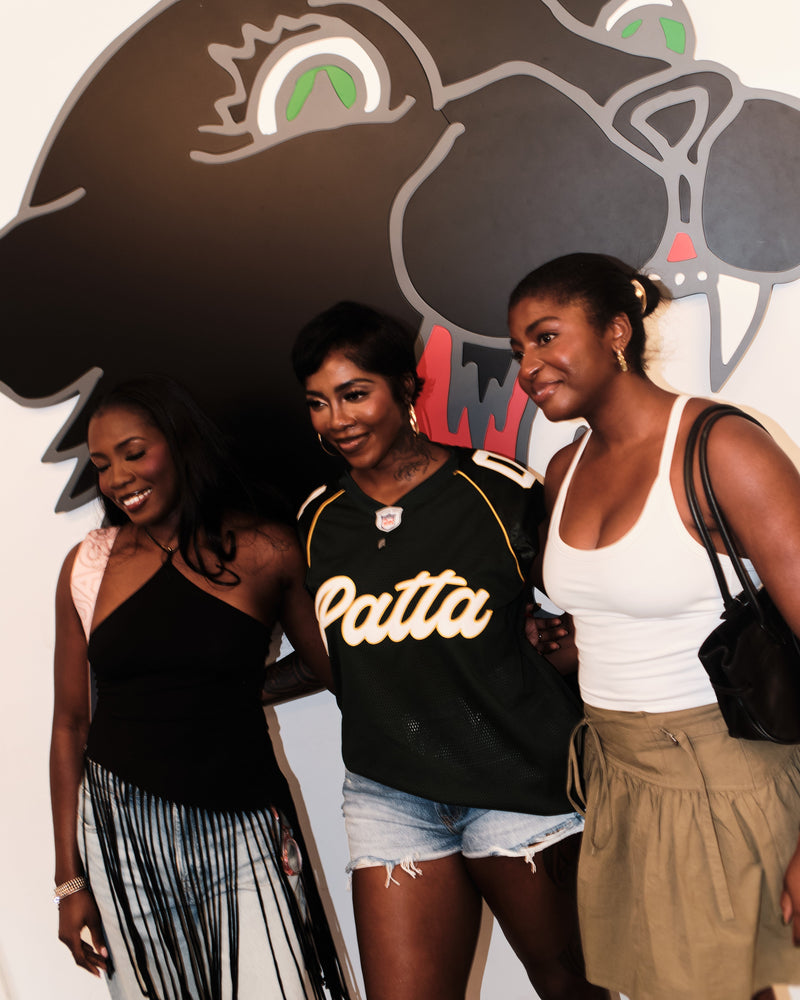
    Photography by Andrea AmponsahThis past Sunday, August 9th, we had the pleasure of hosting the legendary Tiwa Savage at our Patta Amsterdam store for an exclusive meet-and-greet. Patta Amsterdam served as a vibrant bridge that brought together different circles and many new faces into the store. It was a unique opportunity for the community to connect with a global Afrobeats icon and one of Nigeria’s most influential artists in an intimate setting. As the first woman to win the MTV EMA for Best African Act, Tiwa Savage continues to shape the sound of a generation, and seeing that energy reflected in our space was a true victory for the Patta community. Thank you to everyone who came through and made this afternoon special. We look forward to continuing to expand our community and connecting with you all through more moments like this in the future.
    • What Went Down

  • Lee Quiñones for Patta Magazine

    Lee Quiñones for Patta Magazine

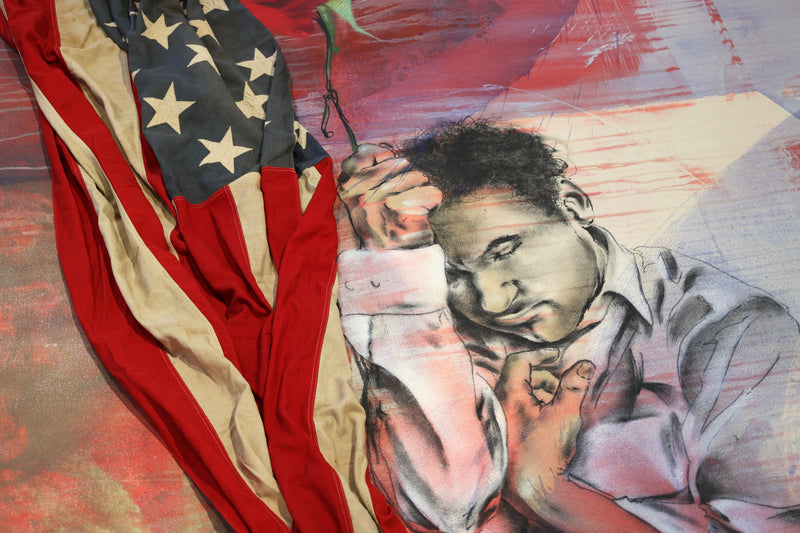
    Words by Andy Thomas In 1978, Lee Quiñones’ iconic mural Howard the Duck appeared on a handball court wall in the Lower East Side near where the 18-year-old had lived since arriving as a child from Ponce, Puerto Rico.The first freestanding urban mural to appear in New York was a symbolic moment for graffiti art’s emergence out of the underground, with walls replacing metal as the young artist’s urban canvas.Quiñones began spray-painting subway trains at 14 in 1974, creating ambitious murals in train yards on the Lower East Side. Two years later, Quiñones and the Fabulous Five crew had the audacious plan to paint an entire 10-car subway train with a mural that would make them folk art heroes across the five boroughs.These acts of artistic genius and ingenuity would prove as important to the evolution of hip-hop culture as DJ Kool Herc’s Back to School Jam at 1520 Sedgwick Ave in 1973, fellow Bronx schoolboy Grand Wizzard Theodore inventing scratching in 1975, and the arrival of “Rapper’s Delight” by the Sugarhill Gang in 1979.Another big moment in hip-hop was Charlie Ahearn’s Wild Style, which starred Quiñones as the semi-autobiographical Zoro. Ahearn became aware of Quiñones when he came across the Howard the Duck mural while filming his martial arts movie The Deadly Art of Survival on the Lower East Side with his Super 8 camera.In June 1980, Ahearn and his cohorts in the arts collective Colab transformed a three-storey building on 41st Street and Seventh Avenue into The Times Square Show, a DIY exhibition that, in the words of the Village Voice, was “the first radical art show of the ’80s”.It was also an important moment in the history of graffiti art, with Lee Quiñones and his Fabulous Five partner Fred Brathwaite (AKA Fab 5 Freddy) displaying works alongside around 100 other artists, including Kenny Scharf, Jean-Michel Basquiat, and Keith Haring. It was there that Ahearn met Brathwaite, who would introduce the filmmaker to Quiñones.Through his social commentary and poetry used in his expressionistic work with messages like “If we don't use our heads now we may lose our tails later” Quiñones had been speaking directly and profoundly to the marginalized from the streets where he was raised. But Quiñones had ambitions for his art and culture that went well beyond the Lower East Side.The December before The Times Square Show, an art collector named Claudio Bruni had invited Quiñones and Fab Five Freddy to exhibit at his Galleria La Medusa in Rome. It was the first step towards propelling Quiñones into the international art market and giving graffiti art the same attention and respect as other art movements - from pop art to abstractionism.By the mid-’80s, Quiñones was participating in groundbreaking group shows like Arte di Frontiera: New York Graffiti in Italy and Documenta 7 in Kassel, Germany. As the graffiti art he pioneered became recognized as a serious art movement in the years that followed, Quiñones continued to expand his artistic vision. Today, his works are displayed in the world’s leading museums - from MoMA in New York and Pérez Art Museum Miami to Museum Ludwig in Köln.In October 2025, he held his first solo exhibition in London for 40 years, Outside Is America, an intersection of old and new works that spanned his career - from iconic spray paint pieces like the self-titled Lee from 1979 to contemporary mixed material works such as Heart in a Hurricane from 2025, created from his Bushwick studio.With a lineage that reaches back to the mid ’70s, these works continue Quiñones'mission to communicate using a combination of striking visual symbols and written messages. Through empathy and resistance, his addressing of political and socio-economic issues in the age of Trump and the dark dystopian forces of ICE is needed more than ever.As Outside Is America drew to a close, we caught up with the artist to talk about the works displayed at Woodbury House and how they speak to contemporary America.“Art arrives at the time it deserves”, says Lee Quiñones. “I’ve always been at the forefront of something while also realizing I’m just following a lead of something bigger than myself. I think every artist has a responsibility to be committed to what they do in their time. Art does percolate under the surface until it comes up with something to say at a particular point in time. Creating art is in itself a political act. In some cases, a rebellious act; in most cases, an urgent act.“Titles have always been important to my work and they often speak to me before the work becomes a tangible thing. I want the work to correspond to the title and vice versa.  With this show, I wanted to talk to people outside of my country as an American with what we are going through today. This is nothing new, though. We’ve always lived in the abyss of the hypocrisy of humankind. But I’m a firm believer that the forces of good can be more powerful than the forces of evil.”HEART IN A HURRICANE“I had found this old vintage flag in the Brooklyn Navy Yard back in the mid-’90s that had been sewn together, not printed. This was a beautiful piece - it was more than a piece of fabric, it was the fabric of the country. But it started to get me thinking about all the atrocities over time in America. When you think about personal moments, you can go back to Mildred and Richard Loving, the interracial couple in the ’50s who married and went through hell just for being in love. Then, into today with Colin Kaepernick (of the 49ers). He’s not stepping on the flag or burning the flag; he is kneeling to bring a justifiable awareness of this country’s issues with its dirty dishes. Now I’m Puerto Rican, and we have our very rightful gripes and rifts with our country for obvious reasons. So I’m always going to have a rebellious part of me. But in this piece, which is a self-portrait, I’m not rebelling or lashing out; it’s a very tender moment. I’m lying down with a rose in my hand to show a love of country. But you can’t love a country if you can’t question the country.”UNFOLDED“Ori Carino is an Italian American who, like me, grew up on the Lower East Side and was inspired by my art. But he was also a huge inspiration to me, another man from the Lower East Side with whom I shared concerns and pride. Here are two men of Puerto Rican and Italian descent. The main reference of these two things combined is West Side Story. As beautiful as that story is, it's also a tragic story of migration. The real genius behind that painting is Ori Carino - he said to me, ‘Lee, I’m making these paintings on these layers of synthetic silk.’ So I went down to his studio, and I was floored. He told me he wanted to do a collaborative piece about the layers and layers of immigration and the different conversations and arguments over the centuries. So I was like, ‘Wow, this is great karma for us coming together.’ It was a beautiful collaboration even before we pulled the trigger on the paint. And the results were amazing.”TABLET #9 “These writings taken from studio walls are what I call soundboards. I think of them as liquid daily diaries of my thoughts, my isms, my poetry, that come to me now and then. Sometimes I feel as dumb as a church mouse. I just can’t talk, spell, or remember anything. Then the next day, I wake up, and I just spill out all this poetry. Lots of it makes sense, and much of it doesn’t at that time. But maybe it will become something that I will work out later in another painting. These ideas can be playfully funny or darkly poetic. The idea is you don’t hit people over the head with things, but you get them to think through the usage of words. I heard Basquiat say once that he would cross out words so people would be attracted to them. It got people thinking, ‘Why did he cross that out? What did he write?’ And sometimes the lack of words is more powerful and gets people thinking, ‘What is that about?’”LEE“This was one of a batch of paintings that I created between 1979-80, trying to exorcise myself from the fringes of the subway art era. That time was so powerful and special for me. It saved my life even though I was always putting my life on the line. It saved me from the abyss of my neighbourhood. I had painted in the dark about dark times for years. But in that darkness, I painted in the brightest colours because I wanted to bring this banquet of flowers to people. Lee featured in the 1979 exhibition The Fabulous Five at Galleria La Medusa in Rome [the first European exhibition to showcase artists from the graffiti movement], organized by gallerist Claudio Bruni. When we write, something comes out through us.”HONEST GEORGE“Honest George is rooted in the fairy tale of Little Red Riding Hood. It’s one of a series of pieces I’m doing based on all these follies and tales we hear as children, and on how we structure our beliefs about them and relate them to the real world as it unravels. My moral compass is angry, so my work relates to the hypocrisy of the human experience. But today my work goes all over the place. There are times that I do go into a rhythm, but I only stay there as long as I need to. My art will never be repetitive or redundant. I never want to be put in a corner. As artists, we have to switch gears; otherwise, we are going to burn the clutch.”  
  • Patta x Athenaeum Open Source

    Patta x Athenaeum Open Source

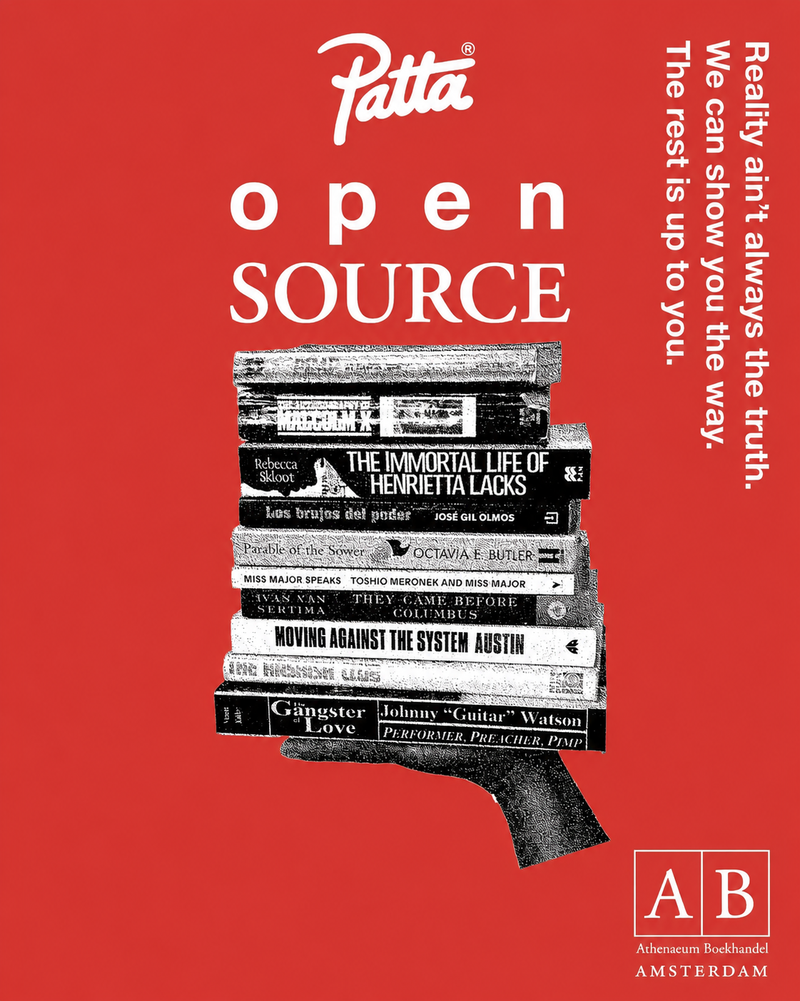
    Education stands as one of Patta’s core pillars. The reality is that Black and POC perspectives are often excluded from mainstream narratives, yet they are vital to understanding history, culture, and identity. Reading is power, and access to diverse stories is essential. That’s why Patta is launching Patta Open Source bookshelves, a literary collection curated by Team Patta in collaboration with Athenaeum Bookstore, that centers the voices of those too often overlooked.We’re not just putting books on a shelf. Patta Open Source is making room for stories that challenge the way we think and push us to see the world from different perspectives. Some books will spark curiosity, others will raise difficult questions, and many will offer inspiration. But most importantly, they will all contribute to a broader conversation, one that breaks old narratives and builds new ones. Each One, Teach One.Express YourselfTourmaline : The Joy and Defiance of Marsha P. JohnsonMarsha P. Johnson was more than an icon of the Stonewall uprising — she was a living symbol of radical joy, resistance, and humanity. In The Joy and Defiance of Marsha P. Johnson, artist and activist Tourmaline brings her story to life with equal parts tenderness and fire. Johnson’s voice, so often drowned out in official histories, is finally given the space it deserves. This is not a conventional biography, but a poetic tribute to what it means to live freely in a world that keeps denying that right. Tourmaline writes with rhythm and warmth, celebrating both the flamboyant and the fragile. The Joy and Defiance of Marsha P. Johnson is essential reading for anyone who wants to understand what it truly means to be yourself — in full color, against the current.Must Read Ta-Nehisi Coates: The MessageWith The Message, Ta-Nehisi Coates returns as the clear, uncompromising voice of contemporary Black consciousness. Best known for Between the World and Me, Coates here explores what remains of hope, truth, and community in a world so often divided. His writing is lucid and lyrical, probing what it means to stay human amid noise and regression. Coates traces the legacy of hip-hop, politics, and spirituality as forces of both resistance and beauty. This is no manifesto but a meditation — fierce and tender at once. The Message is a book to read and to feel: a call for dignity, nuance, and resilience.His StorySudhir Hazareesingh: Daring to be Free: Rebellion and Resistance of the Enslaved in the Atlantic WorldSudhir Hazareesingh reminds us that the history of slavery is not only a story of oppression, but also of defiance. In Daring to Be Free, he recounts the courage and rebellion of the enslaved across the Atlantic world — from Haiti to Brazil, from Cuba to the United States. He shows that freedom was never granted, only fought for. Drawing on testimonies, songs, and diaries, Hazareesingh weaves a powerful tapestry of human dignity. This book is a tribute to the men and women who revealed the foundations of the modern world — not as victims, but as thinkers, dreamers, and revolutionaries. Daring to Be Free is history that breathes, glows, and inspires.Non-Fiction Be The Real Hip HopRobin Givhan: Make It Ours: Crashing the Gates of Culture with Virgil AblohIn Make It Ours, Pulitzer-winning journalist Robin Givhan pays tribute to the incomparable Virgil Abloh — designer, visionary, and bridge-builder between street culture and haute couture. Givhan traces how Abloh rewrote fashion’s codes and cracked open the doors of white institutions. This is no glossy portrait but a sharp, affectionate essay on creativity as liberation. She frames Abloh’s legacy as an act of cultural reclamation: from Off-White to Louis Vuitton, from Chicago to Paris. Make It Ours is a celebration of Black brilliance — and of the right to define beauty on one’s own terms.Brand New FunkZadie Smith: Dead and AliveZadie Smith is at her best when she writes from the inside out — about art, life, and the fragile boundaries between them. In Dead and Alive, she explores the fine line between creation and destruction, freedom and fear, identity and form. Smith reflects on the artist’s role in times of crisis, and on the constant reinvention of self in a shifting world. Her prose is, as ever, supple, witty, and layered — attuned to both rhythm and thought. Dead and Alive is a meditation on surviving with style, on the moral duty of beauty, and on how art keeps the human heart in motion.Music PleaseAnnie Zaleski: Queens of Disco In Queens of Disco, Annie Zaleski revives the glittering history of disco — this time through the women who made it legendary. Donna Summer, Gloria Gaynor, Grace Jones: their voices became the soundtrack of freedom, sensuality, and pride. Zaleski writes with energy and insight, but most of all with love for the music and the subcultures it nurtured — from the ballroom scene to New York’s queer clubs. Queens of Disco shows that disco, often dismissed as kitsch, was in fact a revolution: a stage for expression, a celebration of identity. A sparkling, rhythmic tribute to the power of beat and self-liberation.The Patta Open Source Bookshelf will appear as a recurring feature in the Patta Magazine, showcasing a curated selection of titles available at our bookshelf at Athenaeum store in Amsterdam.
    • books

  • SO MI WAN by Tirino Yspol

    SO MI WAN by Tirino Yspol

    A self-portrait series by Tirino Yspol with lighting by Raphael Mapwata
    • Art

  • Get Familiar: Elisa

    Get Familiar: Elisa

    Few people embody the relationship between creativity and the outdoors as naturally as Elisa. Born in Venice but drawn to the peaks of the Italian Alps, she has built a life where exploration, design and storytelling exist in constant dialogue with the landscapes that surround her. Whether hiking remote trails, climbing exposed ridgelines, wild camping beneath the stars or sleeping in the snow, Elisa approaches the mountains not as somewhere to escape everyday life, but as the place where she feels most at home. That connection extends beyond adventure. As one-third of the creative collective MBRACE, she brings the patience, observation and respect she has developed outdoors into projects spanning design, fashion and visual storytelling, collaborating with brands such as The North Face while advocating for a more thoughtful relationship with both the products we consume and the environments we inhabit. We caught up with Elisa to discuss growing up between Venice and the Dolomites, embracing discomfort, finding confidence through solitude and why curiosity remains the driving force behind everything she creates.Elisa is wearing the Patta Chapter Series, available now only in Patta Amsterdam, London, Milan and Lagos.You were born in Venice, but you've built much of your life around the mountains. Can you tell me about that journey? Was there a moment when the outdoors shifted from being somewhere you visited to somewhere you truly belonged?I’ve always felt connected to nature; my parents spent a lot of time taking me into the forests and the mountains, so being outdoors has been part of my life for as long as I can remember. As I got older, I naturally started exploring on my own, and that’s when something changed. The mountains stopped being a place I visited with my family and became a place where I felt myself completely. They’re where I feel the most present, the most grounded, and the most free. It never felt like I consciously chose that life, it simply grew with me and became who I am.Growing up between the lagoon and the mountains offers two very different landscapes. How has that shaped the way you experience nature today, and what was it about the Dolomites that ultimately made them feel like home?I think growing up between such different environments taught me that nature has so many ways of making you feel connected. The lagoon has a calm, quiet energy, while the mountains are raw, powerful and constantly changing. I love both, but the Dolomites have always given me a stronger sense of belonging. Every season transforms the landscape, and no matter how many times I return, they always have something new to teach me. They challenge me, inspire me and make me feel grounded at the same time.You spend a lot of time hiking, climbing, wild camping and even sleeping in the snow. What keeps pulling you back, and do you see the outdoors as an escape from everyday life or simply another way of living?For me, it’s not really an escape; it’s simply a way of living. Being outdoors gives me a sense of freedom and motivation that I can’t find anywhere else. It pushes me to know myself better, to understand my limits, and at the same time it reminds me to appreciate the simple things. Life feels more real when you’re outside, moving through nature one step at a time.Living so closely with nature inevitably changes your perspective. How has spending so much time outdoors reshaped your relationship with discomfort, and what's something people often misunderstand about life in the mountains?Spending so much time outside has taught me that discomfort isn’t something to avoid; it’s often where you grow the most. Being cold, tired or facing unexpected conditions makes you adapt and stay present. I think many people imagine life in the mountains as either romantic or extreme, but the reality is somewhere in between. It’s about respecting nature, being prepared, and accepting that you can’t control everything. Many of your adventures take place alone in remote places. What have those moments of solitude taught you about yourself? Has being alone become a source of comfort, or does it still come with moments of uncertainty?I genuinely love being alone in the mountains because it reminds me how much I can rely on myself. Of course, some moments can be a little scary, especially in remote places, and I won’t pretend otherwise. But overcoming those situations on my own gives me a much stronger sense of confidence and awareness. Solitude has become something I really value because it allows me to listen to myself without distractions.Whether you're sleeping in the snow or climbing remote peaks, there's always an element of risk. How do you prepare yourself mentally before setting off, and where do you personally draw the line between adventure and unnecessary risk? Have you ever found yourself in a situation where you genuinely questioned whether to continue?Preparation is everything. Before every trip, I make sure I have the right equipment, I carefully check the weather forecast, study the route, look at GPS tracks and gather as much information as possible. That preparation gives me confidence, but it also helps me recognise when it’s time to stop. I remember one trip where the snow conditions made it unsafe to continue, so I decided to turn back. It wasn’t the outcome I wanted, but it was the right decision. I think real adventure also means knowing when to let go of your original plan. The mountain will always be there another day.You recently explored Valle Aurina. What drew you there, what made the landscape stand out, and did that journey change your perspective on the Italian Alps in any way?I had wanted to visit Valle Aurina for a long time because I’d heard how wild and untouched it feels compared to other parts of the Alps. What really impressed me was the silence and the feeling of space you can spend hours walking without seeing many people. It reminded me that even in places I think I already know, there are still landscapes capable of surprising me. That trip made me appreciate even more how different the Italian Alps really are.Beyond your outdoor practice, you're also one-third of MBRACE. How did the three of you come together, and how do your different creative backgrounds complement one another?MBRACE was born from the connection between the three of us: me, Enrico and Jonny.We’re three very different people, but we share the same vision and curiosity. Each of us observes the world from a different perspective and brings different skills to the table. When those perspectives come together, they create something that’s always fresh and inspiring. We all share a passion for nature, fashion, sport, art and creativity, and I think that’s what makes our work feel authentic. Your work sits at the intersection of the outdoors, design and storytelling. In what ways do your experiences in nature directly influence the creative projects you take on?Nature influences almost everything I create. Spending time outdoors teaches me to slow down, observe details and pay attention to light, textures and movement. Those experiences naturally shape the way I approach storytelling and design. I like creating projects that feel honest and that communicate real experiences rather than just beautiful images. Being outside constantly reminds me that the strongest stories come from genuine moments.You recently worked with The North Face around circular design during Milan Design Week. What interested you about that project, and how do you think design can encourage people to build a deeper relationship with the environments they inhabit?What I found most interesting was the idea of giving materials a second life instead of seeing them as waste. I think good design has the power to make people think differently about the products they own, encouraging them to repair, reuse and value things for longer. When design tells a story, it can also strengthen our connection with the environment and remind us that every choice has an impact.Sustainability has become a buzzword, but your work is rooted in spending real time outdoors. What does sustainability actually look like in your day-to-day life, and have you noticed the mountains themselves changing over the years?For me, sustainability isn’t something you talk about; it’s something you practise every day through small choices. I try to buy less but better, repair my gear whenever possible, reuse what I already own and always leave nature exactly as I found it. Spending so much time outdoors also makes it impossible not to notice the changes happening in the mountains. Snow arrives later, glaciers are shrinking and weather conditions have become much more unpredictable. Seeing those changes with my own eyes makes protecting these places feel even more important.Looking ahead, you've built a life that connects exploration, design and creativity. What kind of legacy do you hope that way of living leaves behind—for the people who follow your work and for the landscapes that continue to inspire it?I hope my work encourages people to spend more time outside and build their own relationship with nature, whatever that looks like for them. You don’t need to climb the highest peaks to experience something meaningful; you just need to be curious and willing to explore. If I can inspire even a few people to respect nature more, move through it with awareness and appreciate its value, then I’ll be happy. At the same time, I hope the landscapes that inspire me will remain protected so future generations can experience the same sense of freedom that I have.For Elisa, the mountains are far more than a backdrop for adventure. They are a place of learning, creativity and perspective, where every journey reinforces the value of patience, preparation and respect for the natural world. In this photoshoot, she is wearing the Patta Chapter Series, available now only in Patta Amsterdam, London, Milan and Lagos.Whether through MBRACE, her collaborations with The North Face or the countless hours she spends exploring remote landscapes, her work is guided by the belief that meaningful stories begin with genuine experience. In an age where the outdoors is increasingly filtered through social media and spectacle, Elisa offers a quieter alternative—one rooted in curiosity, self-reliance and a lasting commitment to protecting the places that continue to shape her. Her hope is simple: that others are inspired to step outside, move through nature with intention and leave it just as they found it, ensuring future generations can discover the same sense of freedom that first drew her to the mountains.
    • Get Familiar

  • Get Familiar: spazioSERRA

    Get Familiar: spazioSERRA

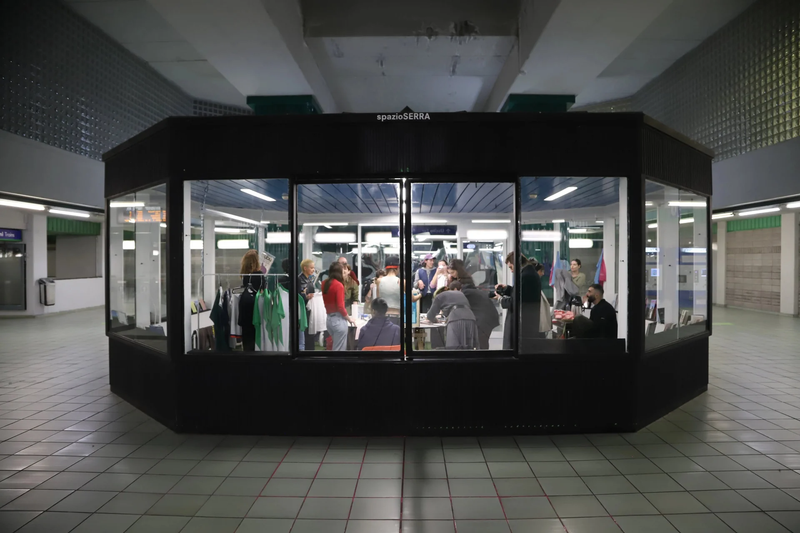
    Interview by Passion Dzenga and Liesje Verhave | Imagery courtesy spazioSERRAMost galleries ask people to come to them. spazioSERRA asks something different. Hidden inside Milan's Lancetti railway station, the independent exhibition space exists in a place designed for movement rather than contemplation. Every day, commuters, students, families and local residents pass through its doors, often encountering contemporary art entirely by accident.That tension has shaped the collective's practice since its founding. Rather than treating the station as simply another venue, spazioSERRA has embraced it as both subject and collaborator. Here, exhibitions are conceived specifically for a public in transit, where artworks compete with train announcements, morning routines and the constant rhythm of the city itself. There is no white cube, no controlled viewing experience and no expectation that visitors arrive already interested in contemporary art. Instead, every exhibition begins with a simple question: what happens when art interrupts everyday life?We spoke with the spazioSERRA collective about nearly a decade of working inside a railway station, developing a curatorial practice rooted in site-specificity, and why they believe public art should never be neutral.spazioSERRA has always existed inside a railway station rather than a traditional gallery. Why was that important from the beginning?The station has never simply been a venue for us. From the very beginning, it was the starting point for the entire project. Rather than asking how we could fit contemporary art into a railway station, we were interested in understanding what kind of exhibitions could only exist in a place like this. The context changes everything. A station is designed for movement, transition and routine. People aren't there because they've decided to spend an afternoon looking at contemporary art. They're commuting to work, heading home, meeting friends or simply passing through.That completely transforms the relationship between the artwork and its audience. In a traditional gallery, visitors have already made a conscious decision to engage with an exhibition before they even walk through the door. They arrive prepared to spend time looking, reading and reflecting. Here, that expectation disappears. Most people encounter the exhibitions unexpectedly. Some only glance at them while waiting for a train. Others return every day as part of their commute and slowly build a relationship with the work over weeks or months without even realising they're doing so.For us, that's incredibly exciting because it means the exhibitions become part of everyday life rather than something separate from it. During the pandemic, for example, many museums and galleries were closed, but because our exhibitions were visible from the station itself, people could continue experiencing contemporary art simply by moving through the city. That reinforced something we'd always believed: art doesn't need to exist inside isolated cultural institutions. It can become another layer of the urban landscape, living alongside the rhythms and routines of the people who pass through it every day.Your audience is often accidental rather than intentional. How does that change the way you think about curating exhibitions?It influences almost every curatorial decision we make. Unlike a museum or commercial gallery, we can't assume that our audience already has an interest in contemporary art or even knows who the exhibiting artist is. Most visitors didn't wake up planning to see an exhibition. They're simply moving through the station as part of their daily routine. That means we have to think very carefully about how somebody encounters the work for the first time.Accessibility is important to us, but we don't think of accessibility as simplifying ideas. Instead, it's about creating multiple points of entry. Someone who only has thirty seconds before their train arrives should still be able to connect with something visually or emotionally. At the same time, somebody who returns every day for a month should continue discovering new layers, new references and new meanings each time they encounter the work.That creates a very different kind of exhibition design. We think about sightlines, movement through the station, how the architecture frames the work and how people experience it from different distances. The audience isn't standing still. They're constantly in motion. The exhibitions have to acknowledge that movement rather than resist it.What's particularly interesting is that people begin creating their own relationships with the exhibitions over time. Some commuters see the same installation every morning on their way to work and every evening on their way home. Without necessarily intending to, they become long-term spectators. Their understanding develops gradually through repetition rather than through a single dedicated visit. Site-specificity seems to be central to your programme.How do artists respond differently when they know their work will exist in a public space?That's one of the reasons artists are often excited to work with us. We don't invite people to simply install an existing body of work inside the station. We ask them to begin with the station itself. The architecture, the movement of people, the visibility of the space and the surrounding neighbourhood all become part of the conversation before a single artwork is made.That process often changes the work dramatically. Instead of treating the exhibition as something independent from its surroundings, artists begin responding directly to the environment. Sometimes the architecture becomes part of the installation. Sometimes the public becomes part of the work. Sometimes the exhibition only makes sense because it's happening in that precise location.Over the years, we've realised that there isn't really a clear boundary between the artwork and the station anymore. The two continuously influence one another. The work transforms the space, but the space also transforms the work. The audience completes that relationship because every person experiences the exhibition differently depending on where they're coming from, how much time they have, and what they're bringing with them emotionally that day. For us, that's what site-specific practice really means. It's not simply adapting something to fit a location. It's allowing the location itself to become an active collaborator in the exhibition.This year's programme is titled Co-presence Is a Passing Gesture. What does that phrase mean to you?The title emerged quite naturally once we began looking at all of the selected projects together. Originally, we approached this season differently from previous years. Rather than establishing a broad curatorial theme and asking artists to respond to it, we opened the call without prescribing a subject. We wanted to understand what artists themselves were already thinking about and what kinds of questions felt urgent to them.After selecting the projects, we started noticing unexpected connections. Again and again, artists were exploring ideas around spectatorship, participation, waiting, public space and the different ways people occupy environments together without necessarily interacting.A railway station became the perfect place to think about those ideas because it is fundamentally a place of co-presence. Thousands of people share the same physical environment every day. They're together, but they're rarely connected. They're passing one another constantly without necessarily acknowledging one another's existence.The exhibitions each approach that condition differently. Some invite participation. Others ask people to observe. Some explore waiting as a political condition, while others think about performance, intimacy or memory. What connects them all is this idea that relationships can exist even if they're brief, temporary or almost invisible.In many ways, that's exactly what happens inside the station every single day. It shows that these ideas are being tested through the exhibitions themselves.The exhibitions this season all seem to approach co-presence from different perspectives. Could you tell us about some of the recent projects and how they connect to the wider programme?One of the things we've been interested in throughout this season is how each artist approaches the idea of co-presence differently. Rather than illustrating the concept directly, every exhibition has explored a different relationship between the artwork, the audience and the public space of the station.Joan Horrach's installation was a good example of that. The work centred on waiting, but it wasn't simply about representing waiting as a theme. Instead, it mirrored what was already happening inside the station. The installation resembled a waiting room that could easily have belonged to the railway station itself, blurring the boundary between the exhibition and everyday life. People waiting for trains became part of the work without necessarily realising it, while the work itself reflected the rhythms, routines and temporary encounters that already define the station. In many ways, it asked visitors to recognise that waiting isn't an interruption to public life but one of its fundamental conditions.Valerio Torrisi's exhibition approached waiting from a much more personal and political perspective. Through a long-duration performance, he explored the ongoing struggle for LGBTQ+ rights in Italy, particularly the fact that same-sex couples are still denied full marriage equality. Rather than presenting this through explicit political messaging, he built the work around the poetic image of a partner waiting for a wedding that never arrives. Throughout the exhibition, the flowers within the installation slowly decayed, becoming a physical measure of time passing without resolution. That gradual transformation reflected both the emotional exhaustion of waiting and the reality that progress, while happening, often feels painfully slow for the communities directly affected.What interested us most about Valerio Torrisi's project was the way it embodied these ideas rather than illustrating them. Visitors didn't necessarily arrive knowing when the performer would appear or even exactly what they were waiting for. They found themselves sharing that uncertainty with the work itself. The performance resisted fixed identities and clear definitions, allowing the body, language and duration of the piece to communicate experiences that couldn't easily be reduced to a single statement or slogan. In that sense, it became less about explaining LGBTQ+ rights and more about allowing people to inhabit, even briefly, the emotional condition of waiting for recognition.The unpredictability of public space makes these encounters especially meaningful. We can carefully consider how an exhibition is installed, how it addresses the architecture and how people might move through it, but we never truly know how the public will respond. Sometimes an installation encourages immediate participation. Other times people simply walk straight past. With Fidaty Collective's football field installation, for example, we initially thought the project wasn't working because nobody wanted to engage with it. Then, unexpectedly, a group of visitors stayed for almost an hour playing together. Those moments remind us that public space always resists complete control. The audience ultimately completes the work in ways that can't be anticipated.Looking ahead, the final exhibitions continue expanding these ideas in new directions. What can visitors expect from the remainder of the programme?The next projects continue exploring spectatorship and participation, but each approaches those ideas through very different forms. The next exhibition is by Elisi’s collective, whose practice sits somewhere between design, research and installation. Their project introduces the idea of the "mnemosphere," a term they developed to describe the relationship between atmosphere and memory. Rather than presenting a series of individual snow globes, the installation transforms the entire space into a boule à neige. What makes the work particularly interesting is that it only becomes active through the movement of visitors passing by the space.Hidden sensors respond to the presence of commuters, generating bursts of movement that cause the snow throughout the space to swirl. Most visitors won't even realise they've activated the installation. They're simply walking through the station as they always would. That invisible participation perfectly reflects the wider theme of the season. Whether intentionally or not, people continuously shape the exhibition simply through their presence. We hope that for those who stop to spend more time with the work, these moments of activation begin to open up more personal reflections around memory, atmosphere and the ways our environments quietly influence our emotional lives.The final project, by Sveva Crisafulli, moves in a completely different direction. Through a performance and accompanying editorial publication, she investigates the practice of cake sitting—a subject that initially surprised us because none of us were familiar with its history. As we began researching the project together, we realised it opened up much broader conversations around the body, sexuality, food, spectacle and feminist theory.Rather than treating cake sitting as an isolated or sensational act, Sveva traces its cultural history from the Renaissance through to contemporary internet culture, asking what this unusual practice reveals about desire, consumption, performance and the ways bodies are viewed in public. Unlike many of our previous exhibitions, this project invites audiences directly into the exhibition space itself, creating a shared encounter rather than one experienced solely through the station windows.Although the two exhibitions are formally very different, they continue the same conversation that has shaped the entire season. Both ask how people participate in artworks, whether consciously or unconsciously. Both question the relationship between spectatorship and embodiment. And both remind us that contemporary art doesn't simply exist to be looked at. It creates situations where audiences become active participants, sometimes without even realising it.After nearly a decade, spazioSERRA has demonstrated that contemporary art doesn't need the neutrality of the white cube to have an impact. If anything, its power is amplified by the unpredictability of public life. Within the constant movement of Milan's Lancetti station, exhibitions become part of the city's rhythm rather than an escape from it. They ask commuters to pause, if only briefly, and reconsider the spaces they move through every day.Throughout our conversation, one idea surfaced repeatedly: relationships. Relationships between artworks and architecture, artists and audiences, strangers sharing the same space, and the fleeting moments of attention that connect them. Whether through Joan Horrach's reflections on waiting, Valerio Torrisi's meditation on queer recognition, Elisi’s collective’s invisible interactions with memory or Sveva Crisafulli's exploration of bodies, intimacy and spectatorship, every exhibition extends the same conversation. Rather than presenting finished conclusions, they create situations where meaning emerges through encounter.In a city that often prioritises speed, efficiency and constant movement, spazioSERRA offers something increasingly rare: permission to linger. Even if that pause lasts no longer than the time it takes for a train to arrive, the collective hopes that moment of interruption is enough to shift someone's perspective. The station remains a place of transit, but for a few seconds, it also becomes a place of reflection.Ultimately, that's what spazioSERRA has been building all along. Not simply an exhibition space inside a railway station, but a cultural landmark embedded within everyday life, one that reminds us that art doesn't always ask us to step outside the city. Sometimes, it simply asks us to see it differently.
    • Get Familiar

  • Tiwa Savage at Patta Amsterdam

    Tiwa Savage at Patta Amsterdam

    This Sunday, August 9th, we’re welcoming Tiwa Savage to Patta Amsterdam for an exclusive meet & greet.A global Afrobeats icon and the first woman to win the MTV EMA for Best African Act, Tiwa Savage has helped shape the sound of a generation. This is your chance to meet one of Nigeria’s most influential artists, so come join us this weekend in our Amsterdam store.🗓 Sunday, August 9🕠 17:30–19:00📍 Patta AmsterdamSee you there.
    • Events

  • namesbliss and Elijah at Patta London

    namesbliss and Elijah at Patta London

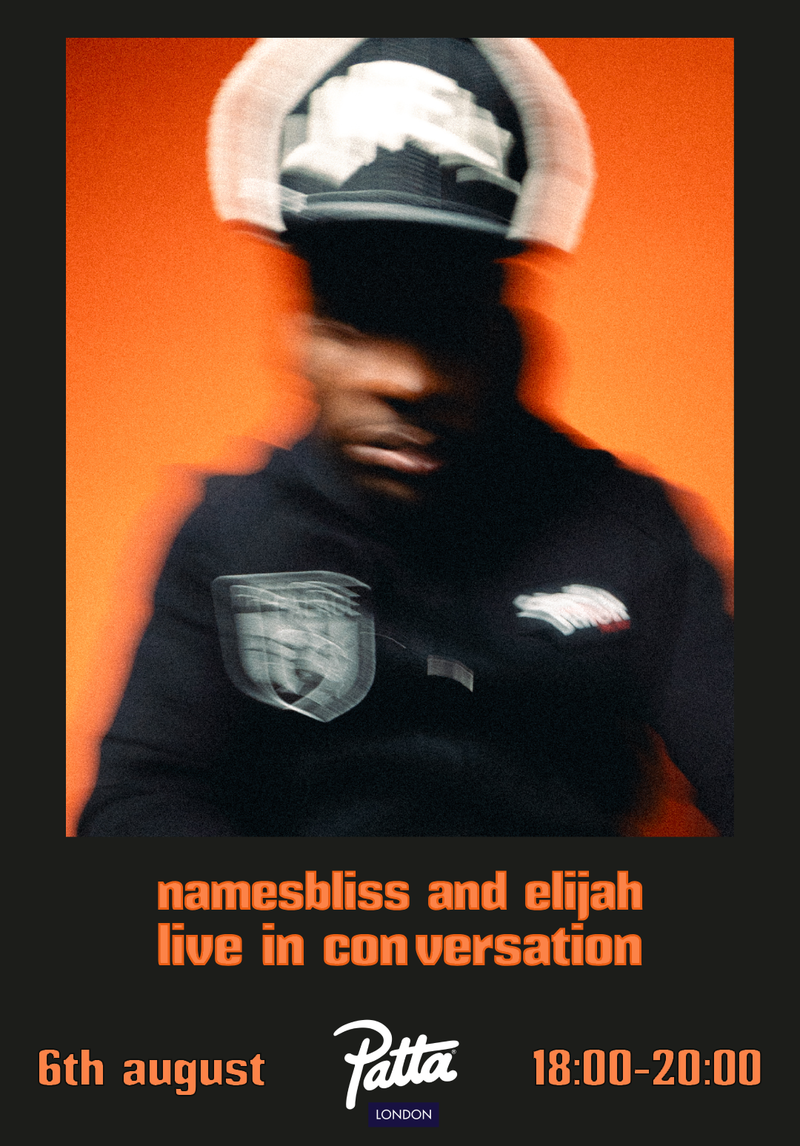
    Patta London welcomes namesbliss and Elijah for an intimate panel talk on Thursday, August 6th. Entry is free and first come, first served, with drinks provided by Mirchi.Fresh from the release of his new album, where’s bliss?, namesbliss joins London-based DJ and writer Elijah for a conversation exploring music, creativity, community and the realities of building a career within the UK underground.namesbliss has developed a sound that brings together jazz, grime and East Coast hip-hop storytelling. Following the breakthrough success of “Iniesta Flow” and his debut album Lively Experience, where’s bliss? marks the next chapter in his journey. Elijah has spent more than a decade helping shape UK music culture through Butterz, Rinse FM and his Yellow Squares project, creating new ways to think about independent creativity and sustainable artistic careers.Thursday, August 6thPatta London18:00 
    • Events

Error